

Hello, I’m Chris Allen — and today we’re delving into a mystery that has fascinated Savannah for decades. It’s a story about an old inn, a set of human remains found during renovations, and all the questions that come tumbling out with the skeleton. I call it “Who Put the Bones in the Wall?”
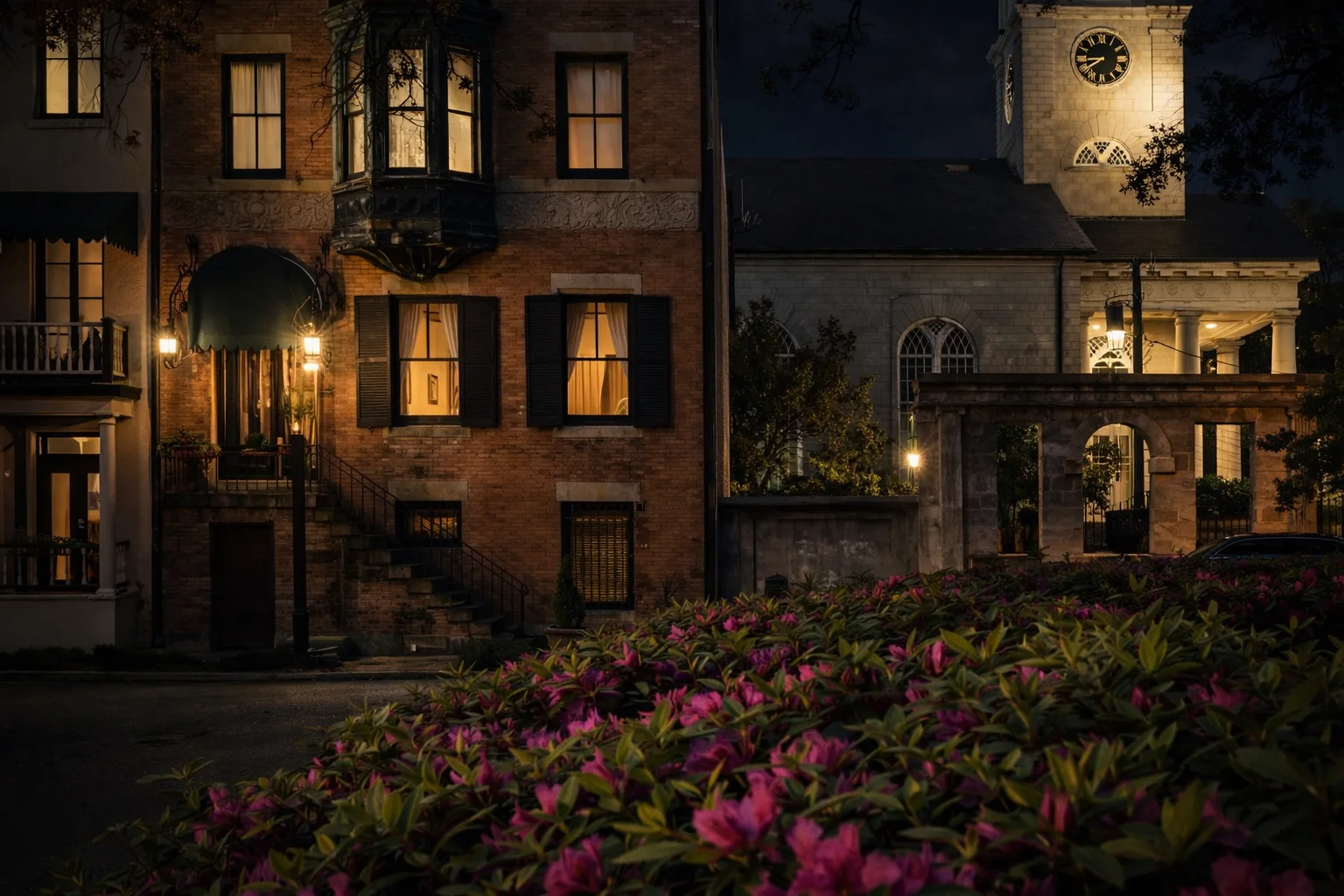
Picture Savannah: Spanish moss draping the oaks, gas lamps flickering outside elegant 19th-century homes. We call ourselves the “Hostess City,” but we’re equally famous as America’s Most Haunted City, and every old building here has a story — maybe even a ghost story. One of the most chilling begins at a charming inn on Chippewa Square: the Foley House Inn.
A Skeleton in the Wall
Our story kicks off in 1987, inside the Foley House Inn. The place was nearly a century old and undergoing much-needed renovations — and, as workers were about to discover, it was hiding a deadly secret in its walls. It started like any other job: dusty plaster, pry bars, the whine of power tools. The crew was removing an inner wall on the first floor to make room for a new staircase down to the kitchen. Then one worker struck a section of old plaster, and a cascade of crumbled wood and dust spilled out — along with something else. At first it looked like debris. Then someone spotted a bone. And then a skull.
Imagine it: you’re tearing down a wall in a beautiful historic inn, and suddenly a human skull is staring back at you. Work stopped cold. The crew had uncovered a full human skeleton, sealed inside the wall for who-knows-how-long. The police were called and an investigation launched — but the bones were dry and old, the wall untouched for decades. This was essentially an archaeological find, not a fresh crime scene. The remains were too far gone to identify, with no clothing or personal items reported alongside them. A mystery with a skeleton and no name. For Savannah’s rumor mill, though, that was more than enough — because many long-time locals remembered an old legend about the Foley House that, until 1987, everyone had dismissed as just a spooky tale.
The Widow of Foley House

To understand that legend, we step back to the late 1800s and meet Mrs. Honoria Foley. The widow of a wealthy Irish immigrant named Owen Foley, Honoria had the home built in 1896, on the site of an earlier house lost to fire. By all accounts she was a savvy businesswoman and an early hospitality pioneer — the Foleys’ original home was one of Savannah’s first true bed-and-breakfasts, and after the fire she rebuilt bigger and better, combining two townhouses into the large inn that stands today. She ran the place herself and raised her family there. Picture a genteel Victorian boarding house, a respectable widow at the helm, family and guests coming and going.
For years, Mrs. Foley’s inn prospered pleasantly. But as the story goes, something terrible happened one night around the turn of the century — something Honoria kept secret for the rest of her life. According to local legend, she had a male guest, often described as a wealthy businessman from out of town, who took a particular interest in the attractive widow. At first he was merely flirtatious; eventually his advances turned unwanted and threatening. Honoria tried to rebuff him, but the man would not take no for an answer.
The Fateful Night and the Cover-Up
The tale has the feel of a Southern Gothic thriller. It’s late, the household asleep, and Honoria is alone in her bedroom when the door swings open and there stands the unwelcome boarder, intent on having his way. Startled and terrified, she reacts in self-defense — reaching for the heavy brass candlestick on her nightstand and swinging it with all her might. One blow to the head is all it takes. When the adrenaline subsides, the man lies motionless on the floor. Honoria Foley has just killed him.
Now imagine being a woman in 1900 who has just killed a man in her home — a guest under her roof. Honoria likely feared that no one would believe a widow’s claim of self-defense against a well-to-do man. Her reputation, her business, perhaps her freedom were all at risk in a world that might have met her story with skepticism or scandal. So, the legend says, instead of calling for help she enlisted a trusted friend — in some versions a handy man or carpenter. In the dead of night, they carried the body to an interior wall beside the dining room, placed it in a niche, and sealed it up with brick and plaster. If this sounds like Poe’s The Cask of Amontillado, you’re not wrong — except that was fiction, and this, supposedly, was real. Honoria explained the guest’s disappearance easily enough: in a port city, men came and went, and a traveler with no close ties in town might vanish without raising alarm.
A Deathbed Confession, Vindicated
According to the lore, Honoria never breathed a word of it for years — not to her family, not to her guests. Life went on at the Foley House, and any whispers about the boarder who vanished faded with time. Until, that is, the very end. In 1914, Honoria was 83 and in failing health, and in her final hours — delirious or perhaps remorseful — she reportedly confessed that she had killed a man long ago, and that his remains were still hidden in the house. You can picture the scene: the old woman rasping out a wild tale about a body in the wall. Those who heard it apparently dismissed it as the ramblings of a dying mind. No one tore down any walls. Honoria was laid to rest, and her confession was politely forgotten.
Fast forward 73 years — and a skeleton falls out of the wall, in the very spot Honoria had named.
When the bones tumbled out during that 1987 renovation, that long-dismissed confession suddenly didn’t seem so crazy after all. To be transparent: much of Honoria’s story comes from oral history and ghost-tour lore — we don’t have a diary or a police report from 1900 confirming the details. But a human skeleton was found in the walls of her house, and as far as anyone knows, Honoria was the only person who ever hinted a body was there. The remains were never identified, but the assumption is they belonged to that missing guest from the late 1890s. We don’t even know his name — he’s become a kind of urban-legend character.
The Ghost of “Wally”
From that moment in 1987, the Foley House Inn went from a charming historic B&B to front-page news and a must-stop on every Savannah ghost tour. As the current owners quip, “when you find human remains in your walls during renovations, you end up getting that reputation.” Almost immediately the ghost stories began: a rush of cold air in an empty hallway, inexplicable noises at night, and the occasional sighting of a spectral figure. One frequently told tale describes a man in a top hat wandering the inn’s garden after dark — presumably the restless spirit of the boarder. The staff affectionately nicknamed him “Wally” — short for “the man in the wall” — which is both terrible and terrific, and very much in keeping with Savannah’s sense of humor about its hauntings.
The inn has embraced the legend as part of its identity, and honestly, who wouldn’t be a little curious to stay at the place with the skeleton-in-the-wall story? It’s a lovely inn, by the way — tastefully decorated, comfortable rooms, all that good Southern hospitality — plus, perhaps, an extra guest or two who checked in over a century ago and never quite checked out.
Bones in Other Walls
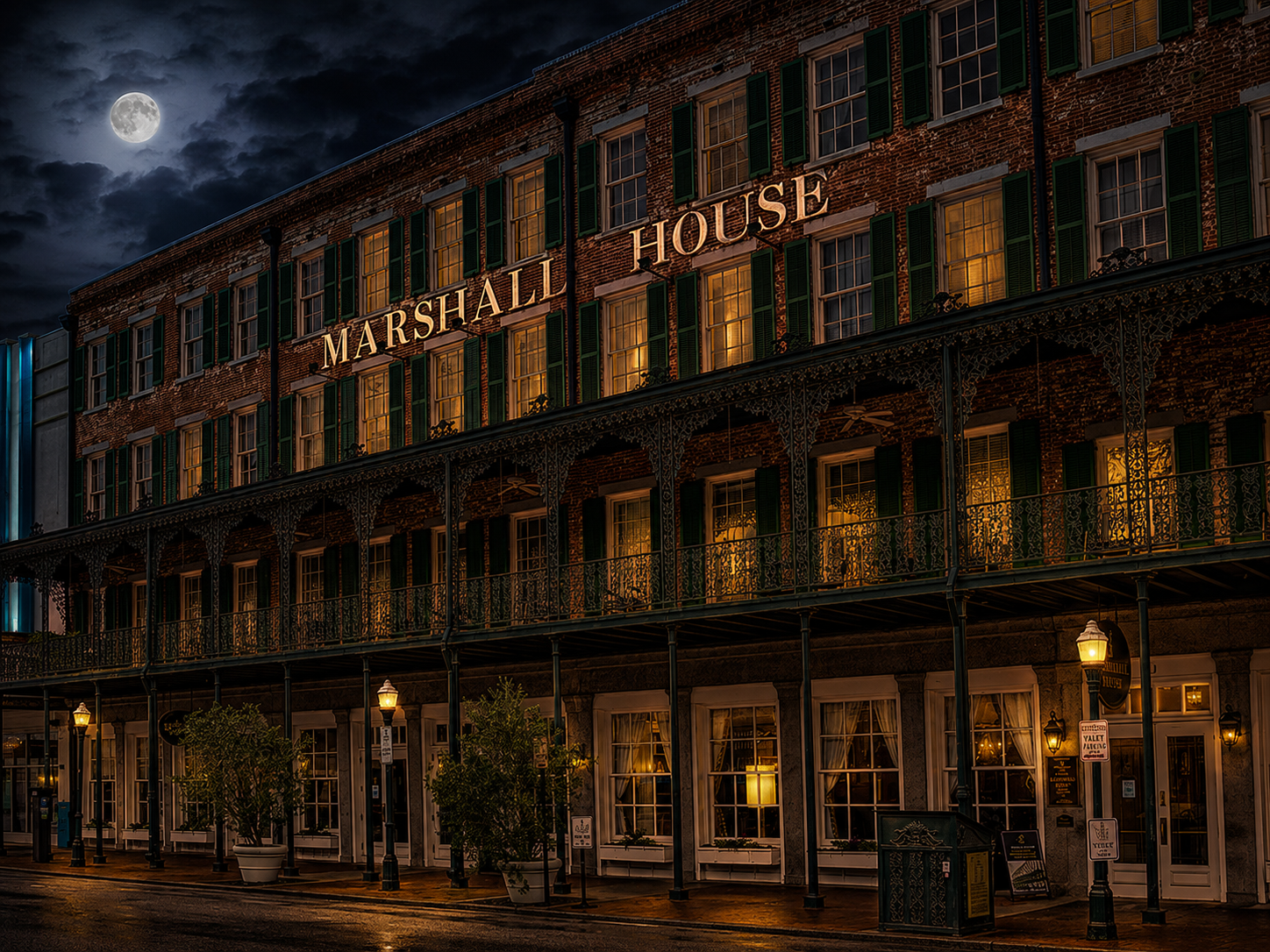
Sensational as it is, the Foley House case isn’t unique — and a couple of parallels really put it in perspective. Just a few blocks away stands the Marshall House, one of Savannah’s oldest hotels (built in 1851). Around 1999, during renovations, workers pulling up ground-floor floorboards discovered a whole pile of human bones and, like at Foley House, called the police. But here the explanation was historical rather than criminal: during the Civil War, the Marshall House served as a Union Army hospital, and battlefield medicine meant many amputations. Staff sometimes buried amputated limbs beneath the floorboards, especially in winter when the ground outside was too hard to dig. The bones found in the 1990s were those surgical remains, left for over a century — macabre, but not murder. Sometimes, when you find bones in an old building, the answer is war and disease, not a crime.
Other cases are far more recent, and starkly criminal. In Poughkeepsie, New York, a schoolteacher named JoAnn Nichols vanished in 1985; her husband suggested she may have run off or harmed herself, and the case went cold for 27 years. After he died in 2013, a clean-out crew clearing his cluttered house knocked down a false wall in the basement and found a plastic container with skeletal remains inside. Dental records confirmed it was JoAnn; she had died of blunt-force trauma. He had concealed her in that wall for nearly three decades, living above her remains the whole time — and, having died before the discovery, he never faced justice. Going further back, in 1913 a mansion in Illinois built by Colonel Thomas Snell yielded the skeleton of an infant sealed in a wall cavity — a long-buried family scandal that made lurid headlines in its day. The lesson across all of them is the same: walls can’t keep secrets forever. Eventually someone opens them up.
So, Who Put the Bones in the Wall?
We can’t haul Honoria Foley back from the grave to answer — she took that with her over a century ago. But thanks to the 1987 discovery, we have strong reason to believe the old legend was true: that Honoria herself was the one who caused those bones to be there, likely to cover up a killing and protect her family from scandal and legal peril. Was it right? Of course not — a man died and was denied both justice and a proper burial. But can we understand why a woman in that era might have panicked, fearing the courts would never believe her? Perhaps we can. As for the victim, no name has ever been attached to the remains; he’s the eternal John Doe of the Foley House, most often remembered as a wealthy boarder who simply vanished one night.
Savannah has a way of layering history, myth, and modern life all together. You can enjoy blueberry pancakes at the Foley House in the morning and hear its dark secret on a ghost tour that same night. Was Honoria a murderer who got away with it, or a woman who defended herself in an era when the system might not have protected her? Perhaps both can be true — it’s the kind of moral riddle history is full of. There’s a saying that if walls could talk, they’d have some stories to tell. In the case of the Foley House Inn, the walls did more than talk — they held onto the evidence of a story for ninety years, until someone finally listened.
Hear the Full Episode
“Who Put the Bones in the Wall?” is one of many tales we dig into on the Destination Ghost Podcast. Press play, and stay curious — you never know what’s hiding behind the drywall.
Hear the story of Foley House Inn after dark
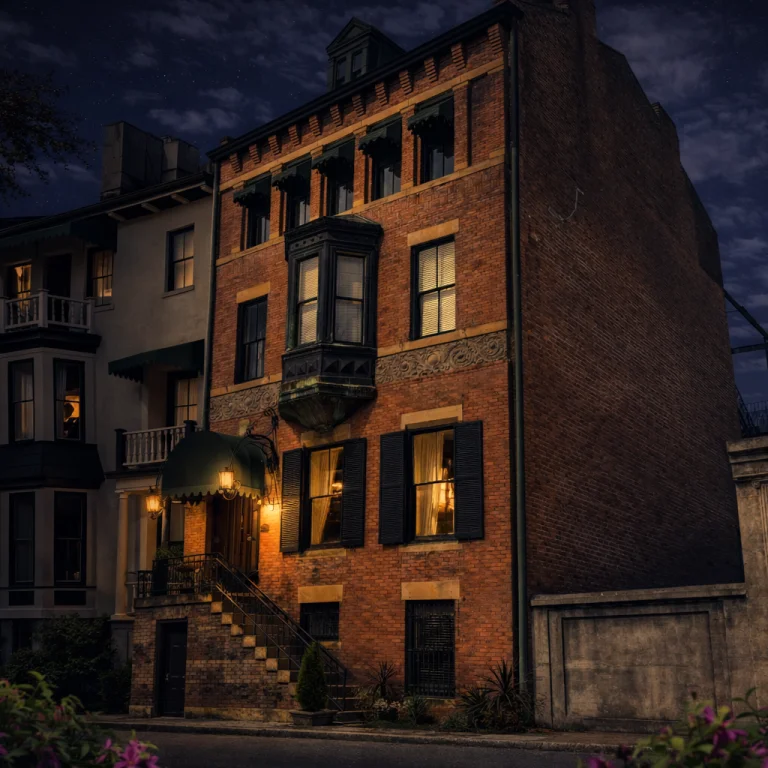
Guided walking tour · Savannah
Original Haunted Savannah Tour
8:00 PM90 minAll agesAbout 1 mile
Savannah’s signature ghost walk: true history and documented hauntings through the historic squares, with no jump scares, actors or cheap tricks. Ideal for families and first-time…
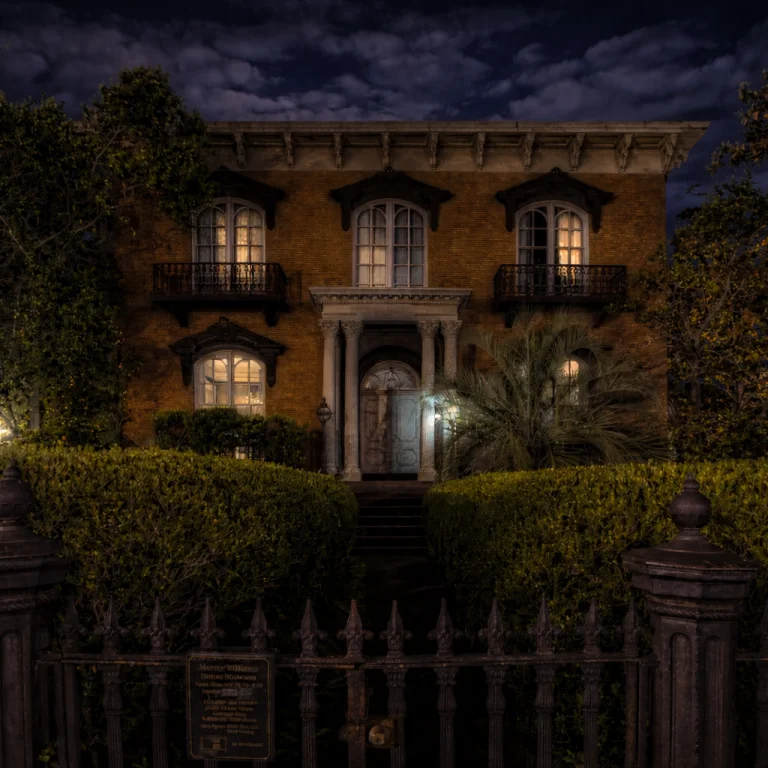
Guided walking tour · Savannah
Spirits and Scoundrels Ghost Tour
10:00 PM120 min18+About 1 mile
Two hours of Savannah’s grimmest documented history — crime, scandal and tragedy — once the crowds have thinned. An adults-only late-night walk with no actors.
Self-guided tour · Savannah
Shadows of Savannah Self-Guided Ghost Tour
Anytime90 minAll agesAbout 1 mile
A self-guided ghost walk through Savannah’s historic district: route, map and narration at each stop on your phone. Start any time, pause and resume, at your…
Self-guided tour · Savannah
Ghosts of River Street Self Guided Ghost Tour
Anytime90 min to 2 hours minAll ages1 mile
A self-guided walk along Savannah’s riverfront — the cobblestones, old cotton warehouses and the water’s edge — with the true, darker history narrated on your phone.
Questions people ask
Who put the bones in the Foley House wall?
The legend attributes the concealment to Honoria Foley and a helper. That explanation has not been established through verified evidence.
When were the bones reportedly found?
The story places the discovery during renovations in 1987.
Were the remains identified?
The article reports no confirmed identification. Their association with a missing boarder remains an assumption.
Who is Wally at the Foley House Inn?
Wally is the nickname given to a reported male apparition, sometimes described wearing a top hat in the garden.
Is the Foley House Inn haunted?
Accounts describe apparitions, cold air, and unexplained sounds. These reports do not establish supernatural activity.
Can you stay at the Foley House Inn?
Yes. The property operates as a historic inn offering overnight accommodations.
Link to or cite this story
Writers, bloggers, teachers and travel guides are welcome to link to this page. Copy a ready-made link, citation or story card below.
Page address
HTML link for your website
Citations (APA, MLA, Chicago)
Paste this HTML to show a story card that links back here
More haunted stories
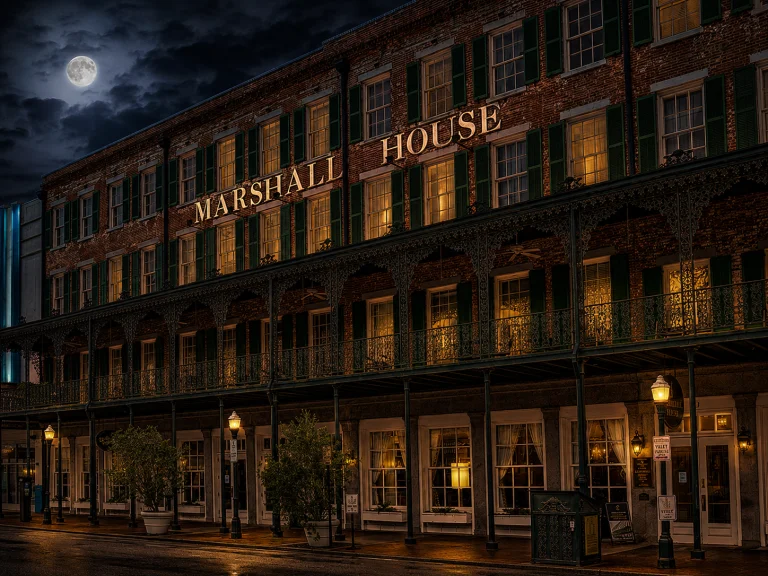
Savannah
The History and Hauntings of the Marshall House
The Marshall House at 123 East Broughton Street in Savannah, Georgia, is a historic hotel opened by Mary Marshall in 1851 that…
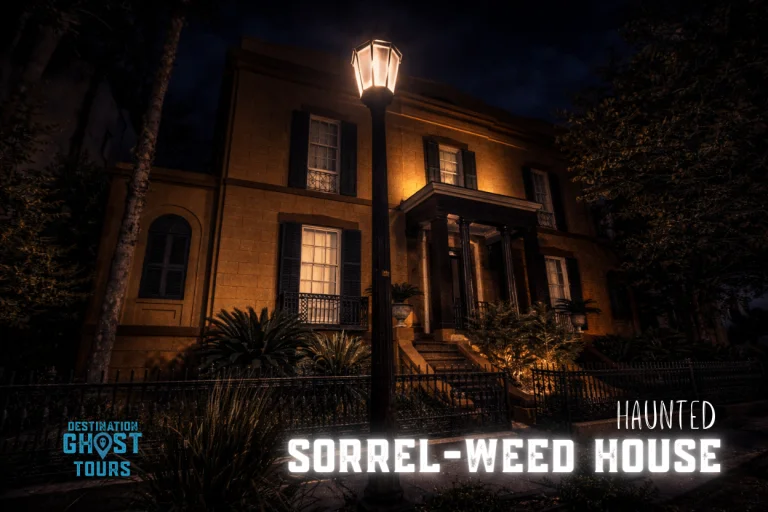
Savannah
Haunted Sorrel-Weed House
The Sorrel-Weed House at 6 West Harris Street, beside Madison Square in Savannah, Georgia, is a historic mansion known for reports of…
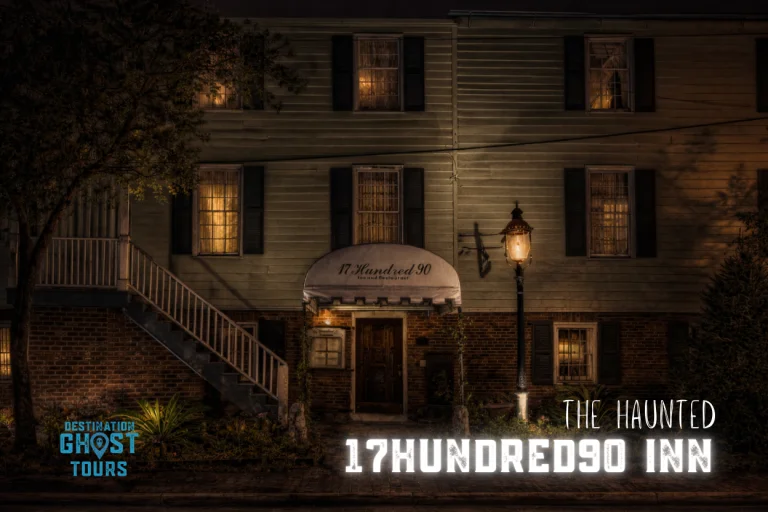
Savannah
Haunted 17Hundred90 Inn
The 17Hundred90 Inn & Restaurant at 307 East President Street in Savannah, Georgia, is a historic inn known for the legend of…
1 comment