
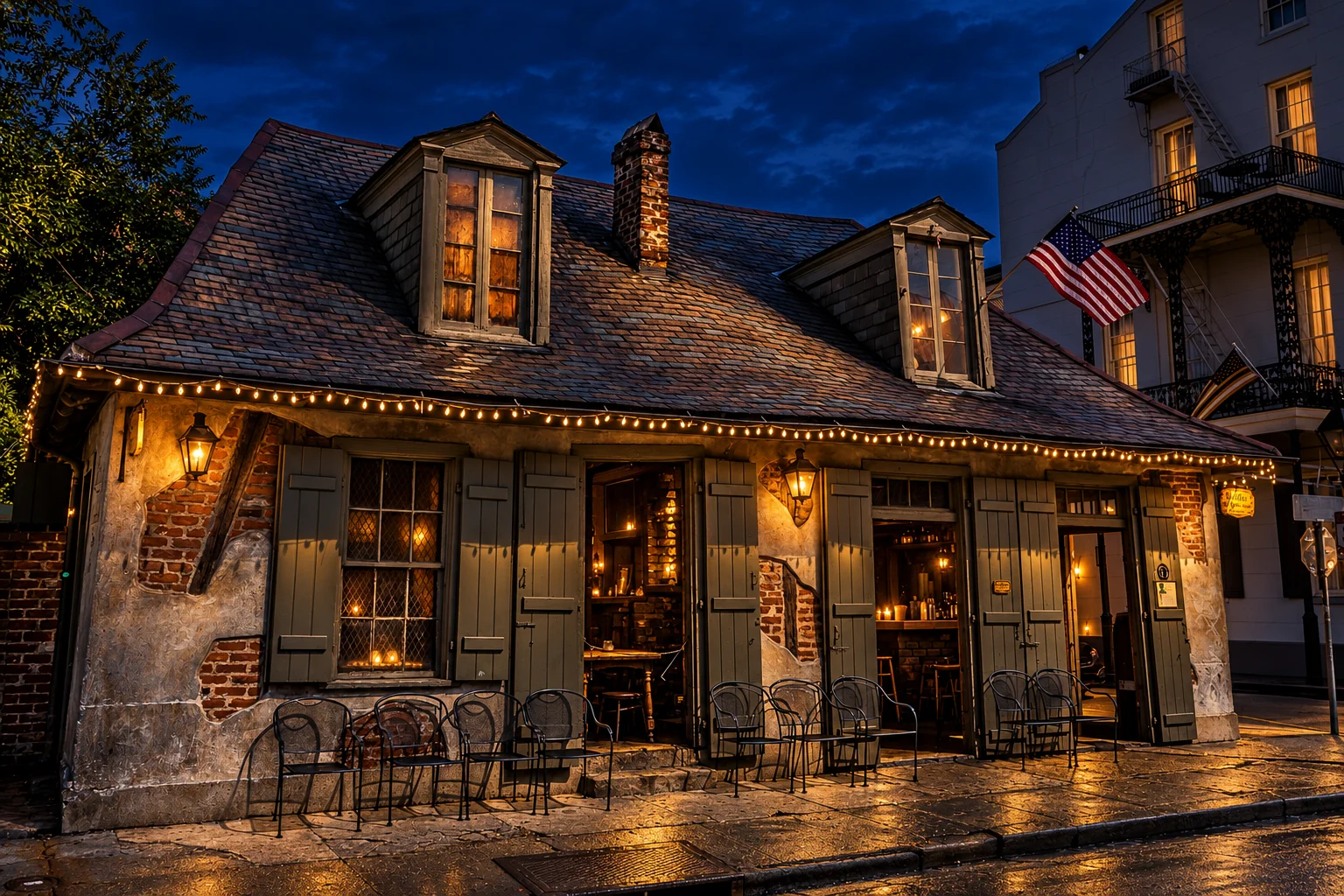

941 Bourbon Street, French Quarter, New Orleans
Lafitte’s Blacksmith Shop Bar
A haunted history of 941 Bourbon Street: a Spanish colonial cottage, the pirate legend it may never have earned, and the figures still seen by candlelight.

Lafitte’s Blacksmith Shop Bar looks out of place on Bourbon Street.
The low cottage at the corner of St. Philip has a steep roof and exposed patches of brick between wooden timbers. Inside, candlelight is part of its familiar atmosphere, leaving the fireplace and the darker corners to attract a different kind of attention.
For years, published ghost stories have described a man appearing near that fireplace. Another presence is associated with the rooms upstairs, where a woman’s voice is said to whisper a visitor’s name. There are also accounts of red eyes seen in the darkness, a detail that has given the bar a more sinister reputation.
The building is old enough to have a substantial history of its own. Its association with Jean Lafitte, however, requires a closer look. Much of what is repeated about this Bourbon Street landmark belongs to the city’s folklore.
The Cottage Before the Legend
The exact construction date remains uncertain. Although the bar’s website gives a date between 1722 and 1732, the Historic New Orleans Collection’s Vieux Carré Survey identifies the surviving cottage as most likely dating from the 1770s. An early land record does not necessarily date the structure standing on that land today.
Architectural historian Robert J. Cangelosi Jr., writing for the Preservation Resource Center of New Orleans, places the cottage in the Spanish colonial period. His research connects it to carpenter Bartholomie Robert’s family, which owned the site from 1773 to 1833. Robert’s estate mentions a small house there in 1781.
Its French colonial appearance does not conflict with that Spanish-period date. Architectural traditions continued across changes in government. The cottage uses briquette-entre-poteaux, or brick-between-posts construction, with brick filling the spaces in a timber framework. Lime plaster originally protected the soft, porous brick from rain.
An older National Park Service architectural survey describes an original arrangement of four rooms, with interior partitions later removed for use as a bar. The cottage’s flared roofline and dormers give a relatively small building a distinctive shape. Its architectural significance earned it designation as a National Historic Landmark in 1970.
These details place the building within the working and domestic life of colonial New Orleans. People lived here before generations of visitors began arriving to drink beneath the Lafitte name.
Did the Lafitte Brothers Use the Blacksmith Shop?
The familiar story holds that Jean and Pierre Lafitte operated a blacksmith shop here while conducting their smuggling business behind it. Some versions add tunnels leading toward the river, allowing goods to pass unseen beneath the streets.
The evidence does not establish that operation at 941 Bourbon Street. The National Park Service treats the blacksmith shop association as unconfirmed legend. It does identify a genuine family connection nearby: Pierre’s partner, Marie Louise Villard, purchased a property across the street in 1816.
That nearby connection helps explain how an association with the neighborhood could develop into a story about one particular building. It cannot establish what happened inside the cottage.
The legend was circulating by the nineteenth century. Cangelosi notes Lafcadio Hearn’s reference to the brothers’ supposed smithy in 1883 and its repetition in an 1885 guidebook. The building’s reputation has therefore had a long life of its own, even though the pirate business attributed to it remains unproven.
The “oldest bar” claim needs similar care. Cangelosi’s research places its use as a bar in the early twentieth century, following earlier uses as a residence, workshop, and ice cream parlor. An old building and a continuously operating old bar are different historical claims.

The Man Behind the Name
Jean Lafitte’s activities in Louisiana were real. He and his brother became associated with the Barataria smuggling network south of New Orleans. Jean emerged as a leader of the Baratarians, whose operations included the trafficking of enslaved people.
That part of the history can disappear beneath the more appealing image of a clever outlaw. The people bought and sold through those operations were human beings, and the Lafitte story cannot be told honestly while leaving them out.
The Baratarians also assisted the American defense of New Orleans during the War of 1812. Jean negotiated for pardons in exchange for their support, and his followers contributed to the campaign that culminated in the Battle of New Orleans in January 1815.
His later movements and eventual fate remain uncertain. The National Park Service cautions that even the dates and places of his birth and death are not securely known. Those gaps have allowed a considerable body of legend to gather around his name.
The Man Near the Fireplace
The best-known apparition at Lafitte’s Blacksmith Shop is a man described in old-fashioned sailor’s clothing. Published accounts place him on the ground floor, often near the fireplace or in a dark corner. He is said to watch the people around him and disappear after being noticed.
The figure is commonly identified as Jean Lafitte. That identification comes from the tradition attached to the bar, rather than evidence establishing who the apparition might be.

One more detailed account appears in Lewis Powell IV’s Southern Spirit Guide, which attributes the story to Dan Asfar’s 2007 book Ghost Stories of Louisiana. It concerns a woman visiting the bar during her honeymoon.
According to that retelling, she experienced an unusual chill before noticing a broad-shouldered man with a large mustache and hat. He stood near other patrons, who did not appear to acknowledge him. She believed he was smiling at her. When she turned to ask her husband whether he could see the man, the figure was gone by the time she looked back.
The account has a published source, but it is still a reported experience relayed through other writers. It does not prove the figure was supernatural or identify him as Lafitte.
Its unsettling quality comes from how little initially distinguished the man from another customer. In the woman’s account, recognition arrived only after his disappearance.
The Woman Upstairs
Another recurring legend concerns a woman associated with the upper rooms. Published paranormal accounts describe an unseen female voice whispering visitors’ names. Some retellings also mention an apparition or a figure seen in a mirror.
Her identity remains unknown. A story that she died by suicide upstairs is repeated online, but the accounts reviewed here acknowledge that they lack a verifiable source for that history. There is no supported reason to supply her with a name or a tragic romance.
A name spoken close to someone’s ear would feel personal in a way that an unexplained noise would not.
The reported whisper is the central detail. The stories do not establish who spoke it, or how the voice was identified as belonging to the dead.
The Red Eyes in the Darkness
The bar’s more ominous legend concerns pairs of glowing red eyes, reportedly seen in dark corners and, in some versions, around the fireplace. These accounts describe eyes without a visible body, fading or disappearing after being noticed.
Some paranormal writers interpret them as evidence of a demonic presence. That is an interpretation, not a verified explanation. The reports do not establish the source of the lights or the nature of anything behind them.
Low light and reflections are possibilities worth considering when examining such a claim. Without a documented investigation of a particular sighting, however, assigning an ordinary cause would be as premature as confidently naming a supernatural one.
A Place to Listen
Lafitte’s Blacksmith Shop Bar does not need invented murders or hidden treasure presented as fact to hold someone’s attention. The surviving cottage carries the history of people who lived and worked on this corner long before its present fame.
The ghost legends add another layer. Their most affecting details are small: a man who seems to be another patron, a voice speaking a name, a pair of eyes where a face should be. They are established parts of the bar’s haunted reputation, although their causes remain unresolved.
Beneath the pirate stories is an old New Orleans house that has kept finding new uses. Today, people gather inside it with drinks and conversation. Some leave remembering the building. Others leave wondering who else was there.
Research sources
- Historic New Orleans Collection, Vieux Carré Survey, 937–941 Bourbon Street
- Preservation Resource Center, Is Lafitte’s Blacksmith Shop the oldest bar in the country?
- National Park Service, Jean Lafitte: A Pirate’s Life
- National Park Service, 1968 architectural survey
- New Orleans Historical, Lafitte’s Blacksmith Shop and the Battle of New Orleans
- Lafitte’s Blacksmith Shop Bar, About Us
- Southern Spirit Guide, Encounter with a Gentleman
- Amy’s Crypt, Lafitte’s Blacksmith Shop
- Ghostly Podcast, Lafitte’s Blacksmith Shop
Hear the story of Lafitte’s Blacksmith Shop Bar after dark
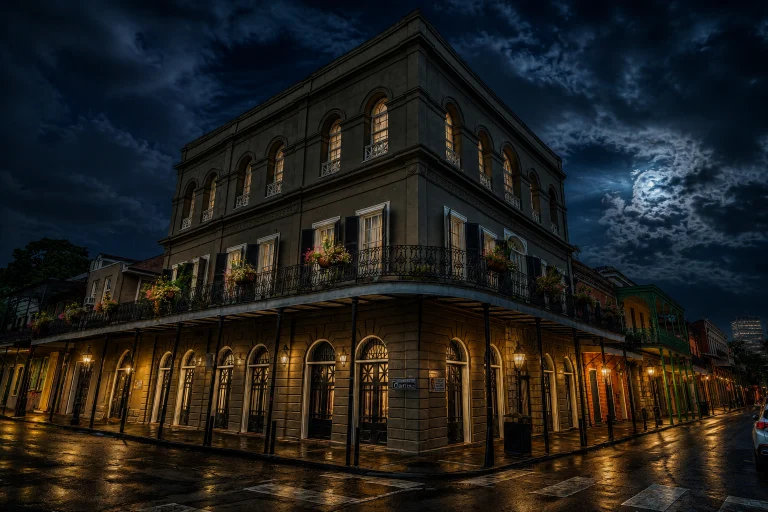
Self-guided tour · New Orleans
Haunted New Orleans Self-Guided Tour
AnytimeAll ages
A phone-guided route through the French Quarter with narration on haunted locations, tragedies, voodoo and local folklore. Start any time.
Questions people ask
Is Lafitte’s Blacksmith Shop Bar haunted?
Published accounts describe apparitions, whispered names, and glowing red eyes, but their supernatural causes remain unverified.
What ghosts are reported at Lafitte’s Blacksmith Shop?
Stories describe a man near the fireplace, often identified as Jean Lafitte, and an unidentified woman associated with the upstairs rooms.
What are the red eyes at Lafitte’s Blacksmith Shop?
Paranormal accounts describe glowing red eyes in dark areas. Claims that they indicate a demon are interpretations, not established facts.
Did Jean Lafitte operate a blacksmith shop here?
The National Park Service states that no evidence confirms the legend linking the Lafitte brothers’ blacksmith operation to this building.
Is Lafitte’s Blacksmith Shop the oldest bar in America?
The claim is not supported by preservation research, which dates its use as a bar to the early twentieth century.
When was Lafitte’s Blacksmith Shop built?
Its precise construction date is uncertain. Preservation research places the cottage in New Orleans’s Spanish colonial period and notes a house on the property in 1781.
Sources & further reading
- Vieux Carré Survey: 937–941 Bourbon Street — The Historic New Orleans Collection
- Is Lafitte’s Blacksmith Shop the oldest bar in the country? New Orleans Truths vs. Tales — Preservation Resource Center of New Orleans
- Jean Lafitte: A Pirate’s Life — National Park Service
- National Survey of Historic Sites and Buildings: Lafitte’s Blacksmith Shop, May 10, 1968 — National Park Service
- Lafitte’s Blacksmith Shop and the Battle of New Orleans — New Orleans Historical
- About Us — Lafitte’s Blacksmith Shop Bar
- Encounter with a Gentleman: New Orleans — Southern Spirit Guide
- New Orleans Bar Lafitte’s Blacksmith Shop Haunted by Ghosts and Demon — Amy’s Crypt
- 092: Lafitte’s Blacksmith Shop, New Orleans — Ghostly Podcast
Link to or cite this story
Writers, bloggers, teachers and travel guides are welcome to link to this page. Copy a ready-made link, citation or story card below.
Page address
HTML link for your website
Citations (APA, MLA, Chicago)
Paste this HTML to show a story card that links back here
More haunted stories
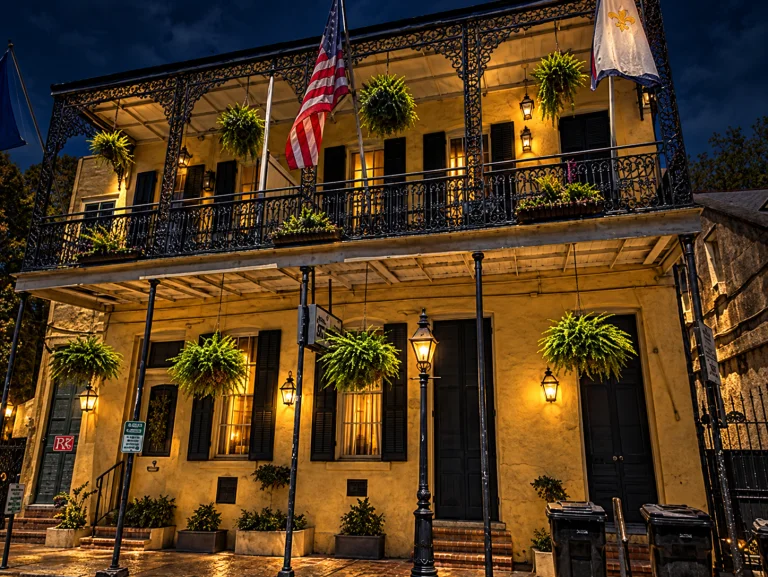
New Orleans
The Haunted Andrew Jackson Hotel in New Orleans
The Andrew Jackson Hotel at 919 Royal Street in New Orleans’s French Quarter is known for reports of children laughing in its…
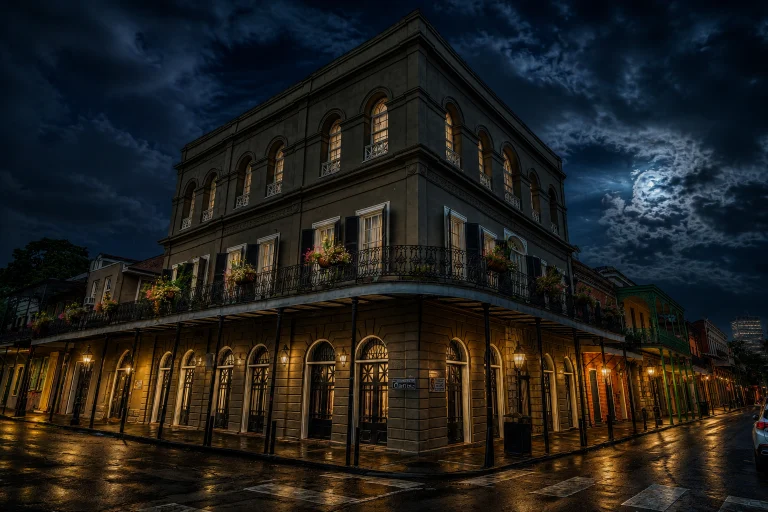
New Orleans
The History and Hauntings of the LaLaurie Mansion
The LaLaurie Mansion at 1140 Royal Street in New Orleans’s French Quarter is known for ghost stories involving screams, rattling chains, and…
St. Augustine
The History and Hauntings of the St. Augustine Lighthouse
The St. Augustine Lighthouse on Anastasia Island, Florida, is a historic maritime landmark known for reports of children’s laughter, apparitions, and unexplained…