

Imagine waking in the dead of night to a faint rustle in the corner of your room. In the darkness, a silhouette stands unnaturally still — a humanoid form blacker than black, without a face or features. Your heart pounds as the shadowy figure seems to watch you. Then, in the blink of an eye, it dissolves into the dark.
Was it a trick of your eyes, a figment of half-sleep, or something beyond the ordinary? Such eerie encounters are often reported as “shadow people,” mysterious entities that have captivated the human imagination and sent chills down spines around the world. In this exploration, we’ll look at what witnesses describe, how such beings appear across history and culture, and the many theories — both paranormal and scientific — that try to explain them.
What Are Shadow People?
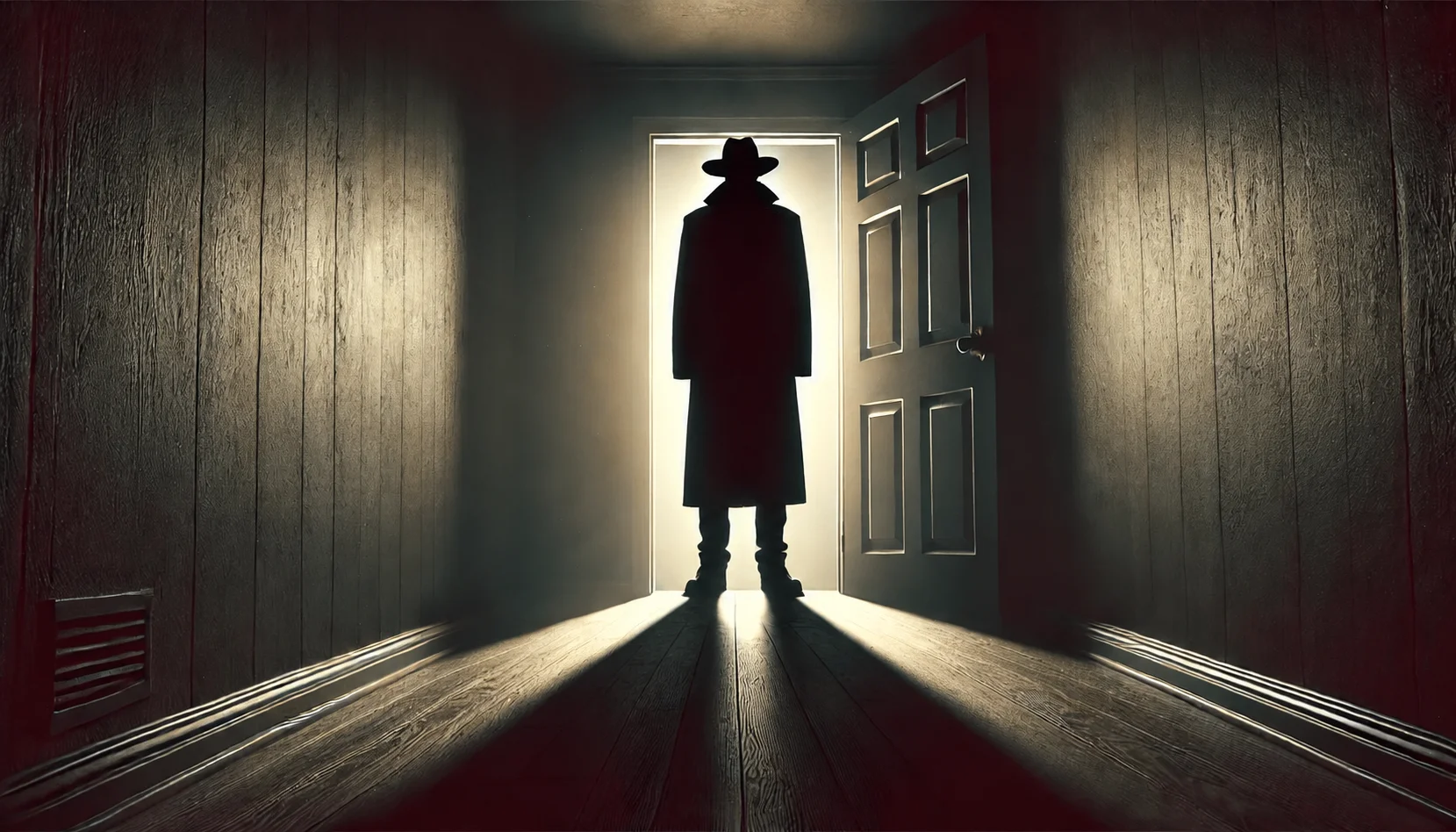
“Shadow people” are typically described as dark, human-shaped silhouettes — essentially patches of shadow that seem to move and act with intent. In paranormal circles, they are interpreted as a spirit or entity appearing in shadow form. Unlike traditional ghost apparitions that might look like misty white figures or recognizable human forms, shadow people are usually jet-black and featureless, appearing as a humanoid outline with no discernible face or clothing. Witnesses often report only the general shape — sometimes a tall male figure, occasionally with a trench coat or a wide-brimmed hat, earning one common subtype the nickname “Hat Man.” In rare cases, people claim these shadows had glowing red eyes, heightening the terror of the encounter.
Another hallmark of these encounters is their fleeting, elusive nature. They frequently slip away the moment you try to focus on them. Early reports suggested they were seen only out of the corner of one’s eye, vanishing if you looked directly — but intriguingly, many experiencers now say they have seen shadow people face-on and for longer periods, even observing details like those eerie red eyes. There is often a sense of intense dread or a chilling presence associated with these beings. They tend to hover in doorways, dart across walls, or loom over beds, and when they depart, they may simply melt into walls or ceilings.
Are these shadowy figures mere illusions of light and shadow, or do they hint at something truly paranormal? People have grappled with this question for ages — and to understand the possible answers, it helps to look at how shadow-like entities have appeared throughout history and across cultures.
Encounters in History and Culture
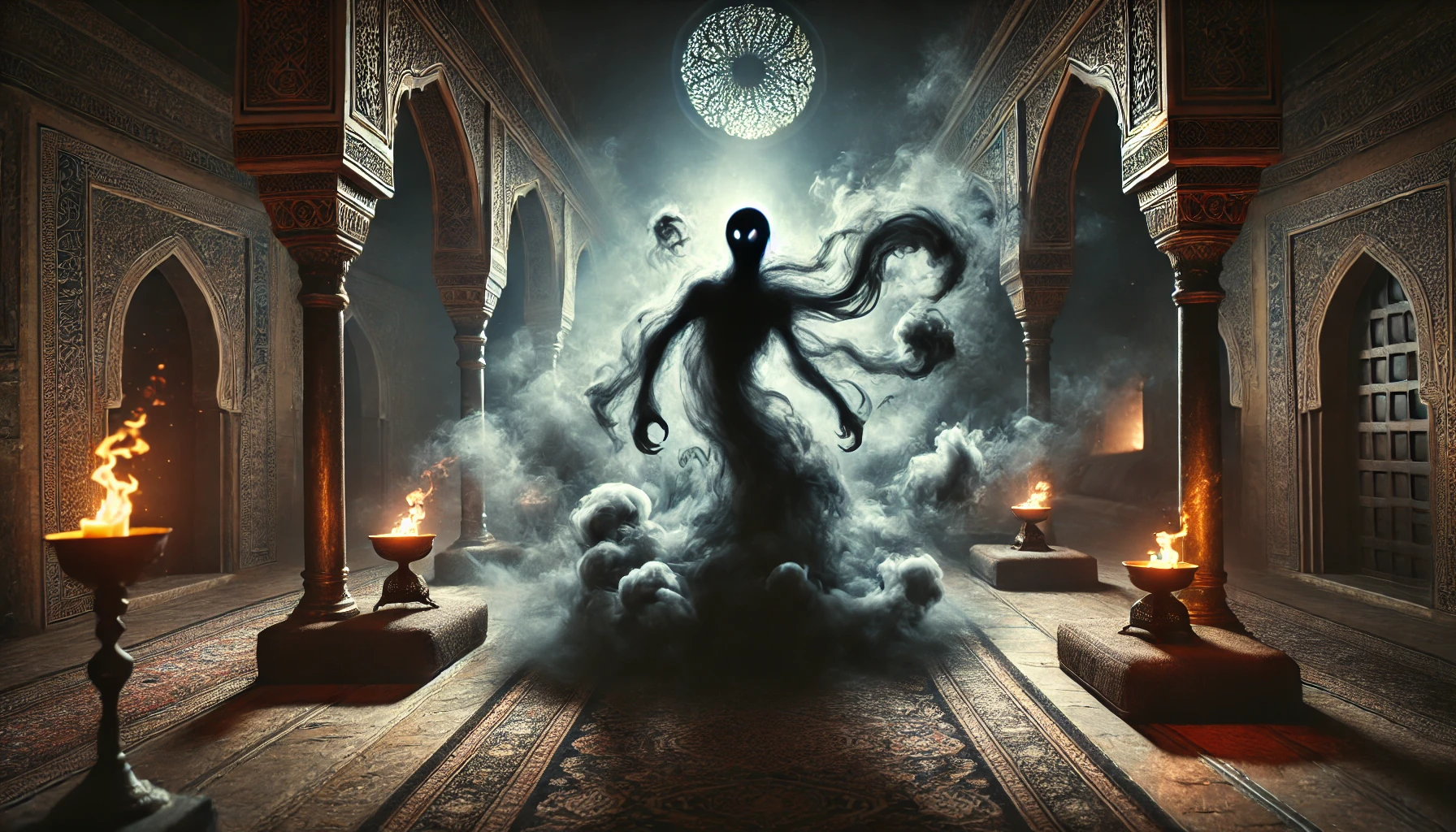
Reports of mysterious shadowy beings are not just a modern occurrence. Throughout history, many cultures have told stories of dark, human-like spirits that lurk just out of sight. In ancient folklore, the shades of the underworld were sometimes envisioned as incorporeal shadow forms of the deceased — more an echo or silhouette of a person than a living presence. Shadowy creatures have long been a staple of ghost stories and myth: Islamic tradition speaks of the jinn, invisible entities made of “smokeless fire” that can shapeshift and exist parallel to our world. Jinn are sometimes described as almost like shadow humans living in a parallel shadow universe hidden from mankind, and many believers think encounters with shadow people might actually be glimpses of these jinn spirits.
In Japanese folklore, there is the kage-onna, or “shadow woman” — a yōkai that appears as the shadow of a woman cast on a wall or paper door when no physical person is present. Such tales suggest the concept of human-like shadows with a life of their own has been with us for centuries.
Indigenous cultures also have strikingly similar legends. The Choctaw people of North America tell of Nalusa Chito (also called Impa Shilup), a great black soul-eating shadow being. According to Choctaw legend, if a person harbors evil thoughts or deep sadness, this malevolent shadow can creep into their mind and devour their soul. The Choctaw traditionally believe each person has an “outside shadow” (shilombish) that can wander separately from the body, as well as an inner spirit or “inside shadow” (shilup). The roaming outside shadow could frighten people after death — a concept uncannily close to what we now call shadow people. These interpretations cast shadow entities as omens or spiritual forces, often evil or trickster in nature, that prey upon human fear.
While these stories are old, the modern phenomenon of “shadow people” as we know it burst into popular awareness in the late 20th and early 21st centuries. A major turning point was a 2001 episode of the overnight radio show Coast to Coast AM, a program devoted to paranormal topics. On April 12, 2001, host Art Bell interviewed a man who called himself “Thunder Strikes,” described as a Native American elder, about shadow people. The response was explosive: listeners were invited to send in drawings of the shadow beings they had seen, and soon the show’s website was flooded with hundreds of eerie sketches of silhouetted figures. This collective outpouring of reports made it clear that something strange was being experienced by ordinary people across the country.
Later that year, author Heidi Hollis published a book on shadow people and became a frequent Coast to Coast AM guest, further spreading the legend. Hollis described dark humanoid silhouettes that flicker at the edge of vision, sometimes even jumping onto people’s chests and choking them as they lie paralyzed in bed. She concluded that shadow people are malevolent extraterrestrials rather than ghosts — essentially evil aliens in shadow form — and claimed they could be repelled by invoking the name of Jesus. The explanation resonated with some and raised skepticism in others, but it cemented shadow people in contemporary paranormal lore.
Since then, shadow people have become a worldwide discussion, featuring in countless personal accounts, internet forums, and TV shows. A particularly infamous figure to emerge from recent reports is the aforementioned “Hat Man” — a tall shadow person wearing an old-fashioned fedora or wide-brimmed hat, often reported during episodes of sleep paralysis or in haunting encounters. The Hat Man is typically described as a solid black form, sometimes with red eyes, exuding an aura of sheer terror. Intriguingly, some cases have linked Hat Man sightings to specific triggers, such as people who have taken high doses of the antihistamine diphenhydramine (Benadryl) experiencing very similar hat-wearing figures while in delirium. Whether in historic folklore or modern encounters, shadow people inspire both fascination and fear — and a host of theories to explain what they really are.
Paranormal Theories: Who or What Are They?
Those who believe there’s more to shadow people than misperception have proposed a range of paranormal explanations. Over the years, several major theories have gained traction, often overlapping and evolving as new encounters emerge. Here are the leading supernatural interpretations.
Ghosts of the Dead
One of the simplest theories is that shadow people are a type of ghost or spirit — though they seem different from classic sightings. Traditional ghosts often appear as recognizable people or white, misty apparitions, sometimes with discernible clothing. Shadow people, by contrast, are darker than night and lack any clear detail. This has led some researchers to speculate that if they are ghosts, they might be spirits trapped in a limbo state, only able to manifest as a shadowy form — restless souls who lack the energy to appear as full apparitions, so only their dark outline is seen.
Demonic Entities
The malevolent aura and intense fear that often accompany these encounters lead many to believe the beings are not human spirits at all, but demons or similarly negative entities. Witnesses frequently report a feeling of evil or malice radiating from them, and the occasional reports of attacks — jumping on or choking victims — have fueled the idea of demonic manifestations whose goal is to terrorize or feed off human fear. Some demonologists suggest a demon might choose to appear as a shadow precisely because it is less identifiable and can instill fear more effectively than a typical ghost.
Djinn (Genies)
An intriguing theory bridges modern sightings with ancient lore: that shadow people are actually djinn in disguise. Djinn are supernatural beings from Middle Eastern and Islamic tradition, normally invisible to humans. Paranormal researcher Rosemary Ellen Guiley, who spent years studying shadow people, concluded that they are a shape-shifted form taken by djinn. She found that many people who see shadow beings also report other phenomena like alien encounters or poltergeists, suggesting a common source. Because djinn in lore can be good, evil, or in-between, this theory might explain why some encounters feel malicious while others are merely eerie — a fascinating cross-cultural idea that the genies of myth still lurk among us, now viewed through the beam of a flashlight in a dark bedroom.
Interdimensional Beings
Another popular hypothesis is that shadow people are visitors from another dimension or reality. Modern physics has theorized the possible existence of parallel dimensions; could entities from one of them sometimes bleed through into ours? Proponents suggest shadow people might be inhabitants of a universe that overlaps our own, normally invisible, glimpsed only when their frequency or physical makeup falls slightly out of phase with our reality — which is why we see only a dark silhouette rather than a full form. It’s a speculative but thought-provoking explanation that relies not on spirits of the dead, but on the mysteries of the multiverse.
Time Travelers
A more exotic theory speculates that shadow people might be human time travelers from the future, remaining partially out of sync with our time and appearing only as fleeting shadows as they observe historical events — or our private moments — without being fully seen. It’s admittedly more science fiction than supernatural, but it’s floated in paranormal communities as a possible answer for why these figures can seem intelligent yet so ephemeral.
Astral Bodies (Out-of-Body Travelers)
Some enthusiasts suggest shadow people could be human souls traveling outside their bodies. In esoteric traditions, it’s believed that during sleep or deep meditation a person’s consciousness — the astral body — can separate from the physical form and roam. According to astral-travel teacher Jerry Gross, we all leave our bodies when we sleep, and most simply don’t remember it. If so, perhaps a shadow person is the astral form of someone projecting out-of-body, which might explain why shadow figures often seem startled and vanish suddenly when noticed — the sleeper’s consciousness snapping back to their body upon detection.
Aliens or Extraterrestrials
Ever since Hollis and others linked shadow beings to aliens, the idea has gained popularity. Could shadow people be extraterrestrials using cloaking technology or psychic projection to observe humans? Some witnesses report distinctly odd, non-ghostly behaviors — figures that walk through walls or vanish in a flash of light — and a number of self-described abductees describe shadowy beings before, during, or after their experiences. The alien theory often overlaps with the interdimensional one, since advanced visitors might themselves originate from another dimension. There is no tangible evidence for it, but it remains a staple of paranormal discussion.
It’s worth noting that these theories aren’t mutually exclusive. Some people blend them — speculating that demons and aliens are actually interdimensional beings, or that djinn and demons are the same entity perceived differently. No single theory can claim to be the answer, and that very mystery allows many explanations to flourish. In the absence of definitive proof, believers are free to choose the interpretation that best fits their worldview.
Scientific and Psychological Explanations
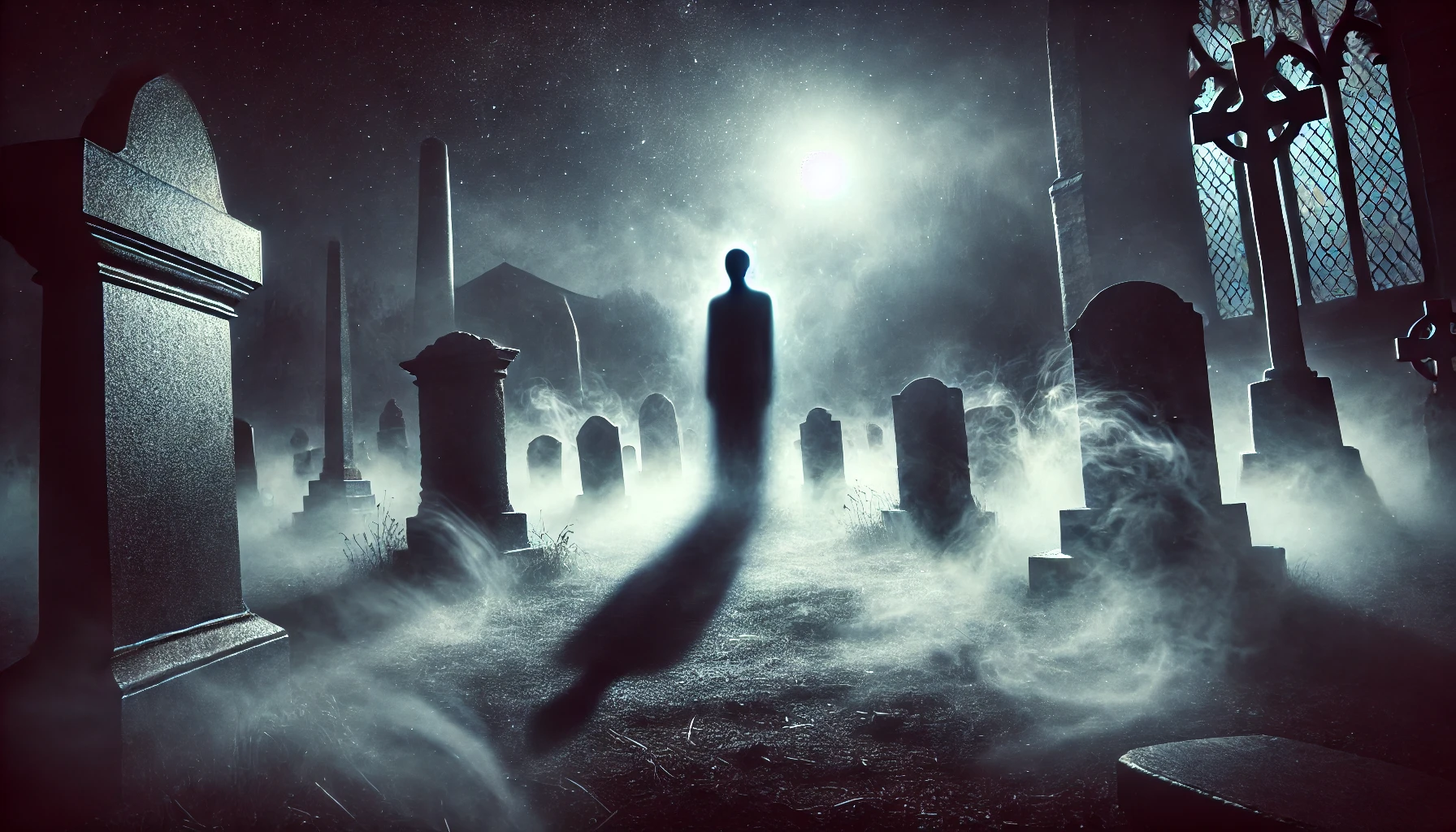
Not everyone is convinced that shadow people represent supernatural beings. Scientists and skeptics point out that human perception is easily fooled, especially in low light and under stress, and several well-documented psychological and physiological phenomena could explain why people see shadowy figures.
Optical Illusions and Misperceptions
The most straightforward explanation is that many sightings are simply tricks of the eye and brain. Humans tend to perceive patterns and faces even in random stimuli — a phenomenon called pareidolia. In a dark environment, or when you’re walking alone at night full of anxiety, a fleeting shape or a play of headlights on a wall can easily be misread as a person for a split second. Peripheral vision is adept at detecting movement but not detail, so a harmless shadow from a passing car or a fluttering curtain might appear to be a figure lurking until you look straight at it. The brain’s survival instinct errs on the side of seeing potential threats — better to see a phantom and be wrong than to miss a real one — so fear and expectation can prime us to see something that isn’t there.
Sleep Paralysis and Nightmares
One of the most common scientific explanations ties the sightings to sleep paralysis, a well-documented REM-sleep phenomenon. Sleep paralysis occurs when a person partially wakes while still in the REM stage: the body remains paralyzed (as it is during dreaming, to stop us from acting out our dreams), but the mind becomes aware, unable to move, and often hallucinates dreamlike images in the waking world. A classic feature across cultures is the sensation of a malevolent presence in the room and a visual hallucination of a dark figure approaching or sitting on the chest — a match for many shadow-being reports. The folkloric “Old Hag” on the chest is now understood as exactly this. A 2015 documentary, The Nightmare, explored the link, proposing that shadow people, alien abductions, and other bedroom encounters can often be attributed to sleep paralysis. This view posits no external entity at all — the mind, caught between sleep and wakefulness, conjures a shadow to match the feeling of terror. It also explains why forcing yourself awake, or invoking a religious name, seems to “banish” the figure: the episode is simply ending.
Hallucinations from Drug Use and Exhaustion
There is a striking connection between certain drug experiences and the appearance of shadow people. Chronic methamphetamine users, for example, commonly report seeing shadowy beings after long periods without sleep — so much so that “shadow people” are a recognized hallucination in meth addiction, often carrying a paranoid sense of being followed or watched. As one account put it, you don’t see shadow dogs or shadow birds — you see shadow people, standing in doorways and walking behind you. Users of deliriant substances such as datura and high-dose diphenhydramine (Benadryl) frequently report the same, and even extreme fatigue alone can trigger waking dreams featuring shadowy figures. The common thread is that altered brain states — from drugs, lack of sleep, or fever — can generate lifelike apparitions. This is reported here to explain the phenomenon, not to endorse any substance use; the effects described are signs of a brain under serious strain.
Mental Health and Neurological Conditions
Some sightings may be attributable to certain medical conditions. Psychotic disorders, and severe episodes of some mood disorders, can cause visual hallucinations, including figures or presences that aren’t real — often fleeting and seen in peripheral vision, much like typical shadow people. Neurological events such as migraines or seizure activity in the brain’s visual centers can also produce apparitional hallucinations, and exposure to carbon monoxide can affect perception as well. The idea of shadow people can also be suggestible: read enough frightening accounts and you may be primed to interpret any odd flicker of shadow as one. From this perspective, shadow people are internal rather than external — the product of our own minds under specific circumstances. Yet for those who have had truly clear, unnerving encounters, such explanations can feel incomplete, and the debate continues.
Investigating Shadow People
Regardless of which explanation one leans toward, the allure of the mystery has led many to try to investigate and capture evidence of these elusive entities. In the paranormal community, shadow people are often treated much like ghosts, and investigators visit homes, hospitals, and other locations reputed to have shadow-figure activity, armed with an array of gadgets and methods.
Modern ghost hunters employ electronic devices to detect anomalies: EMF meters (which register spikes in electromagnetic fields), digital thermometers (to find unexplained cold spots), and night-vision video cameras to scan dark rooms. Many set up static or infrared cameras in hallways and bedrooms where figures have been reported, hoping to catch a fleeting dark silhouette on film. Such footage, when it surfaces, is intriguing but almost always met with skepticism — could it be a team member’s own shadow, or a trick of the light?
Investigators also use audio recorders to attempt to capture Electronic Voice Phenomena (EVP), place motion sensors and trigger objects in empty rooms, and conduct vigils in complete darkness, watching with their own eyes since so many witnesses see shadow people unaided. Some try flash photography, hoping a camera will freeze a silhouette that wasn’t visible at the time; others experiment with creative methods like fine mist or fog, on the theory that a shadow might take visible form if given a medium. The efficacy of these techniques is unproven, but the experimentation shows how eager people are for hard evidence.
It must be said that mainstream science does not endorse ghost hunting as valid research. No rigorous study has confirmed the existence of ghosts or shadow people; EMF meters pick up ordinary interference, and visual “evidence” is prone to misinterpretation. Photographs of shadow people typically show a vague dark blur that believers find convincing and skeptics dismiss. So far, the evidence remains tantalizing but inconclusive — though, as enthusiasts are quick to point out, absence of proof is not proof of absence. As long as people continue to witness unexplained shadow figures, investigators will keep refining their techniques in hope of a breakthrough.
The Enduring Enigma
Every mystery begins in the dark — and for now, the shadow people remain one of our most compelling.
Whether regarded as supernatural entities or tricks of the mind, shadow people occupy a unique and disquieting place in our collective imagination. There is something fundamentally primal about the fear of a dark unknown figure lurking just beyond sight — it taps into age-old anxieties of the dark, where predators or spirits might hide. The phenomenon’s persistence across cultures and eras suggests that something is happening, even if that “something” differs from case to case. A person in one country might call it a jinn, another a ghost, another a hallucination — yet the experiences share the uneasy feeling of being watched by a shadow that shouldn’t be there.
What is especially compelling is how shadow people straddle the line between the physical and the phantasmal. Unlike many paranormal phenomena that feel purely otherworldly, a shadow person looks almost solid — as though you could touch that silhouette, though you’d find nothing but air — and yet it dissolves like a mirage. This in-between nature draws in both ghost hunters and neuroscientists, both shamans and psychologists. Each may hold a piece of the puzzle, but no single perspective has solved it in full. In a way, the phenomenon is a mirror: what you believe about it reflects what you believe about the world. Lean toward the paranormal, and you may see evidence of spirits or interdimensional beings; lean toward skepticism, and you see the marvelous workings of the human brain under unusual conditions.
Until the day comes that we have a definitive answer, shadow people will continue to fascinate and frighten — stalking the pages of horror stories, the discussions of paranormal podcasts, and the bedrooms of people who wake at 3 a.m. to find they cannot move except for their eyes, while in the dark corner a darker shape stands watching. Are they truly there, or is it all in our heads? The debate goes on. But the next time you catch a flicker of motion in your peripheral vision and turn to see nothing but shadows, you might pause — just for a moment — and wonder if something watched you back.
Come Face the Dark With Us
Shadow people, restless spirits, and centuries of eerie history await after sundown. Join Destination Ghost Tours and explore the haunted corners of Savannah where the veil feels thinnest.
6 comments
I don’t ever see anything but they do stuff to me and in the room.I suppose their spirits. Rhondamaddox1954@gmail.com
The comparison between a featureless shadow and the Hat Man with a recognizable brim is a striking detail. I work on ImageToBeads, which turns pictures into bead patterns, and that simple silhouette would make a fun small Halloween motif without needing much detail. In the accounts you have collected, is the hat shape the detail people remember most consistently, or is it the figure’s height?
I found this post on shadow people absolutely fascinating! I’ve always been intrigued by the paranormal, and the different theories about what shadow people could be really got me thinking. The personal experiences you shared were spine-chilling! It’s interesting to consider whether they are just figments of our imagination or something more profound. Can’t wait to read more about this topic!