
Night rises slow over the bluff. Cobblestones keep the day’s heat, lanterns sharpen the seams of brick, and the Savannah River breathes brine and tar. Doors that look like doors to nothing open into stairwells. A coded knock sounds once, then twice, then a question, and glass whispers against glass. Welcome to Prohibition Savannah — a city that learned to move quiet, to listen, and to know the difference between what was said in a courtroom and what was said two minutes before a raid.
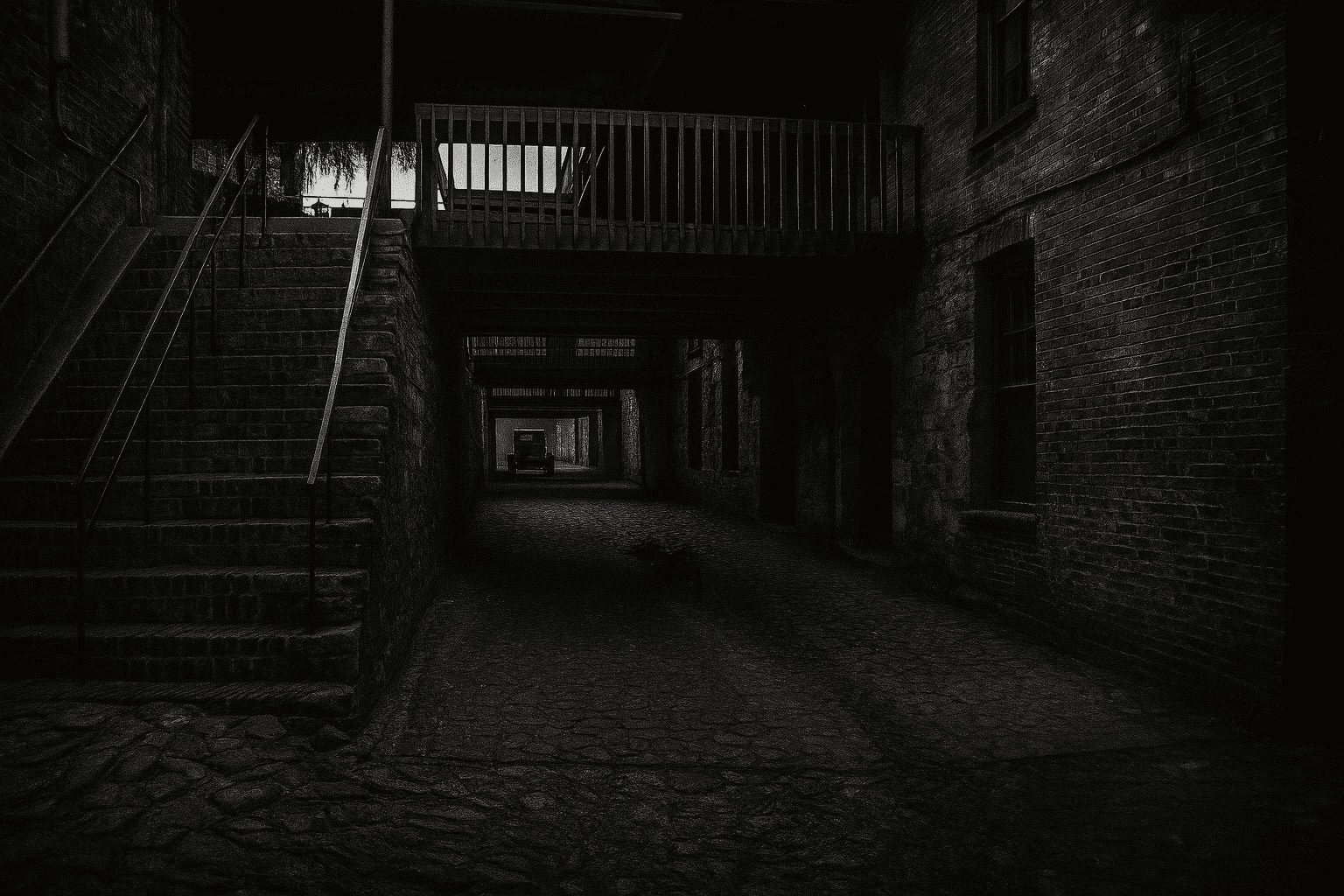
This is a story of river routes and marsh paths, of false manifests and glove-box cash, of soft-drink parlors that did not serve soft drinks once the door was shut. It’s also a story of households — musicians, dressmakers, chauffeurs, and the families tethered to a black-market economy. We’ll follow the arc from the 18th Amendment’s shock to coordinated smuggling, from early locker clubs to rooms with peepholes, from grand-jury indictments to the funerals that drew whole neighborhoods.
Savannah at the Dawn of Prohibition
Before 1920, Savannah was a port first — a city of cotton factors and stevedores, of ships riding the river on a timetable of tides. The waterfront was a working anatomy of wharves and warehouses, hoists swinging bales, crews moving to a rhythm of cranes and calluses. Nightlife played out across taverns and hotel bars that watched the ships come in, then emptied after midnight when cooks and porters finally had a moment to themselves.
When the 18th Amendment and the Volstead Act arrived, law collided with custom. Georgia had already seen rounds of state-level prohibition, and Savannah had watched each wave break against the granite of a port city that lived on traffic and exchange. The new federal reach put agents on trains to the coast and turned warehouse alleys and hotel corridors into contested ground. Some restaurants went respectable in print, then quietly moved their liquor from the front bar to the back room. The adaptation was quick, clever, and often brazen.
Rum-Running and the River
The map tells you why this coast lent itself to smuggling. The river’s steep drop from Bay Street down to Factor’s Walk created layered ways in and out; the barrier islands broke the Atlantic into sounds and creeks; and salt marshes threaded the mainland with routes that bent and vanished with the tide. In fog or on a new moon, a fast boat could nose into a creek mouth and be hidden by spartina and shadow before its engine even cooled.
Large mother ships idled two or three miles offshore, loaded with whisky, rum, and French cordials. Under cover of night, smaller boats ran the goods inshore, and from the landing sites the cargo moved inland by truck or car — sometimes in false-bottomed crates, sometimes in steel tanks dressed up to look like oil or milk. A driver who knew the patrol’s habits could make Bay Street at an hour when the market men were not yet awake. Warehouses near River Street handled bundles that never made the official ledger, and courtyards, carriage houses, and upstairs rooms over groceries doubled as waystations. The waterfront’s own architecture helped: the hoists and chutes that once carried cotton down to the river now carried other cargo in the other direction. What changed was not the city’s bones — it was the timetable and the password.
Methods in Motion
- False manifests and shifting cargo: papers that told one story while the cargo told another — boxes labeled for flour or spare parts, tanks dressed as heating oil.
- Hidden compartments: shop-built cubbies under floorboards, cavities behind wall paneling, steel built into car frames so neatly a traffic stop proved nothing.
- Night transfers: a rendezvous offshore, then smaller boats taking the load to a private dock or a lonely bend of marsh with a rutted track nearby.
- Staggered deliveries: no single room ever held too much. A warehouse might host a dozen crates at dusk and be a model of respectability by dawn.
- Lookouts and signals: a lamp in a second-story window, a hat pulled a certain way, a whistle that meant scatter. Streetcraft mattered as much as seamanship.
Speakeasies, Secret Clubs, and Back Rooms
Savannah’s speakeasies wore several faces. Some were honest restaurants by day and brazen by evening, with a man at the door and a view of the hallway in a small mirrored panel. Others were hotel rooms with more chairs than beds, guarded by a woman who knew every regular by his hat. Still others were rooms over a shop, reached by a back stair and a second door with a tiny square of sliding tin. The furniture was practical — chairs easy to move when the band needed space or when a raid was rumored. Some were genuine “locker clubs,” keeping members’ bottles on site to skirt enforcement; others traded by the glass with no pretense at all. The code was direct: you came with a name, you left with a story, and you kept the story to yourself.
Music was the mixtape of the era. A cornet sounded from a far room while someone joked in a low voice about “the weather” — which meant patrol patterns that night. The city’s Black musicians gave the scene its swing, carrying the rhythms of the 1920s into white rooms and mixed rooms alike, smoothing class edges for three hours at a time. Clothes were part of the chemistry too: linen for the heat, silk in defiance of it, feathers and beaded handbags that caught the light when a door opened. Classes mixed because the corridor was narrow and the door was shut.
Organization, Influence, and the Law
Any port smuggling economy needs a hierarchy, and Savannah’s was a web connecting ships to boats, boats to trucks, and trucks to rooms with doors that locked twice. The top tier owned vessels or controlled access to them. Below them were shore crews and marsh pilots who read the tide like a clock, then middlemen who handled cash, hired drivers, and paid for information. At the retail end stood restaurateurs, hotel staff, warehouse foremen, and householders with a cellar that could hold a few extra crates. Money moved along two tracks: the traditional cash economy of the waterfront, and influence — a pattern of gifts and favors that rippled through the city, appearing wherever a bribe was efficient. To a wayward deputy, a slow-typing clerk, or the man who watched a doorway and looked away for two minutes.
The federal presence grew as the early 1920s wore on. Agents took rooms in reputable hotels, asked few questions, and spent their mornings walking the riverfront and counting cars. Corruption sat like a fog — thicker some nights, thinner others. There were raids that came to nothing because the room had been scrubbed clean an hour earlier, and raids that turned up a ledger, a concealed shelf of bottles, or a room that smelled of gin long after every glass had been rinsed. Behind the headlines were small decisions that mattered: a judge who set high bonds sent a signal; a federal attorney who pursued conspiracy over simple possession indicted a network instead of a man. The city learned that enforcement was a rhythm, not a constant — and that the river kept its own time.
The 1923 Shock: Savannah’s Great Prohibition Case
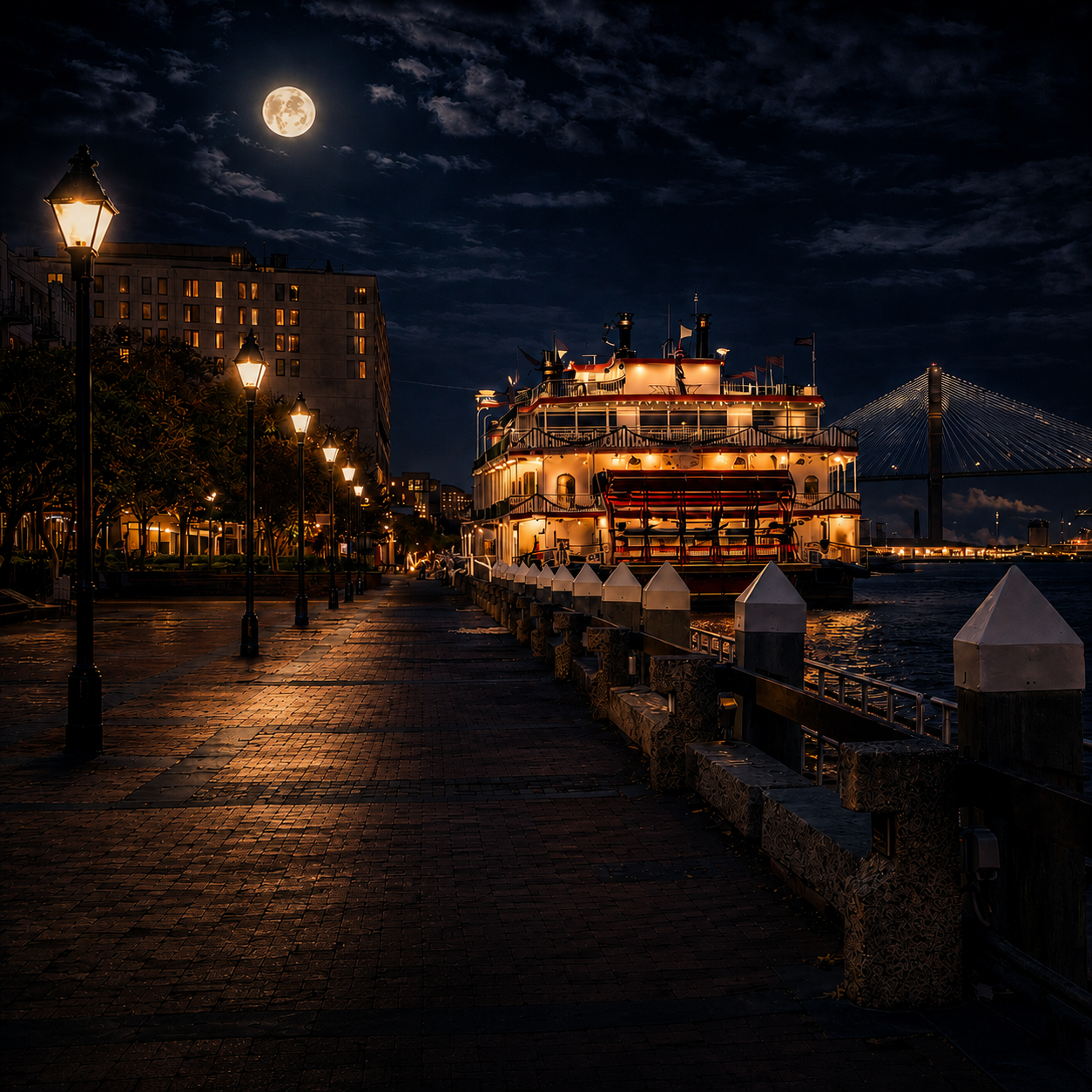
The morning of August 16, 1923 opened like any other: gulls tilting over the river, a tug pushing low through the current, shop doors hauled up along Bay Street. Then men with quiet shoes began to move. In the days beforehand, federal agents had taken rooms at the DeSoto Hotel, where the last warrants were typed and duplicated out of sight — a single writing room meaning fewer leaks, a small detail with large consequences. By noon, Savannah had a new vocabulary for conspiracy, seizure, and bond.
Arrests came in clusters. Federal men stepped into stores and offices, upstairs rooms and lobby corners. Businessmen, boatmen, storekeepers, a banker, a former police sergeant, and several household names faced conspiracies that had been building for months. Cars and boats were seized, bonds posted, and federal courtrooms filled. The story wrote itself across front pages in Georgia and far beyond, because the scale was national and the organization robust — not a barroom clique but a port-scale lattice touching docks, warehouses, businesses, and back rooms.
The legal arc that followed included guilty pleas, fines that sounded like lottery numbers, and appeals that reached the Fifth Circuit, where printed opinions fixed Savannah names to pages that still bear the city’s imprint. Behind every seized car was a driver, a mechanic, and a family whose supper table went silent for a night or two. For a city that lives close to its legends, it’s worth remembering how prosaic the paperwork can be: the dockets repeat names, the bonds repeat amounts, and the clerks’ notes repeat addresses you can still find on a map. By the middle of the decade, Savannah’s smuggling case file read like a city directory — and still, the river did not stop moving. Nightlife adjusted and found new doors; enforcement adapted, learning the waterfront the way the waterfront had long learned the tide.
Everyday Accomplices, Everyday Costs
The glamour sits with the speedboats and the hotel rooms full of strangers, but the weight of Prohibition fell on ordinary lives. A woman who kept books for a shop kept a second ledger in pencil. A barber overheard a name and a time and chose silence, because rent was due. A young couple with a new baby took five crates into their cellar and collected ten dollars in quiet cash that made all the difference that week. A driver found himself on the wrong street at the wrong hour and learned to memorize faces faster than directions.
Women occupied both the spotlight and the margins — several ran rooms that were safe and profitable until they were not, while others moved as couriers because they could cross a lobby with a hatbox and draw no attention at all. Musicians, many of them Black Savannahians whose artistry carried the era, learned to recognize the feel of a room that could tip into trouble. Genealogy of the period tells the story plainly: occupations that don’t match the cash on hand, abrupt address changes, marriages that tie one neighborhood to another along a business route. City directories show grocers, mechanics, clerks, porters, and chauffeurs; the court docket shows how some of those ordinary lines bent — and, sometimes, broke.
Architecture of Secrecy: Walking the Past Today

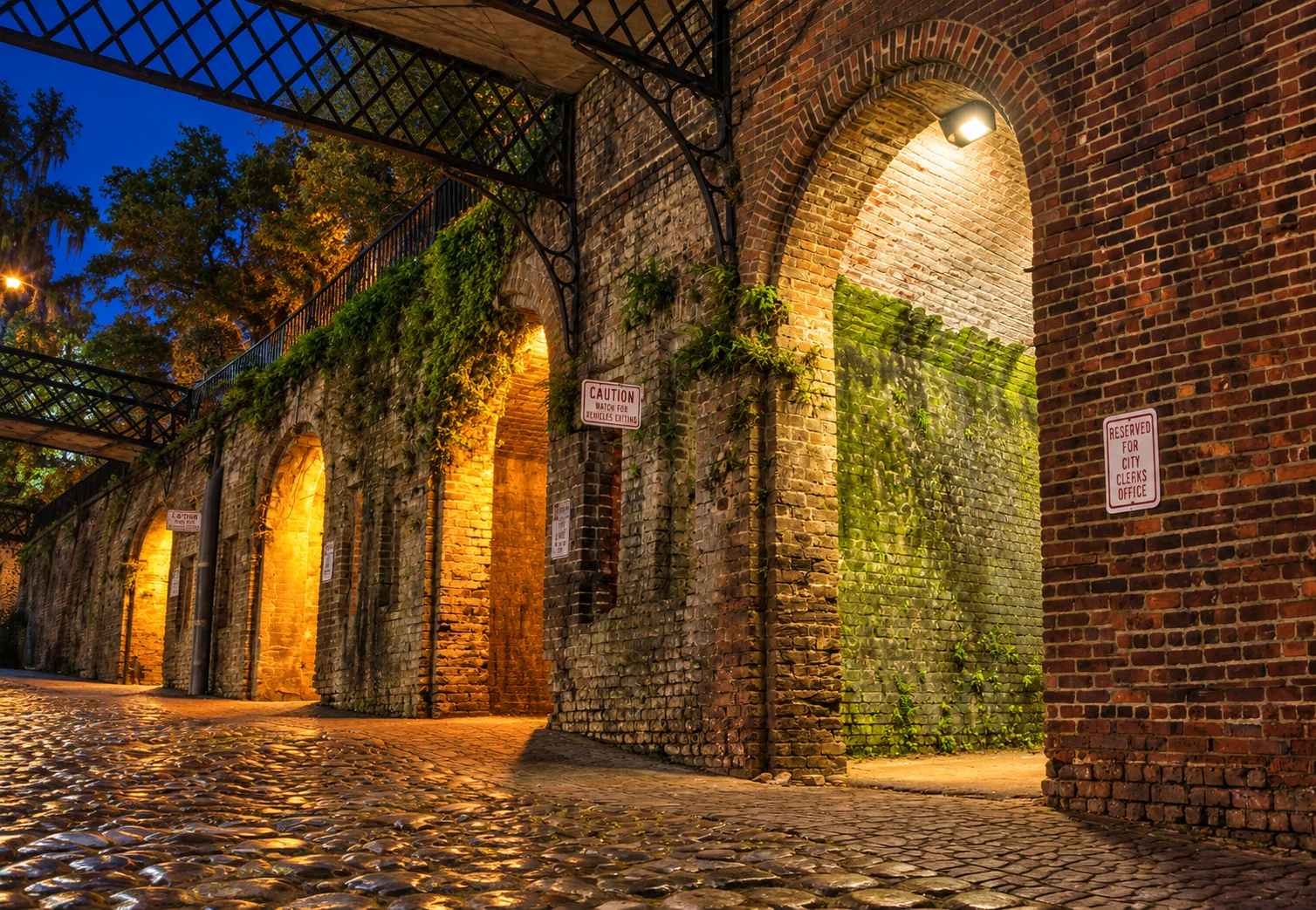
A visitor walking today’s Historic District can still read the infrastructure of the 1920s. The riverfront warehouses and upper-range walkways have doors at two elevations, ideal for moving cargo without crossing a busy street. Courtyards and carriage alleys hide in plain sight near kitchens and back stairs. Hotel corridors run long and carpeted, past rooms whose locks did not always stay true. Shop basements stayed cool enough for storage and close enough to the street for a quick move if a rumor proved true.
Some visitors ask about tunnels. The city does possess vaults beneath the bluff and bricked-over arches along Factor’s Walk — including the Cluskey Embankment Stores east of City Hall — but their original functions were practical: 19th-century storage and retaining walls, the layered logistics of a working port. In the Prohibition years, the city did not need fantasy architecture to keep its secrets. It needed rooms with two doors, a stair you could reach from two streets, and a watchman with good eyes. A good guide teaches you to see what’s already there — the worn sill, the patched hinge, the way a second-story window commands two streets — pairing atmosphere with records so the past you hear holds up to daylight.
Repeal, Aftermath, and Memory
Savannah was an honest port and an expert smuggler, a city of law and a city of loopholes, a place of Sunday hats and midnight passwords.
December 5, 1933 arrived with the sound of corks as much as cheers. In Savannah, repeal was a practical shift as much as a moral argument settled by vote. Public life righted itself in small ways first: a legal drink at a bar with nothing to hide, a band that played without glancing toward the door, a ledger line that said “wholesale wine” without a wink. The hidden rooms didn’t all vanish — some folded into the daylight as legal lounges with new paint and new mirrors; some shut for good with no forwarding address. The branches that had taken root in smuggling didn’t all wither with the change in law; some men went back to hauling tools and groceries with relief, while others, used to the margins, drifted to other trades that kept to the edges.
In Savannah’s cultural memory, Prohibition left a palimpsest — a layer of story beneath the visible city. Locals still point out half-remembered doors and inlets; musicians tell younger players about rooms that made a trumpet sound like three; families hold quiet stories about a grandfather’s car or a great-aunt’s ledger. The Historic District wears these memories lightly, but they’re there for anyone who knows where to look. To walk these blocks with care is to understand how a port thinks, how a neighborhood adapts, and how a city remembers: brick holding warmth after sundown, lantern light writing stripes on cobble, and the river keeping its patient rhythm through it all.
Walk Savannah’s Hidden History
Our guides pair atmosphere with the records — the directories, dockets, and papers of record — to place you inside Savannah’s Prohibition past. Hear the water, and feel the hush before a knock, with Destination Ghost Tours.