
Savannah is a city rich with haunted history and true-crime lore. One tragic tale that still echoes through its moss-draped oaks is the murder of Delia Green, a 14-year-old girl killed on Christmas Eve, 1900.
This harrowing story — featured on Destination Ghost Tours’ Savannah Secrets True Crime Tour — blends immersive storytelling with journalistic detail. More than a century later, Delia’s fate and its aftermath continue to captivate, inspiring mournful folk songs like “Delia’s Gone” and adding a chilling chapter to Savannah’s historic murders.
A Christmas Eve in Yamacraw — Setting the Scene (1900)

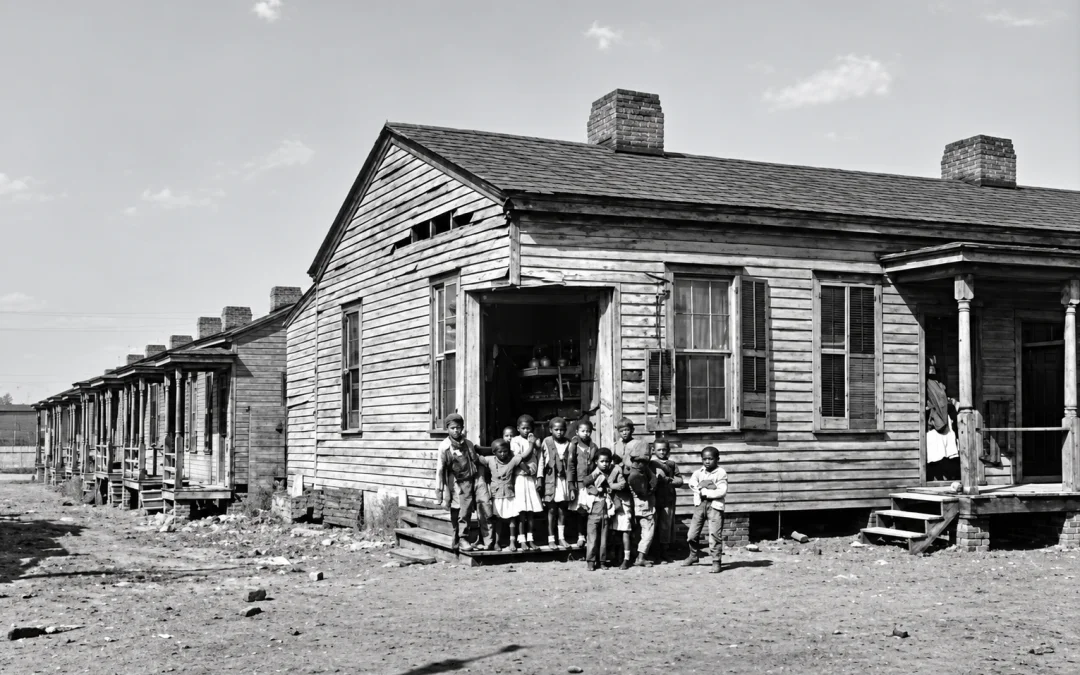
On the cold Christmas Eve of 1900, the Yamacraw neighborhood in west Savannah buzzed with holiday festivity. Yamacraw — a working-class African-American district near the railroad yards — was alive with music and laughter that night. In a modest home on Harrison Street, 14-year-old Delia Green was attending a Christmas party hosted by her employers, Willie and Emma West. Delia worked for the West family as a laundress (a “scrub girl”), and she had been invited to join the celebration. Lanterns lit the humble rooms, the smell of home-cooked food filled the air, and guests mingled. Among them was Moses “Cooney” Houston, a teenage boy around Delia’s age who had been courting her for a few months.
Delia was known as a polite, lively girl — “a 14-year-old child who died for the stupidest of reasons,” as one later writer lamented. That night, though, tension ran between Delia and Cooney. Houston, only about 15 himself, arrived at the party already drinking and increasingly possessive. He began teasing Delia, calling her his “little wife” and boasting to the others that she belonged to him — publicly claiming her as his own. Delia was offended and embarrassed. She defended herself firmly, denying that she was his common-law wife and insisting she was no one’s property. The festive mood curdled as the guests looked on uneasily.
A Deadly Quarrel — The Murder of Delia Green
Before long, the argument erupted in full view of the party. Angry at being publicly claimed, Delia cursed at Cooney — calling him “a son of a bitch,” an insult that carried far more weight in 1900 than it does today. Houston’s pride was wounded. As Willie West would later testify, Delia’s sharp words and rejection enraged him beyond reason. West stepped in and ordered Cooney to leave the house to cool off. Humiliated and furious, Houston reached for a hidden revolver.
Without warning, he turned at the doorway and fired a single shot at Delia. The crack of the pistol silenced the Christmas revelry in an instant. The bullet struck Delia in the lower abdomen, and she collapsed as screams filled the room. In moments, the warm, joyful home had become a scene of chaos. The 14-year-old girl had been gravely wounded, and the celebration had descended into horror.
Houston fled into the night the instant he fired — but he didn’t get far. Willie West bolted after him and caught the teenager within a block or two. By the accounts given later, the young shooter showed no remorse; West and other bystanders disarmed him and handed him over to a city patrolman named Williams. According to the officer’s testimony, Houston immediately admitted shooting Delia because she had insulted him, and even said he would do it again. It was a chilling statement from a boy barely in his teens.
Back at the West home, Delia was carried to her mother’s house on Ann Street and placed under a doctor’s care. She clung to life for a few hours, but the wound was fatal. Around 3:00 a.m. on Christmas morning, 1900, Delia Green died. What should have been a day of joy had become a day of mourning — a 14-year-old’s life cut short over a petty quarrel, and a crime Savannah would remember for generations.
Shock and Aftermath — Witness Accounts and News Reports

News of the senseless killing spread quickly. The fact that both victim and killer were so young — a child killed by a child — made the crime all the more shocking. Local newspapers seized on the story, and their reports painted the murder as utterly unprovoked. Willie and Emma West, the party’s hosts, gave statements asserting that apart from Delia’s “contemptuous words,” the attack came without cause and was “as cowardly and brutal as it was unprovoked.” In other words, nothing Delia said had justified the violence that followed.
In the coroner’s inquest and preliminary hearings, witnesses described how Houston had been courting Delia for months and had grown possessive of her. Delia, for her part, liked Moses but resisted his attempts to control her. One Savannah Morning News article in early 1901 recounted that she “had been accepting for some months Houston’s ardent attentions, but when he pressed her to admit a preference for him above all others, she evaded the point.” His jealousy and wounded pride, inflamed by drink, boiled over — and, the paper reported, “when he could bear her taunts no longer, he drew a revolver and fired.”
A grand jury formally indicted Moses “Cooney” Houston for murder in February 1901, only weeks after Delia’s death. Savannah newspapers followed the case closely, and by March the headlines announced that Houston would face a jury for the killing of Delia Green. Articles reiterated that Delia’s only “crime” had been to reject his drunken claim over her. Such a motive — a wounded male ego — was sadly familiar in turn-of-the-century crime pages, but the tender ages of those involved made the case stand out. All of Savannah waited to see whether a jury would show mercy to a teenage killer.
The Trial of Moses Houston — Justice in the Spring of 1901
The trial began in Chatham County Superior Court in mid-March 1901. Spectators packed the courthouse for a glimpse of the boy at the center of the tragedy. Houston played up his youth before the jury — he even showed up wearing short pants, the kind a young schoolboy might wear, to remind everyone how young he was. Georgia had no separate juvenile justice system at the time, so despite being only about 15, he was tried as an adult for murder.
The prosecution laid out a straightforward case: Delia Green’s death was an intentional act of vengeance for an insult. Witness after witness — including Willie and Emma West — testified that Houston had quarreled with Delia, been thrown out of the party, and then retaliated by shooting her. Houston’s defense tried to muddy the waters. When the young defendant took the stand, he spun a very different tale from his confession on the night of the murder. Now he claimed the shooting was an accident: Willie West, he said, had sent him to fetch a pistol from a repair shop; he’d brought it back and set it on a table under a napkin; and later, he and another boy named Eddie Cohen had scuffled over the revolver in fun when it accidentally discharged. He insisted he hadn’t even realized Delia was hit until minutes later, and that he had run for a doctor.
The story fell apart. Eddie Cohen testified that he hadn’t even been present at the time of the shooting, and never struggled with Houston over the gun. Another supposed witness was shown not to have been in the house when the shot was fired. No one in the courtroom believed Cooney Houston’s account. The prosecution, in a brief but forceful closing, urged the jury to see the murder as brutal, cowardly, and unprovoked, and to return a verdict of guilty.

It did not take the jury long to decide. They returned a verdict of guilty of murder — but with a recommendation of mercy, essentially an appeal for a life sentence rather than execution, typically used when a jury felt an offender’s youth warranted leniency. Through it all, the teenage Houston remained uncannily calm; one newspaper wrote that he sat through the trial “without turning a hair.” He then stood to face Judge Paul F. Seabrook for sentencing.
Judge Seabrook noted the jury’s plea for mercy and pronounced the only sentence the law allowed in such a case: life imprisonment. What happened next stunned the courtroom. Instead of breaking down, the young convict simply nodded and said, “Thank you, sir,” to the judge. The report the next morning marveled that Houston “never flinched” and “pranced gaily” out of the courtroom after receiving his life term. To observers, it was as if the gravity of what he had done scarcely registered. His mother, by contrast, broke down sobbing in court. It was a heartbreaking scene — but for the community, there was a sense that justice, however imperfect, had been served.
Aftermath — The Fate of Moses Houston and Delia’s Resting Place
Moses “Cooney” Houston began his life sentence in the Georgia penitentiary system. In 1901, a life term truly meant for life, barring a pardon or parole. Behind bars, he was reportedly a model prisoner, and as the years passed, calls for clemency grew, citing his youth at the time of the crime. In October 1913, after Houston had served about twelve and a half years, Governor John M. Slaton granted him a parole. Released at around 28, Houston soon left Savannah — perhaps because of the infamy of his name — and moved to New York City to start anew. Little is recorded of his later years; by most accounts he continued to have trouble with the law. Moses “Cooney” Houston died in New York in 1927, at around 41.
And Delia? She was laid to rest in Savannah’s Laurel Grove Cemetery South, the historic burial ground for the city’s African-American community. Tragically, her grave went unmarked — a common fate for Black victims of that era, especially a poor girl from a grieving family of modest means. For decades her resting place was known only to her loved ones. Not until the 21st century was a memorial headstone placed to honor her. Today a simple marker recalls Delia Green as a “Blues Muse,” acknowledging the ballads her death inspired — a belated tribute to a 14-year-old girl whose name would echo far beyond Savannah.
Cultural Legacy — The Ballad of “Delia’s Gone”
One reason the murder of Delia Green still lives in popular memory is that it gave rise to one of America’s most famous murder ballads. In the early 20th century, songwriters — especially in the African-American oral tradition — began composing mournful verses about Delia’s end. These folk songs circulated through the South, keeping the story alive in music even as the real people faded into history. Folklorists have documented at least two major versions, both of which became staples of the folk and blues repertoire.
One is usually known simply as “Delia.” The Georgia bluesman Blind Willie McTell recorded a haunting version, lamenting the loss of Delia and the rough company she kept. A distinct version, which gained fame as “Delia’s Gone,” is often credited to the Bahamian folksinger Blake Alphonso “Blind Blake” Higgs; his take was sung from the killer’s point of view, with the chilling refrain “Delia’s gone, one more round, Delia’s gone.” Folklorists believe sailors carried the song from Savannah to the Bahamas, where Higgs learned and recorded it before it made its way back to the States.
Through the folk revival of the 1950s and ’60s, the ballad was rediscovered. Pete Seeger and others sang “Delia’s Gone,” and a young Bob Dylan recorded “Delia” early in his career. The song entered country music too, with Johnny Cash famously performing his own version. Each retelling strayed further from the facts — the killer’s name sometimes changed, and ages and details were altered for dramatic effect. Cash’s 1990s version is far removed from the real, single-pistol-shot story. Yet despite these liberties, the songs ensured that Delia Green’s name would not be forgotten.
As the historian Sean Wilentz has observed, generations of folk and blues singers kept Delia’s memory alive, often unknowingly reshaping her tale into myth along the way. It was not until the late 20th century that researchers like Robert Winslow Gordon and John Garst traced the song back to its real-life origins in Savannah, uncovering the newspaper clippings and court records that confirmed Delia Green’s murder was not a folksong fantasy but a genuine tragedy.
A Haunting Legacy in Savannah’s History
More than 120 years later, the story of Delia Green still lingers over Savannah. The old Yamacraw site where she was shot is now tucked amid the modern city, unmarked to passersby — yet those who know the tale can almost imagine the flicker of lantern light and the sound of that fatal shot on a Christmas Eve long past. The case remains a touchstone in Savannah’s true-crime history, often recounted on ghost tours and true-crime walks. It captures the drama of youthful passion turned to tragedy, set against the backdrop of Savannah’s Gilded Age African-American community.
For visitors seeking Savannah’s darker history, Delia’s story is an especially poignant stop. Destination Ghost Tours’ Savannah Secrets True Crime Tour includes her tale among its most compelling cases. Her murder is a reminder that behind Savannah’s graceful mansions and cobblestone lanes lies a past riddled with real heartbreak — and that a single violent act can send ripples through time, inspiring songs, fueling lore, and ensuring that Savannah’s secrets are never truly laid to rest.
Hear Delia’s Story Where It Happened
The murder of Delia Green is one of the true-crime cases we explore after dark. Walk Savannah’s darker history with Destination Ghost Tours.
Book a Savannah Ghost Tour
Chris Allen is the founder of Destination Ghost Tours, a historian and storyteller with a lifelong fascination for the darker corners of history. He spends his time uncovering the true stories behind haunted legends, guiding guests through historic cities, and chasing down details that refuse to stay buried. When he is not working, he can usually be found with his partner Arissa, their dog Bear, and their two cats, Trouble and Covu, photographing old places, digging through archives, or disappearing into historical rabbit holes. He believes the best history is honest, atmospheric, and just unsettling enough to linger.