The History and Hauntings of the Marshall House
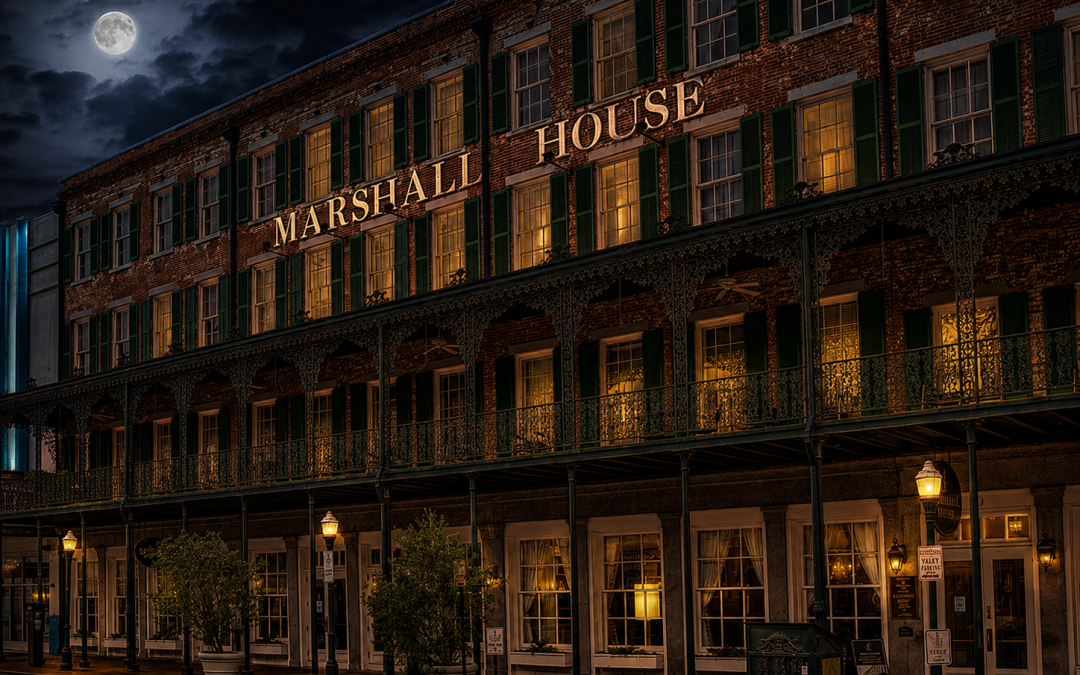
Walk down Broughton Street on a busy afternoon and you will pass it without a second look. Shop windows, tourists, a valet out front. Just another handsome old hotel. It is not. This one has been standing since before the Civil War, and it has buried more history under its floors than most of Savannah's cemeteries hold above ground.
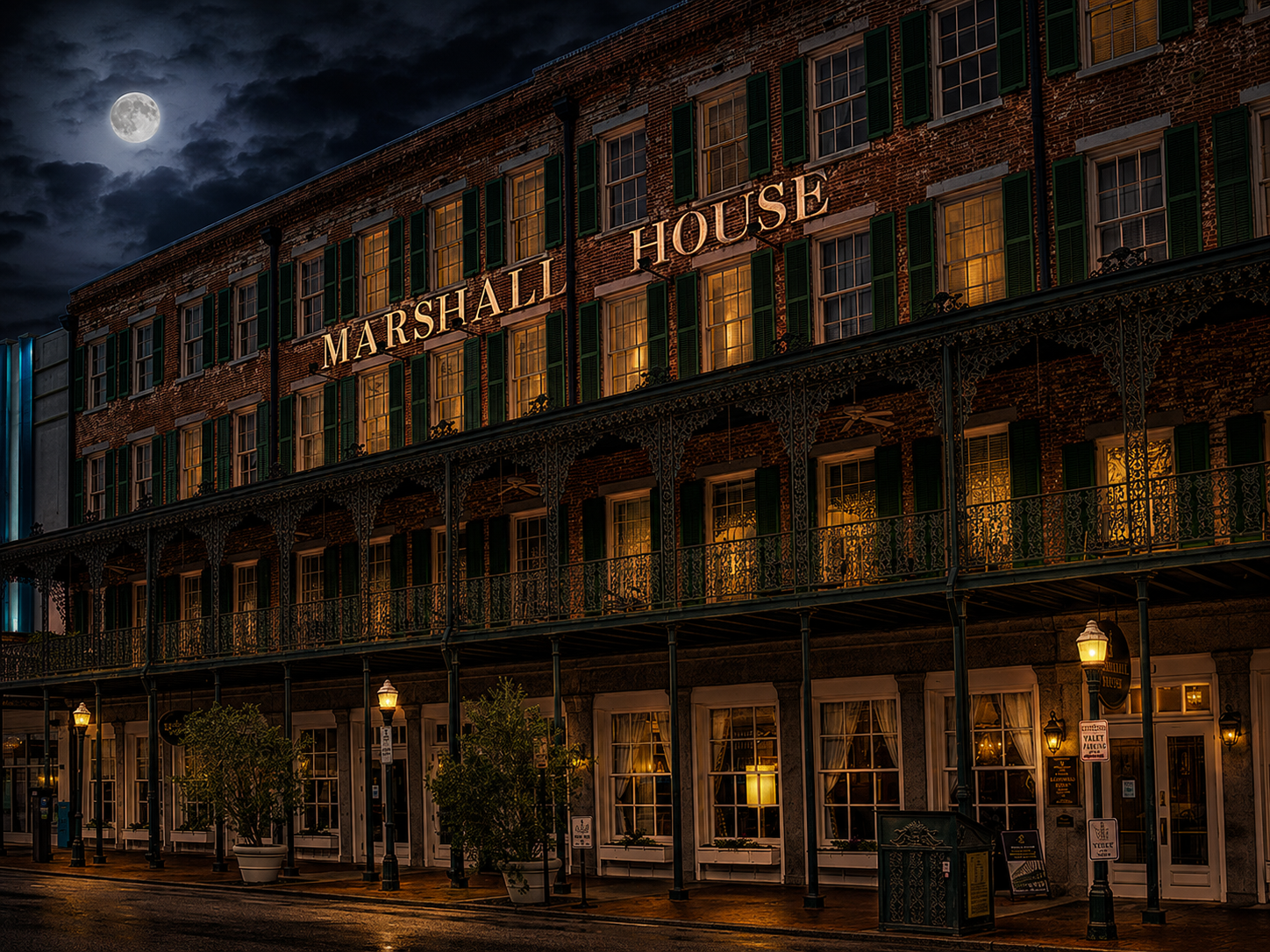
Savannah has always lived close to its dead. The squares you stroll through were laid over old burying grounds, and the whole city has a way of being lovely and a little grim at the same time. So it takes something to stand out here. The Marshall House manages it. People like to call it the home of Savannah's friendliest ghosts, and that phrase gets repeated so often it starts to sound cute. It stops sounding cute the moment you learn what actually happened inside these walls.
A House Built by a Woman of Means
Before there was a ghost, there was Mary Marshall, and she is worth knowing about in her own right. She was born in 1783. Her father, Gabriel Leaver, was a Savannah cabinetmaker, and when he died in 1795 he left property to a girl who was maybe twelve years old at the time. In that era, that inheritance should have quietly slipped into a husband's control and vanished from the record. It did not. Mary held onto it, then she grew it, buying and developing and leasing her way into the top rank of local investors. A woman running a real estate portfolio in early nineteenth century Georgia was close to unheard of. She did it anyway, for decades.
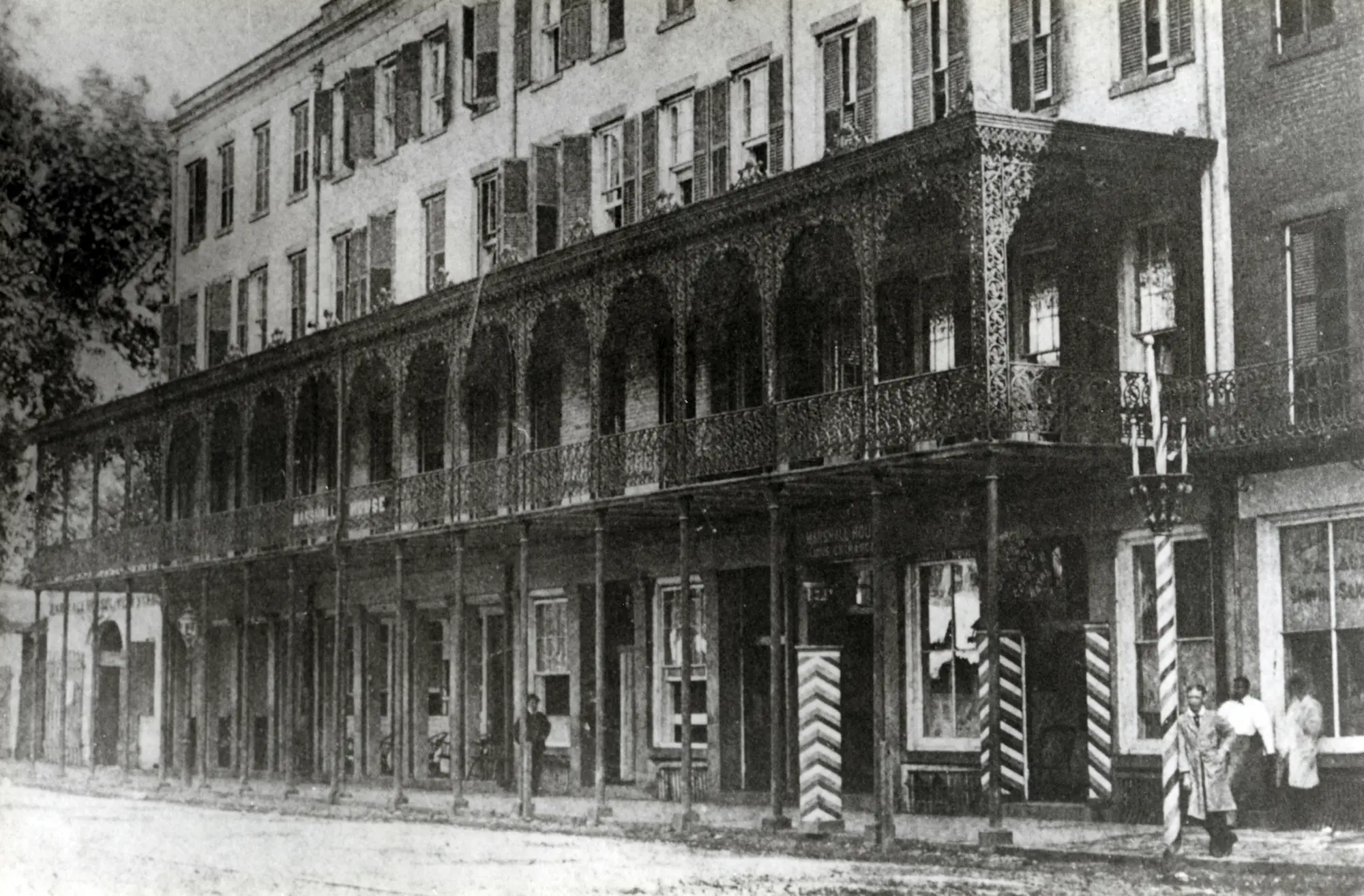
Savannah was booming when she made her biggest move. The railroads had arrived, the population was climbing fast, and Broughton Street was where all the money changed hands. A growing city needs beds. Mary understood that better than most, and in 1851 she opened the Marshall House, a four-story Greek Revival hotel she had built from scratch for exactly that purpose. This was not some grand old home dressed up as an inn. It went up as a hotel and nothing else, faced in Philadelphia pressed brick with granite piers at street level, floored in wide heart pine, a fireplace in every room.
She lived a long time, ninety-three years, born in the last year of the Revolution and gone by the tail end of Reconstruction. Her estate kept collecting rents on the hotel that carried her name all the way to 1914, long after she herself was in the ground. If you go in today, look behind the front desk. There is an oil portrait of her painted in 1830, when she was in her early forties, by an artist named Peter Laurens. The hotel got it from the estate of Jim Williams, the antiques dealer you may know from Midnight in the Garden of Good and Evil. Mary has been keeping an eye on the lobby for a very long time. Given the rest of this story, that feels about right.
The Veranda and the Grand Years
For its first stretch the Marshall House was just a good hotel in a city that wanted to feel important. In 1857 the proprietor, Ralph Meldrim, bolted on the feature that would define the building's face for generations: a long iron veranda, roughly a hundred and twenty feet of it, twelve feet high, running the front of the second floor. Guests would sit up there in the evening and watch Broughton Street do its thing below them. Carriages, merchants, the slow shuffle of a Southern city winding down for the night.
Business was good and the place kept growing. In 1880 it swallowed the Florida House next door and stretched further down the block. Over the years it closed and reopened more than once, got wired for electric lights, added hot and cold plumbing on every floor, and even swapped names for a while, going by the Geiger Hotel and later the Gilbert Hotel. What matters is that it survived. Buildings like this usually do not. Most nineteenth century hotels got knocked flat long ago, and this one is a rare holdout.
Here is the strange part about hotels, though. They gather up strangers under one roof and ask each of them to lie down and sleep, at their most defenseless, in the leftover air of everyone who slept there before them. Most hotels get away with it by forgetting. The Marshall House never really picked up that skill. You will understand why once we get to the middle of its life, which is where the pretty part ends.
When the House Became a Hospital
Savannah in the 1800s was gorgeous and it was dangerous. The city sits low on the coast, wrapped in tidal marsh, and every summer the heat brought sickness with it. Yellow fever was the one everybody feared. It yellowed the skin, it brought on black vomit, and it could kill you inside a few days. When it swept through, it did not take a handful of people. It took hundreds, and the epidemics that hit Savannah in the middle and later decades of the century emptied whole streets.
During those outbreaks the Marshall House opened up to the sick. The hotel's own history says so plainly: twice, during the yellow fever epidemics of the nineteenth century, the building was pressed into service as a hospital. Sit with that image for a second. A commercial hotel, built for traveling merchants, its guest rooms filling instead with fever patients, its hallways carrying the smell and the sound of people dying by the dozen. The house learned early what it was like to hold the dying. Think of it as practice. The real horror was still coming.
Sherman's Winter and the Union Hospital
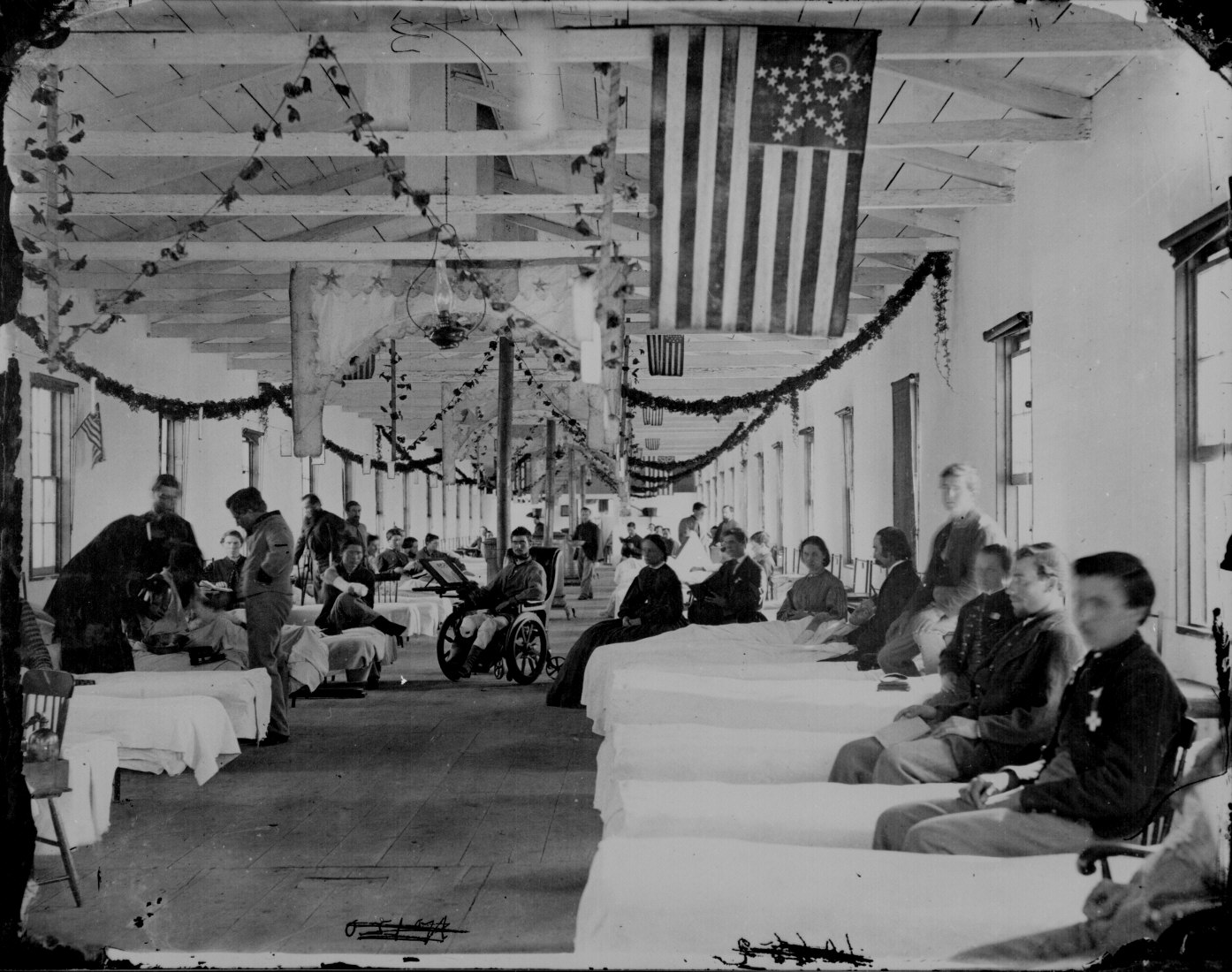
December 1864. General William Tecumseh Sherman finishes his March to the Sea and rolls into Savannah. The city got lucky, at least by the standards of that campaign. It was not burned. Sherman handed Savannah over to President Lincoln as a Christmas gift, in that famous telegram. But not burning a city is not the same as sparing it. The Union Army occupied Savannah through 1864 and into 1865, and an occupying army with a lot of wounded men needs somewhere to put them.
They took the Marshall House. The Union confiscated the hotel on Broughton Street and turned it into a hospital, and for the last months of the war those rooms held soldiers instead of guests. A lot of them were hurt past anything the medicine of the day could fix. This is the part that people sometimes assume is legend, so let me be clear: it is not. It is documented. The Marshall House was a war hospital, and a war hospital in the 1860s was a grim place to be.
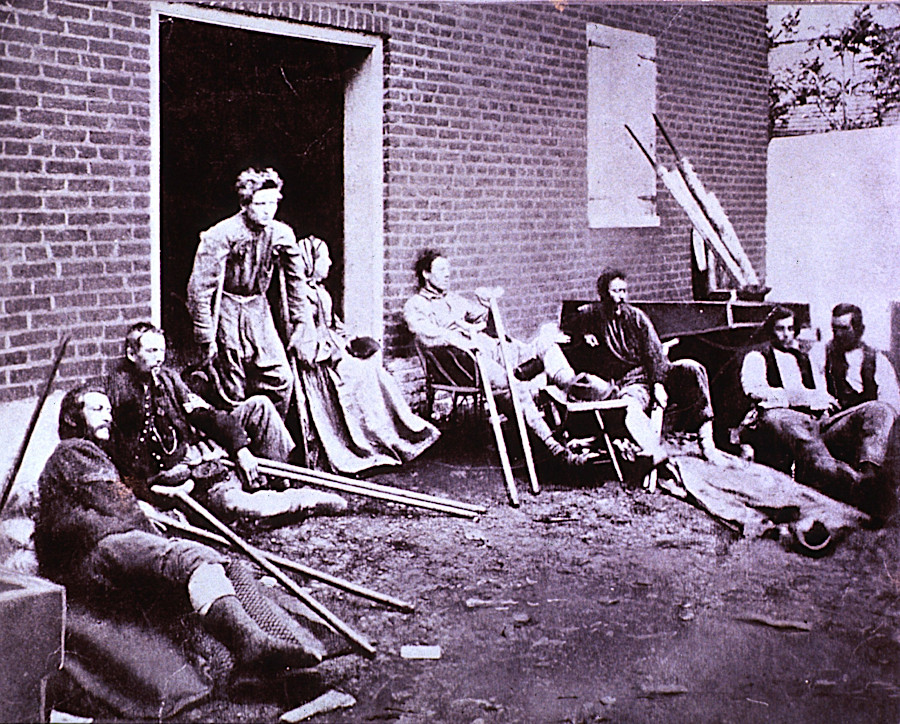
You have to understand what surgery meant back then. Germ theory was barely on anyone's radar. Anesthesia existed, but it was rough. The single most common operation of the entire war was amputation, and the reason is brutal and simple. A musket ball that hit bone did not leave a clean hole. It shattered the limb, and a shattered limb usually meant gangrene, and gangrene usually meant a slow death. So the surgeons cut. They took off arms and legs by the thousands over the course of the war, working fast, half asleep, working straight through the screaming. That work got done inside the Marshall House, on the same Broughton Street where people now buy postcards and pralines.
And the winter Sherman brought was a hard one. This is where the documented history starts bleeding into the story guests still tell. The way it goes, the surgeons worked up on the higher floors, partly so the noise of the operations would not carry so plainly out to the street. When the amputations were finished, they hit a practical problem that is genuinely awful to picture. The severed limbs had to go somewhere. The ground outside was frozen solid, too hard to dig a grave. So, the story says, nobody buried anything. The limbs went into the empty pockets under the floorboards, right there in the building where they had been cut away.
For over a hundred years, that was just a story people passed around. Then 1999 arrived, and things got complicated.
The Bones Beneath the Floorboards
The hotel did not stay lucky forever. It shut down in the 1950s, and then it just sat there, boarded up and rotting behind a blank stucco front for more than four decades while Savannah went through its own long slump and slow comeback. In the late 1990s somebody finally restored it, carefully, and put it back to work as a hotel. It reopened in 1999 after roughly forty-two years in the dark.
It is what the restoration crews supposedly turned up that took a nice old hotel and made it one of the most talked-about haunted spots in the South. Here is the story as it always gets told. Workers were pulling up damaged flooring on the lower level when they found human remains under the boards. For a short while the spot got treated like a crime scene, until someone could examine what had been found. When the results came back, so the account goes, the bones were old, Civil War old, and the location backed up the rest of it. That part of the building was said to have been the hospital's surgery room. The remains were read as amputated limbs from the war, the very ones that frozen winter would not let anyone bury.
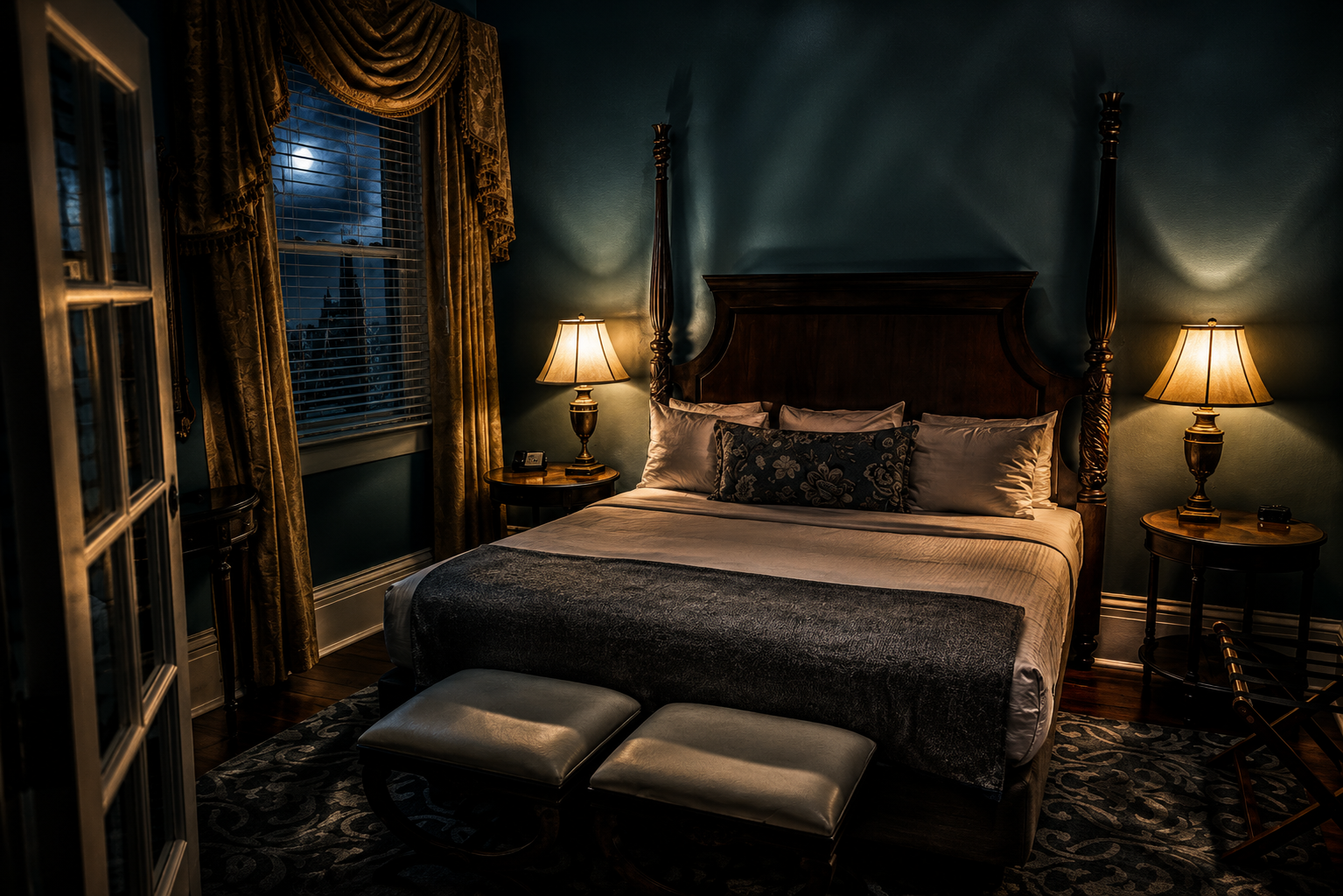
Now, I want to be straight with you here, because the Marshall House is unsettling enough without me inflating it. The bones story is everywhere. You will find it repeated on nearly every site that mentions the place. But the actual paper trail behind it is thin, thinner than you would expect for something that supposedly happened in the late 1990s. No newspaper account of the discovery has ever surfaced, and there are careful local historians who admit they have looked for that clipping and come up empty. If remains were found, they were quietly dealt with, and the hotel opened its doors. What is not in doubt is the foundation under the legend. The Marshall House really was a Civil War hospital. Amputations really were the standard of care in hospitals like it. And the floorboard story has been told for so long, by so many people, that it has basically fused to the building's identity. Take it however you want to take it. The folks who work there, and plenty who have stayed there, have their own reasons for taking it seriously.
The Hauntings of the Marshall House
Bones or no bones, the reports really did pick up after 1999, and they never let up. The thing that gets me about the Marshall House hauntings is how much they agree with each other. You have got different guests, different years, people who never met and never compared notes, and yet the same short list of stories keeps coming back around. Here is that list.
The Soldier Who Lost His Arm
The one people mention most is a Union soldier, and the detail that sticks is oddly specific. He turns up in and around the lobby. Sometimes he is described as carrying his own severed arm. Sometimes he is just looking, asking whoever is nearby where he can find a surgeon. He does not threaten anyone. He is not angry about it. He is a man hunting for something he lost in a building that never gave it back, and apparently he has been at it for well over a century. Other soldier apparitions get reported through the halls and foyers too, and more than a few of those are said to be missing limbs of their own.
Children in the Corridors
Then you have the children, which is somehow worse. Guests have reported the sound of small feet running the long narrow hallways late at night, sometimes with laughter mixed in. Now and then it goes further than sound. People describe small hands, a tug at the blankets, a tickle at the feet just as they are drifting off. Why a former war hospital would be full of children is a question nobody can answer, and honestly that is the part that gets under people's skin the most.
Faucets, Footsteps, and the Fourth Floor
The mildest phenomenon, and the one you hear about constantly, is the water. Guests come back to their rooms, or wake up in them, to find a faucet running that nobody turned on. Lights flicker. Footsteps cross a floor overhead that should be empty. And some rooms carry more weight than others. Back around the 1999 reopening, three rooms in particular got singled out for bad smells and an atmosphere heavy enough that workers reportedly could not stand to stay in them long. They were rooms 214, 314, and 414, stacked right on top of each other. Room 414, up on the fourth floor, is still the number guests trade back and forth when they get to talking about which door to ask for and which one to skip.
The Woman, the Nurses, and the Phantom Typewriter
The cast keeps going. A woman is said to haunt the ladies' restroom off the lobby, sometimes locking herself into a stall that swings open on nobody. Figures described as nurses have supposedly been seen moving among the living, like they are still trying to check a pulse on a patient who arrived a century too late. And there is a literary ghost, of all things. The writer Joel Chandler Harris, the Uncle Remus author, has a room named for him in the hotel, and the story goes that people have heard a typewriter clattering away behind that door, a writer still hammering out pages long after his own last deadline.
Why the Marshall House Remembers
It is easy, when you walk into a place this pretty, to file the ghost stories under decoration. A little spooky seasoning to sell rooms and give the tourists a thrill. The Marshall House almost encourages that read. The lobby is warm, the rooms are lovely, the staff are kind, and the whole friendly-ghosts reputation gets worn pretty lightly. But stand there under Mary Marshall's portrait for a minute and actually think about what this building has been through.
A stubborn woman put it up out of nothing on a street full of ambition. Then the fevers came and it held the dying. Then the war came and it held the wounded, and men lost pieces of their own bodies inside these walls in a cold so deep the surgeons could not even bury what they cut away. Then the building itself got left for dead, sealed up and forgotten for forty-two years, before somebody finally brought it back. None of that is a marketing angle. That is just the honest résumé of a place that has been a home and a hospital and, for a while, something close to a morgue.
Maybe that is the reason it remembers so clearly. It was built to shelter people passing through for a night or two, and instead it turned into the last place a lot of them ever were. You can believe the faucets turn themselves. You can believe a soldier is still pacing the lobby looking for a surgeon who packed up and left in 1865. Or you can believe none of it. The history sitting underneath the hauntings is real either way, and it is a good deal heavier than any ghost story. The Marshall House does not need to make up its dead. It just never figured out how to let them go.
Walk Savannah With Us After Dark
The Marshall House is only one chapter. Savannah is a city built on its dead, and the best way to feel that is to walk its lamplit streets and squares with a storyteller who knows the history beneath the hauntings. Come out with Destination Ghost Tours and let Savannah tell you its secrets in its own voice.
Book a Savannah Ghost TourSources & Further Reading
- The Marshall House, "History." marshallhouse.com/history (hotel's official timeline of Mary Marshall, the yellow fever and Civil War hospital periods, and the 1999 restoration).
- "The Marshall House (Savannah, Georgia)." Wikipedia (Union Army occupation 1864 to 1865, Ralph Meldrim's veranda, ownership history).
- Williams, Robin B., et al. "The Marshall House." SAH Archipedia, Society of Architectural Historians (architecture, the Geiger and Gilbert Hotel names, the 1880 Florida House expansion, and the 1998 to 1999 restoration).
- Visit Savannah, "5 Things You Didn't Know About The Marshall House." visitsavannah.com (Sherman-era Union hospital, reported children and faucet phenomena, third-floor artifact collection).
- Clarkson, Erin. "Is The Marshall House in Savannah Really Haunted?" Savannah First-Timer's Guide (a grounded look at the floorboard-bones legend and the thinness of its documentary record).
- Berendt, John. Midnight in the Garden of Good and Evil (context for Jim Williams, from whose estate the 1830 Mary Marshall portrait was acquired).
Historical facts in this article are drawn from the sources above. Where accounts are traditional or anecdotal, such as the discovery beneath the floorboards and the reported hauntings, the text presents them as the widely told stories they are rather than as settled record.