
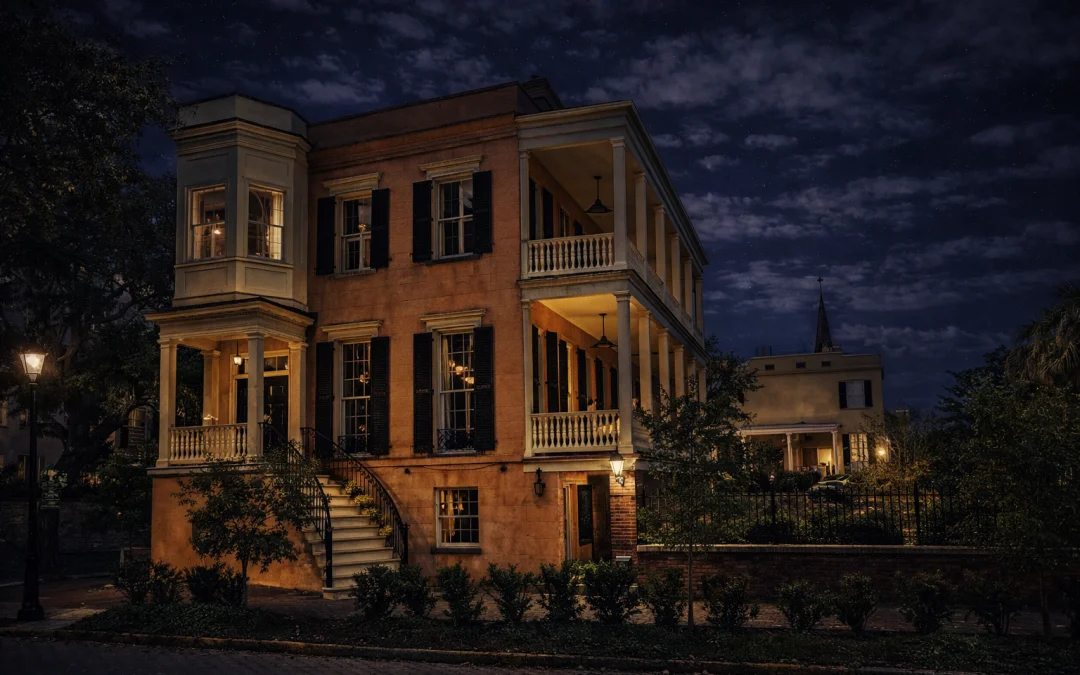
Savannah, Georgia — On the northwest corner of leafy Taylor Square (formerly Calhoun Square) stands an imposing three-story mansion of fading plaster and ironwork. This is 432 Abercorn Street — a house whose elegant Greek Revival facade conceals a history braided through Savannah’s grand past and its most chilling legends. Often called “the most haunted house in Savannah,” the residence has been the whispered centerpiece of ghost tours for decades. Yet behind the cracked shutters and murmuring oaks lies a true story every bit as compelling: a family’s rise and ruin, Civil War scars and untimely death, and the strange alchemy by which history curdles into myth.
In this comprehensive chronicle, we walk the entire saga of 432 Abercorn Street — from its construction in the Reconstruction era to its modern restoration, from verified historical records to the whispered lore of a child’s ghost. Along the way we meet Benjamin J. Wilson, the Irish immigrant turned Savannah gentleman who built the house, and follow his family through joy and sorrow — including the tragic fate of his young son, John. We will see how an innocent child’s death may have been transmuted, over generations, into the infamous legend of a cruel father and a dying daughter. And we follow the house itself: family home, decaying shell, magnet for paranormal seekers, and at last a carefully preserved historic treasure.
The truth of 432 Abercorn Street is both heartbreakingly human and spine-tinglingly atmospheric. By the end, the line between legend and history will stand as clear as gaslight and shadow on a Savannah square — and the real spirits that remain will be those of memory and time.
Foundations of Grandeur: Construction and Early Ownership (1868–1870s)
In the years just after the Civil War, Savannah was rebuilding — restoring both its brickwork and its genteel society. It was in this climate, in 1868, that construction began on the grand house then numbered 432 Abercorn Street. The property occupied half of a “trust lot” fronting Calhoun Square, a coveted address on one of the city’s picturesque squares. The home rose in the Greek Revival/Regency style fashionable in the mid-19th century: three full stories tall, its main entrance lifted atop a curved stone staircase that meets the sidewalk. Five tall, evenly spaced windows march across each floor of the facade, and a columned portico with intricate cast-iron detailing frames the front door. On the right side, a graceful cast-iron balcony and spiral staircase wrap around a side porch. Within were high ceilings, ornate plaster moldings, and spacious rooms lit by floor-to-ceiling windows. It was built to be a showplace of wealth and style in Reconstruction-era Savannah.
The man who commissioned this elegant residence was Benjamin J. Wilson, a recently arrived transplant with large ambitions. His life was a classic 19th-century tale of self-made success. Born in Belfast, Ireland in 1823, he immigrated to America as a teenager, arriving in New York at age 16. Young Benjamin did not linger in the Northeast. He trained as a machinist in Massachusetts, then ventured south, drawn by the booming cotton economy. By the 1850s he had moved between Georgia and Alabama, ultimately settling in Randolph County, Alabama, where he became a partner in the Okufuskee Cotton Manufacturing Company. The cotton trade was lucrative, and Wilson reaped its rewards — by war’s end, he had accumulated a small fortune.
After the Civil War (in which Wilson served the Confederacy as a veteran, though details of his service are scant in surviving records), he sought opportunity in the recovering Southern economy. In 1866 he relocated to Atlanta, where he invested in real estate, banking, and land, and became active in civic life as a Freemason and a Presbyterian. Ever the shrewd investor, Wilson saw promise in Savannah, the Georgia port city steeped in antebellum wealth. Sometime between 1866 and 1868, he resolved to move his family there and raise a fine home that would cement their social standing. Thus the stage was set for 432 Abercorn Street to rise on Calhoun Square.
When the house was completed in 1869, it was reportedly one of the most expensive private residences in Savannah, valued at over $20,000 — an astronomical sum for the time. Benjamin Wilson, then in his mid-forties, moved in with his wife and children as soon as it was ready. For Wilson, the house was more than a dwelling; it was proof in plaster and iron of how far he had climbed from his humble Irish beginnings. With its grand presence on the square, 432 Abercorn announced that Benjamin J. Wilson had arrived among Savannah’s elite.
A Square with a Shady Past
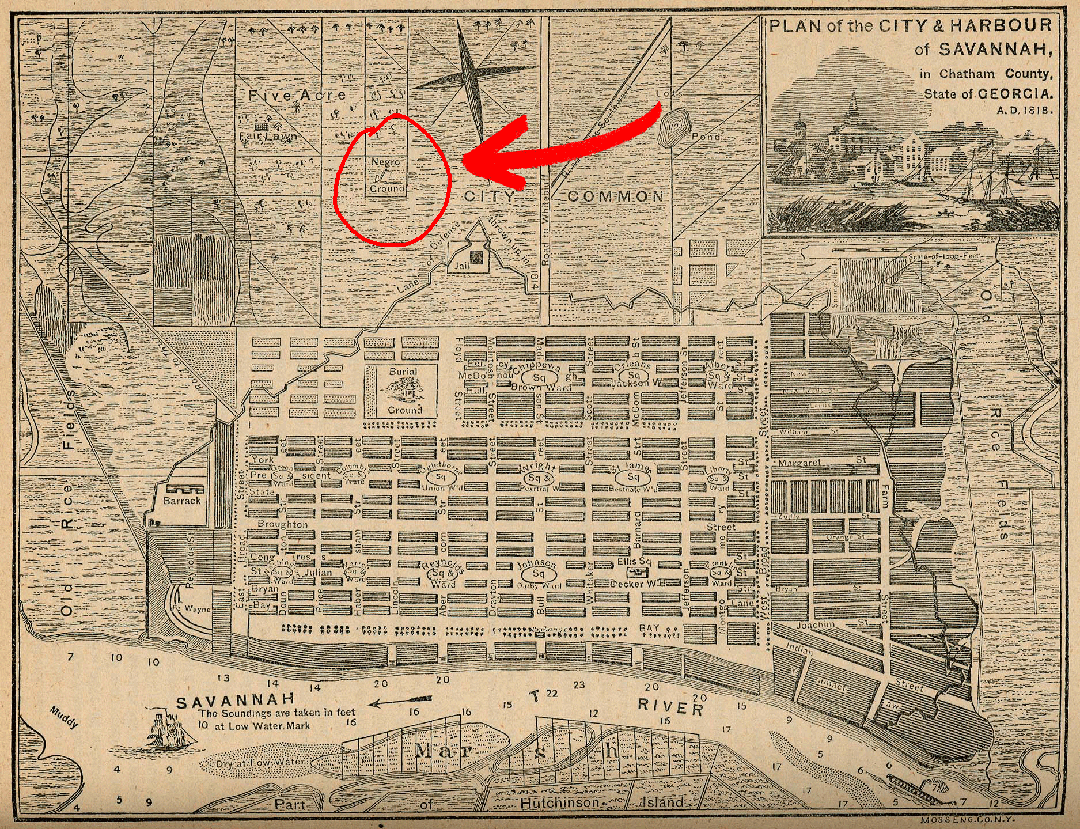
Location was everything for a prominent home like Wilson’s, and Calhoun Square (now officially renamed Taylor Square) was one of the city’s newer but most charming civic spaces. Laid out in 1851, the square was bordered by clapboard houses, a Gothic church, and the Massie School (more on that school shortly). Live oaks dripped Spanish moss over its paths and benches — an idyllic scene. Yet beneath the picturesque beauty lay a darker history that many in the 19th century preferred to ignore. Calhoun Square had been laid out atop a former burial ground for enslaved African Americans, and possibly earlier Native American graves. In the early 1800s this land served as a potter’s field where the city’s enslaved population was interred without markers. When the square and its surrounding lots were developed at mid-century, the graves were not relocated. They were simply paved over — or built upon.
For decades afterward, residents around Calhoun Square occasionally unearthed human remains during construction or utility work. As recently as the early 2000s, utility repairs beneath the square turned up a human skull, confirming the presence of the forgotten dead. Some say this disturbance of graves feeds an “unquiet” atmosphere that lingers still.
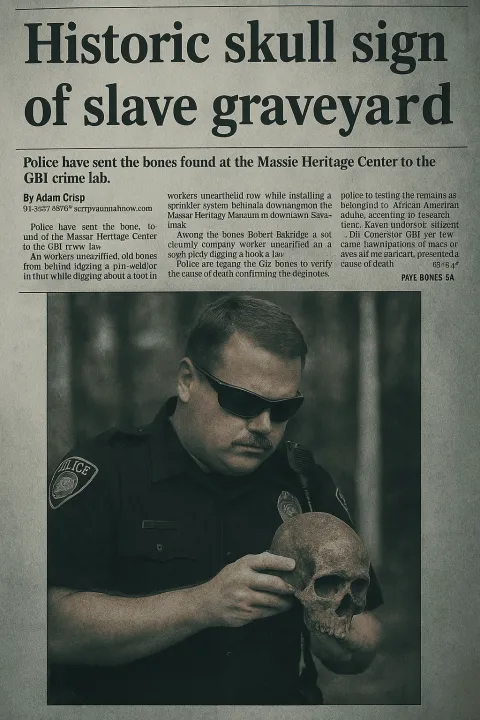
Whether or not one believes in curses, it is an eerie bit of context: the foundations of 432 Abercorn may quite literally rest upon unsettled spirits. Later generations would work this fact into the home’s haunted reputation, suggesting the ground itself was cursed. But in the 1860s, Benjamin Wilson was likely unaware of — or unmoved by — this past. His eyes were fixed on a bright future in his splendid new Savannah home.
The Wilson Family Moves In (1869): Prosperity and Prominence
The year 1869 must have been one of great hope for Benjamin Wilson. He had a beautiful new residence and a growing family to fill it. Historical records and family papers sketch the household in those early years. Wilson had been married twice. His first wife (whose maiden name was Cheely) had borne him several children before apparently passing away sometime in the 1860s. By the time he built 432 Abercorn, Wilson had remarried — his second wife, a Miss Hill, whose first name is lost to history in the documents we have. She is simply Mrs. Wilson in contemporary accounts. What we do know is that she became mistress of the new house on Abercorn Street and mother figure to Wilson’s children.
Benjamin was about 46 when the family took up residence, his second wife likely somewhat younger. The household in 1869 included five children, making the big house a lively home — and the family would eventually number six children in all, with the youngest arriving several years later. From various sources, we can piece together the Wilson brood:
- Carrie Wilson, the eldest daughter (around 3 or 4 years old in 1869). Her full name was Carolyn, and she was Benjamin’s daughter from his first marriage. Carrie would later marry an Atlanta attorney and become Mrs. John L. Tye, living a long life well into the 20th century.
- Mary Dell Wilson, the second daughter (likely a toddler or infant in 1869). Also from the first marriage, Mary Dell married in adulthood into the prominent Potts family of Savannah. Like her sister, she survived childhood and raised a family of her own.
- Robert E. Wilson, a son (exact age unclear, possibly born in the early 1860s). He would live until 1920.
- William “Will” Wilson, another son (birth date unknown; died in 1898).
- Philip D. Wilson, a son — the only one of the six whose death date isn’t noted in the family archives, suggesting he may have lived past the 19th century.
- John B. Wilson, the youngest child (born in 1875). John was the only child of Benjamin’s second marriage, a little boy who arrived several years after the family settled in Savannah. As we shall see, John’s short life would become the hinge upon which both fact and legend turn.
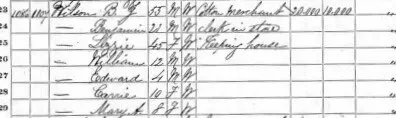
Contemporary documents like the 1870 U.S. Census capture a snapshot of this family not long after they moved in. The census of that year shows Benjamin, his wife, and five of their children “alive and kicking” at 432 Abercorn. To their neighbors, the Wilsons must have looked like the very picture of domestic respectability and comfort: a prosperous father, a spacious home on the square for the children, all apparently well.
Yet life in 19th-century Savannah, as anywhere, could turn on a dime. Unbeknownst to them, the Wilson family’s season of happiness in the Abercorn house would be brief — marred by illness and loss within less than a decade. But first, let us meet the patriarch himself in fuller detail, for the true character of Benjamin J. Wilson has often been misrepresented by sensational stories.
Benjamin J. Wilson: The Man Behind the House
To truly understand 432 Abercorn Street, one must understand Benjamin Wilson. He was, by available accounts, a complex man of his era: industrious, determined, and accustomed to authority. By the time he settled in Savannah, he had lived a life of hard work and hard knocks. It is said that war and widowhood had left him somewhat “hardened” — a stern patriarch, perhaps, though whether he was actually cruel remains a matter of debate. Some who have researched his history suggest he did the best he could for his family amid the challenges of his time. Others speculate he may indeed have been strict, even overbearing, with his children.
What might have fueled the darker view? Consider his context: a Civil War veteran and an immigrant who had carved out success through discipline and labor. Such a man in the 1870s would likely have run his household with firm rules and high expectations. Class and propriety meant a great deal to him — he wanted his family respected in Savannah society. It is not hard to picture him as a father who expected obedience and offered little open affection, as was typical of Victorian paternal norms.
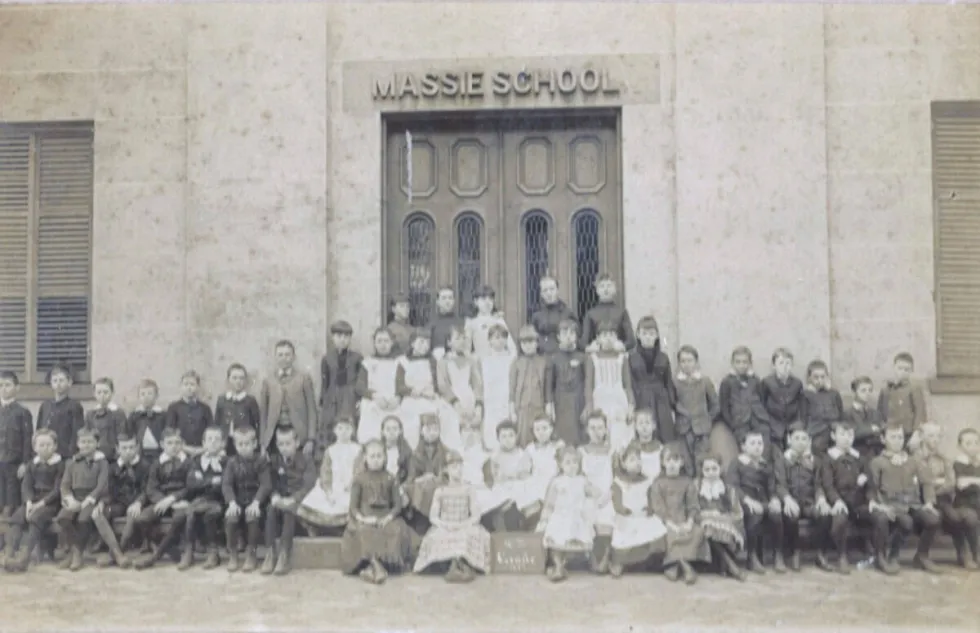
One matter in particular would later be twisted into legend: the Wilson children and the Massie School. Directly across Abercorn Street from the Wilson home stood the Massie Common School House, one of the city’s first public schools, founded in the 1850s for the education of Savannah’s poor children. By the 1870s, Massie taught a diverse group of local kids, including African American children and orphans, at a time when class and racial divisions were sharply drawn. According to local rumor (and, later, ghost lore), Benjamin Wilson disapproved of his daughters mixing with the Massie students across the square. Perhaps young Carrie or Mary, curious and sociable, had been seen chatting or playing with the neighborhood schoolchildren. If Benjamin truly was a class-conscious man, he might have scolded his girls and forbidden such fraternizing, believing it improper for the daughters of a prominent family.
There is no official record of any specific confrontation, but the scenario is plausible — and it would grow enormously in the retelling. Neighbors might have witnessed Mr. Wilson sternly calling a child back from the square, or heard a reprimand echo from an open window. These small seeds — a strict father’s rebuke, a child’s innocent disobedience — would, over decades, be watered by imagination until they blossomed into a far more dramatic “incident.”
Tragedy in the House: Illness and Loss (1870s–1881)
In the mid-1870s, less than a decade after moving into their dream home, the Wilsons’ life took a devastating turn. Savannah, like many Southern cities, was periodically scourged by yellow fever — a mosquito-borne illness that struck in terrible epidemics. The year 1876 brought one of the worst outbreaks in Savannah’s history, with over a thousand people succumbing in a matter of months. In those days of limited medical knowledge, affluent families were shielded from disease no better than the poor.
It was during this 1876 epidemic that Mrs. Wilson — Benjamin’s second wife — fell ill and died. We can only imagine the blow to Benjamin and the children. He had already buried one wife, the mother of his older children; now he had lost his second. He was a widower once again, this time with a house full of young children solely in his care. Savannah’s newspaper obituaries from 1876 list dozens of victims each day at the fever’s peak; among them, surely, was the lady of 432 Abercorn Street. Her first name is not recorded in surviving sources — she is a somewhat ghostly figure herself in the historical narrative. But her death was very real, and it shook the family to its core.
After his wife’s passing, Benjamin Wilson plunged into a deep depression, according to later accounts. The war had tested him, but this personal blow perhaps cut deeper. Neighbors noted that he grew more withdrawn. Still, he had to soldier on for the children’s sake. He was now a single father — an unusual position for an upper-class man of that era. There would have been nurses or servants to help with domestic chores (most large Savannah homes had African American staff, often formerly enslaved people now employed as paid servants). But emotionally and practically, Benjamin was now the sole authority and provider for his family.
It was likely in these difficult days that his parenting grew stricter still. Fear can do that — the dread of losing another loved one, the strain of maintaining order amid grief. One can imagine him watching his children with anxious eyes for any sign of illness, keeping them indoors on sweltering days to avoid mosquito bites, forbidding them from roaming too far. If one of his daughters had indeed been friendly with the local schoolchildren, as the rumors suggested, he may have clamped down harder after their mother’s death, telling himself he was protecting his family’s dignity and health in a perilous time.
Amidst this somber backdrop, another tragedy struck within the walls of 432 Abercorn. In 1880 or 1881, young John B. Wilson — Benjamin’s only son by his second wife — died at the age of around six. The precise date and cause of John’s death are not conclusively documented in public records, but family papers indicate he died in 1881. Given the era, possible causes range from yellow fever’s after-effects (there were minor resurgences in 1877 and 1878) to other common childhood diseases such as scarlet fever or dysentery, or even an accident. One tantalizing clue: Savannah’s city health records from those years do show periodic outbreaks of infectious disease. If John fell ill, the same house that had watched his mother taken by fever may have become the scene of another deathbed.
For Benjamin, losing little John was a cruel blow. This was his youngest child — a living link to his second wife, and likely the apple of his eye as the baby of the family. No obituary for John survives, but we know from the Wilson family archive at the Atlanta History Center that John B. Wilson’s lifespan was tragically short, bracketed between 1875 and 1881. He may have been buried in Savannah in the family’s plot — possibly in Laurel Grove Cemetery, where many yellow fever victims were interred.
With John’s death, Benjamin Wilson had lost two beloved family members in the space of roughly five years at 432 Abercorn. One can only imagine the haunted grief that shadowed those high-ceilinged rooms. Savannah folklore often overlooks this verified heartbreak — the death of a little boy — in favor of a spurious tale about a little girl. But as we will see, the ghost stories may well have their roots in the real child’s spirit after all.
By the early 1880s, the Wilson family’s time at 432 Abercorn was drawing to a close. Benjamin, perhaps seeking a fresh start away from painful memories, left Savannah a few years after John’s passing. He appears to have returned to Atlanta, where he had business interests and extended family. Savannah city directories in the 1880s no longer list Benjamin at the Abercorn address; a new occupant’s name begins to appear, indicating the house changed hands or was rented out. (Some sources later claim the house sat empty for a time after the Wilsons left — which, if true, may only have fueled its eerie reputation.)
What became of Benjamin J. Wilson? The historical record picks him up in his final years far from Savannah. Remarkably, he did not die in that house — nor even in Georgia, as the legends sometimes insist. Benjamin Wilson lived to old age and passed away peacefully in Colorado Springs, Colorado, in February 1896, at 72. One might wonder why Colorado: perhaps he went west for his health (the mountain air was thought to benefit sufferers of tuberculosis and other ailments), or to live near one of his grown sons. By then his surviving children were adults scattered across the country: Robert and Philip presumably in Georgia or nearby; Will (William), who died in 1898, shortly after his father; and the daughters Carrie and Mary, married into new lives.
It is an arresting epilogue: the patriarch whose name would later be cursed as an alleged child-murderer actually died a grandfather in comfortable retirement out west. His remains were brought back to Georgia, and he was laid to rest in Atlanta’s Oakland Cemetery alongside other family members. His obituary carried no whiff of scandal or horror — only the passing of an old Atlanta businessman and Mason. There was certainly no curse, and no suicide, attached to his name. The sensational version of his demise — that he shot himself in guilt and despair at 432 Abercorn — is pure fiction, as we will address fully below.
Before we turn to the rise of those legends, let us follow the house itself, for 432 Abercorn would witness many more chapters — quieter ones — in the decades to come.
A House in Transition: 432 Abercorn from the 1880s to the 20th Century
With the original family gone, 432 Abercorn inevitably took on new occupants and new uses, even as it quietly kept its secrets. Reconstructing the full chain of ownership through the late 19th and early 20th centuries is challenging, but details emerge from city records and historical anecdote.
In the 1880s, the house likely served as a private residence for other prominent Savannahians; the neighborhood around Calhoun Square remained upscale through the turn of the century. There are hints that by 1908 the property changed hands in a notable way — one source suggests it was sold that year to a fraternal organization (the Elks Lodge), which may have used it as a meeting hall for a time. Large old homes were indeed sometimes repurposed by clubs and institutions in that era. However, this particular detail comes from a comparative ghost-story account and may actually refer to another house, so it should be taken with a grain of salt. If the Elks did purchase 432 Abercorn, it was not widely reported in the newspapers.
What is clearer is that by the mid-20th century, the once-grand mansion had been divided, its fortunes faded. The elegant home Benjamin Wilson built eventually became a rooming house by the 1950s or 1960s. As Savannah’s historic center declined at mid-century — wealthy families moving to newer suburbs, downtown properties slipping into disrepair — 432 Abercorn was not spared. Owners found it practical to partition the large interior into apartments and rent out rooms. Former parlors and bedrooms were likely subdivided; the house that once hosted genteel gatherings now sheltered transient tenants. Savannah city directories from the 1960s list multiple surnames at 432 Abercorn, confirming its multi-family use.
Local lore records an intriguing connection formed during this boarding-house period. In the 1960s, a young man named Ralph E. Walden rented a room in the house. Fatefully, Ralph married a woman named Omi Gale Lee — later known as Omi G. Walden. Omi was an accomplished and unconventional figure: she rose to prominence as a public affairs specialist and even served as an Assistant Secretary in the U.S. Department of Energy under President Jimmy Carter, a rarity for a woman of that era. In the late 1970s, during her Washington career, Omi made a personal investment back in Savannah: she purchased 432 Abercorn Street. Perhaps Ralph’s fondness for the old place, or simply its architectural potential, motivated the purchase. But in a twist that feeds the legends, Omi Walden never made the mansion her home.
According to accounts from neighbors and her own family, Omi bought the property (solely in her name) but chose to live only in the small carriage house at the rear of the lot — never the main house. She and Ralph, along with a nephew, did undertake some renovations on the main house in the early 1980s, likely trying to stabilize its crumbling structure. But for reasons perhaps known only to Omi, they never moved in. Some say she felt an “energy” in the house that discouraged her; others simply note that by then it needed extensive work to be comfortably habitable. And so the grand rooms of 432 Abercorn stood mostly empty from about 1987 onward, visited occasionally by caretakers but otherwise dark and silent.
It was in these years — the late 20th century, when 432 Abercorn stood an eerie, vacant shell — that the ghost stories truly took hold. An imposing abandoned mansion on a historic square is the perfect breeding ground for whispered tales. Tour guides found the property ripe for embellishment: no one was around to object, and its forlorn appearance practically begged for a spooky narrative to explain why it sat unused.
Before we descend into those tales of restless spirits, let us finish the factual timeline. Through the 1990s and 2000s, 432 Abercorn gained infamy as a “haunted house” on ghost tours, while ownership remained with Omi Walden (who eventually relocated to Alma, Georgia). Visitors often found the house in decay: windows boarded or broken, plaster peeling, weeds overtaking the front yard, the beautiful iron balcony and stair railings rusting quietly. Savannah’s historic preservation community eyed the property with concern, but nothing changed for decades — not even the booming restoration movement of the 2000s could pry it from its absentee owner. Only after Omi G. Walden’s death in 2021 (at age 76) did the logjam fully break — though, in truth, movement had come shortly before.
In 2018, shockingly, 432 Abercorn Street sold — not once, but twice. The long-time owner either finally agreed to sell or had already passed her interest to someone; records show the property sold in February 2018 for around $744,000, then again in June 2018 for around $1.2 million. The final buyer was a preservation-minded individual who recognized both the historic value and the notorious cachet of the house. Over the next two years, a painstaking restoration unfolded.
Contractors and craftsmen descended on 432 Abercorn, finding no shortage of work — from repairing water-damaged floors to recreating missing moldings. They adhered to strict guidelines, as the house stood under Savannah’s historic district protections and had received a Historic Savannah Foundation plaque back in 1973. Walls that had witnessed sorrow and neglect took on fresh plaster and paint. Modern amenities were discreetly added — updated plumbing, electrical, even an elevator — all while retaining the home’s 19th-century character. By the end of 2020 the transformation was complete: 432 Abercorn shone again in its former glory, its stucco exterior returned to a soft, inviting amber, its ironwork restored, an American flag fluttering proudly by the front door.
In 2021, the project earned a Historic Preservation Award for Excellence from the Historic Savannah Foundation. The “most haunted house” was now also one of the most beautifully restored. Its new owners reportedly intended to use it as a private residence (and perhaps occasionally open it for special tour events, given public curiosity). At last, a home that had stood empty for over thirty years was filled with light, furniture, and the sounds of everyday life once more.
The Legend of 432 Abercorn: Ghosts, Curses, and a Girl in the Window
If you join an evening ghost tour in Savannah, chances are high you’ll find yourself beneath the hanging Spanish moss in front of 432 Abercorn Street. In the dim lamplight, a guide may lower their voice and tell the house’s most famous story. It goes something like this:
In the late 1800s, the Wilson family lived in that grand house. The patriarch, General Benjamin Wilson — some call him a Colonel, or simply Mr. Wilson — was a stern and troubled man, a veteran of the Civil War struggling to hold his authority. He had a young daughter whom he loved dearly, but his love was twisted by prejudice and pride. One day, Mr. Wilson happened to see his daughter playing across the street in Calhoun Square with the children from the Massie School. These were poor children, some of them Black, and in his post-war Southern mind, this was absolutely unacceptable. A girl of her standing, mixing with those he considered beneath her? He was outraged.
That evening he scolded her harshly and forbade her from ever playing with those children again. The little girl was heartbroken — the Massie kids were her friends, and she did not understand her father’s fury. But she was also a bit rebellious, with the innocence of a child who knows right from wrong better than her parent does. The very next day, she snuck out and played with her friends again in the square, defying her father’s orders.
When Benjamin Wilson learned of this disobedience, something in him snapped. He decided to teach his daughter a lesson she would never forget. He dragged the frightened girl into an upstairs front room — the one overlooking Calhoun Square — and tied her firmly to a chair set before the window. Bound at wrists and ankles, unable to move, she was forced to sit facing the glass. From there she could watch the other children playing freely outside — but she could never join them. It was to be a cruel punishment of isolation and humiliation.
Mr. Wilson left his daughter tied in that spot for days on end, deaf to her pleas for mercy. Savannah lay in the grip of a brutal summer heat wave; the air in that room grew unbearably hot and stagnant. The child’s cries weakened to whimpers. By the end of the third day, when Benjamin finally opened the door, he found his little girl slumped in the chair — dead of heat exhaustion and dehydration. He had killed his own daughter through fanatical discipline. The rest of Savannah never knew: in the legend, Wilson’s status in town hushed the incident up, with no charges filed and no newspaper reports.
But the story does not end there. Overcome with guilt and madness, Benjamin Wilson began seeing his daughter’s ghost in the house soon after her death. She appeared in her favorite room — an apparition by the window, a fleeting figure in the hall — reminding him of his terrible deed. Neighbors, too, claimed to see a pale little face peering from the second-floor window when the house was supposed to be empty: a restless spirit searching for her playmates. Mr. Wilson could find no peace. Within a week he unraveled. In one final act of despair, he went to that same room, sat in that cursed chair, and took his own life with a gun, ending the Wilson family line in a bloody flourish.
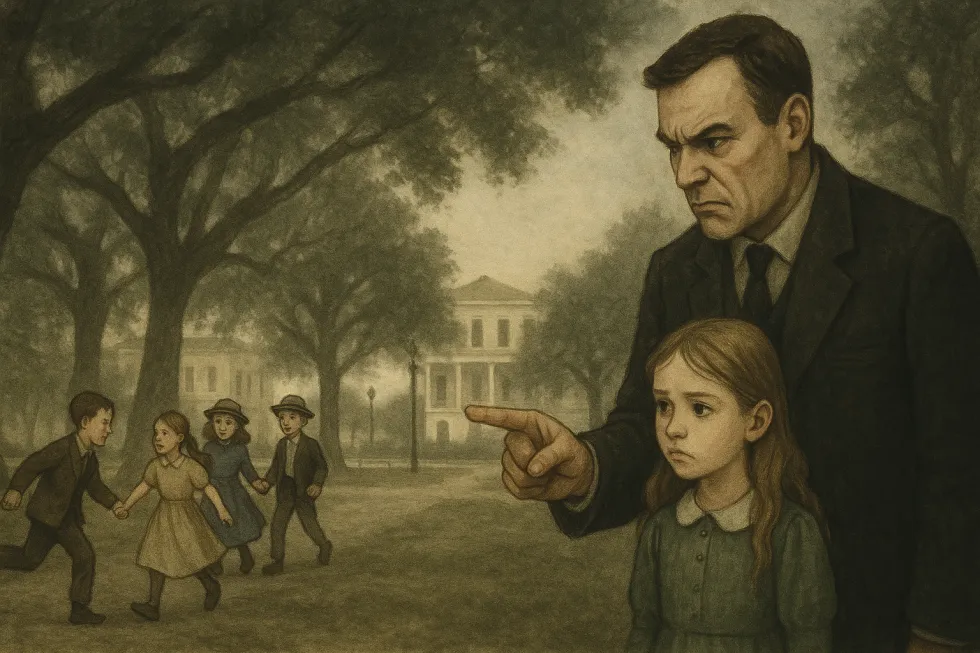
Ever since, they say, the house at 432 Abercorn Street has been haunted by the ghosts of that ill-fated family. The little girl’s spirit is often spotted gazing out the window, yearning to join the children in the square — a fleeting figure, or a reflection in tourists’ photographs. And Mr. Wilson’s anguished presence is felt too; some claim an evil aura clings to the home because of his unforgivable sin. Tour-goers report feeling dizzy or nauseated near the front steps, perhaps sensing the dark energy. Over the years, other stories have attached themselves: a curse upon the land because it was built over graves; a triple child murder in the mid-20th century that supposedly left one survivor who then refused to live in the house; even whispers that the famous Satanist Anton LaVey tried to buy the property for a temple of darkness. The legends paint 432 Abercorn as a magnet for evil — a place where sorrow and cruelty echo through time.
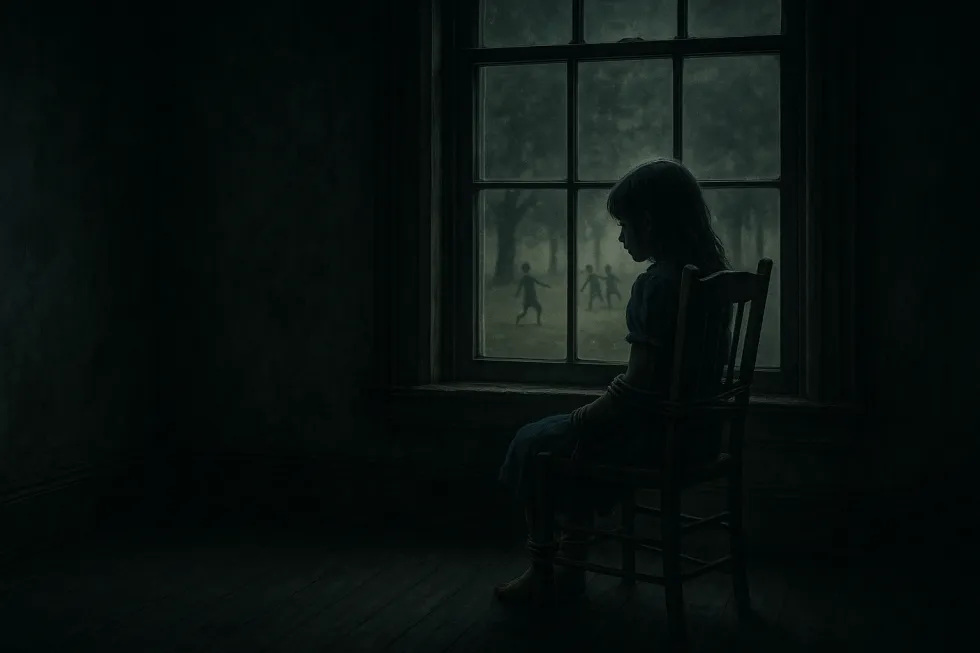
This is the essence of the haunted lore enveloping 432 Abercorn Street. It is a dramatic tale, to be sure — a blend of Southern Gothic morality play and pure horror. As storytellers, we can see the appeal: a relatable villain (a prejudiced father), an innocent victim (a child), and a supernatural aftermath. It even weaves in genuine historical threads — the Massie School, Savannah’s racial and class divisions after the Civil War — lending it a veneer of plausibility.
Before reconciling legend with truth, it’s worth noting the secondary legend that often accompanies the Wilson daughter story: the so-called “triple homicide” of the 1950s. This tale claims that sometime around 1959, a family rented 432 Abercorn while on vacation, left their four children with no sitter one night, and returned to find three of them ritualistically murdered — arranged in a triangle with their organs removed — while the fourth child hid in terror. The surviving child supposedly grew up to inherit the house and left it vacant out of fear. This macabre yarn is as baseless as it sounds: no record of any such crime exists, and it appears to be pure invention, likely grafted onto 432 Abercorn’s lore to explain why “no one lives there.” It is modern campfire horror, not history. Likewise, the story of Anton LaVey, founder of the Church of Satan, trying to buy the house is unfounded — another colorful addition that has made the rounds with zero evidence. Savannah tour guides perhaps could not resist linking an infamous occult figure to an infamous haunted house, but it remains speculation and rumor.
Fact vs. Fiction: Unraveling the Truth Behind the Haunting
For years, the story told on Savannah’s ghost tours about 432 Abercorn Street has turned on a cruel father, a disobedient daughter, and a fatal punishment carried out in an upstairs room. But what if the story — twisted though it has become — is not pure fiction? What if the legend of 432 Abercorn sprang from something real: something sorrowful, hidden, and long misunderstood?
We now know that John B. Wilson, the youngest child of Benjamin J. Wilson, died at just six years old in 1881, during the family’s years at 432 Abercorn. This is not folklore. It is fact, confirmed by family records and genealogy archives, including the Benjamin J. Wilson Papers held at the Kenan Research Center at the Atlanta History Center. And it is the only child death associated with the Wilson household in that house. John was Benjamin’s sixth and final child — his only child with his second wife, who had herself died just a few years earlier in the yellow fever epidemic of 1876.
Despite this, the ghost story passed down through the decades insists a daughter was the one who died — a girl punished for playing with poorer children across the square, tied to a chair in the sweltering heat of an upstairs room and left to die, her body discovered by a guilt-stricken father who later took his own life.
But the daughters of Benjamin Wilson — Carrie and Mary Dell — lived well into adulthood. Their lives are well documented; their names appear in marriage announcements and obituaries decades later. They did not die in that house.
John did.
He was a young, sensitive child. He would have been just six in the summer of 1881 — the same age as the fictional girl in the ghost story. And he was the only Wilson child who never left the house alive. That is not speculation; it is in the record. Yet his death remains vague and undocumented in its details. No newspaper obituary. No formal coroner’s report. No surviving photograph. Just a short span between birth and death, a gap in the family’s otherwise well-traced tree, and a question that has never been fully answered.
So what if the ghost story got the details wrong — but the essence right?
Was John the Child in the Window?
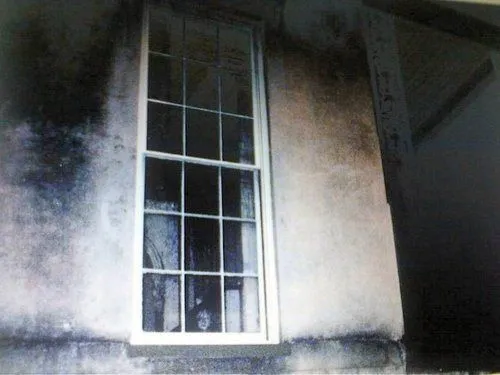
It is entirely plausible that the legend of the “girl in the window” began as a kernel of truth about John B. Wilson’s death. Over time, stories told in whispers and on street corners may simply have changed he to she.
There is no evidence disproving the idea that John died in that upstairs room — perhaps even bound, in some well-meaning but misguided attempt to control him during a fevered delirium. In the 1800s, treatments for sick children were often cruel by today’s standards: confinement, bleeding, forced rest in heat or in darkened rooms. If John was sick and delirious, he may have been restrained, left alone, watched from afar. If he was feverish and thrashing, restraint may have been seen as necessary. And if he died alone in that room, his final days may have imprinted themselves on the walls — on the memory of the house itself.
Perhaps Benjamin never meant to harm him. Perhaps he did nothing wrong at all. But guilt does not care about innocence — it cares only about loss. And in the years after John’s death, as the house darkened and emptied, as vines crept up the plaster and dust settled on the sills, that upstairs window took on a different character. People saw things there. A small face. A hand. A presence.
They said it was a little girl.
But maybe it was John — misunderstood in death as he may have been in life. The ghost stories changed his name and shape, as ghost stories do. But the root remains. A child died in that room.
The Ghost Story That Was Always True
No daughter died in 432 Abercorn Street.
But a child did.
And maybe he was the one seen in the window. Maybe his final days were confused, tragic, filled with heat and fear and isolation. Maybe the chair was real — not as punishment, but as a place of death. Maybe the ghost people see is not a girl in white lace, but a boy in a cotton nightshirt, staring down at the square where he once dreamed of playing again.
The facts don’t disprove the haunting.
They complete it.
They give the ghost a name.
John B. Wilson • 1875–1881
He was the sixth child. The missing child. The forgotten name behind the story.
And if his spirit still lingers, it is not because of hate or cruelty — but because of grief, love, and a life cut too short, in a house that remembers everything.
Epilogue: A New Chapter for 432 Abercorn
Today, passersby who come upon 432 Abercorn Street may be struck by two conflicting impressions. By daylight, the house is stunning — a “timeless architectural legacy,” as a recent real estate listing called it. Its salmon-colored exterior and gleaming white trim radiate the charm of Savannah’s golden age. Looking at it, one can easily imagine the laughter of children on its balconies in the 1870s, or elegant ladies descending its front steps for an evening stroll around the square. The restoration has allowed the house to speak of its authentic history again, rather than merely of its decay.
At night, however, with the square grown quiet, the upper windows of 432 Abercorn still have a way of capturing the imagination. Stand too long beneath them and you might begin to wonder: is that only a curtain fluttering… or something more? Savannah’s ambiance can do that. It is a place where the past feels unusually present. The new owners rarely allow interior access (except on select historic home tours), so the mysteries within remain. And as long as ghost tours are a staple of Savannah tourism, guides will continue to pause at the corner of Abercorn and East Wayne Streets to offer fresh audiences the old yarn.
One can view this as harmless storytelling — a way to keep Savannah’s spooky lore alive. But there is a human cost to consider: the reputations of real people have been muddied by the tale. The legacy of Benjamin J. Wilson, for instance, is now tainted in the public mind by a crime he never committed. One might argue he is long dead and past caring, but storytellers might spare a thought for his descendants, who have had to hear their ancestor slandered as a child-murderer for the sake of entertainment. In recent years, some local historians and bloggers have made commendable efforts to set the record straight, debunking the myths with archival proof. Yet even they got it wrong. There was a child — a sixth child.
And the haunting of 432 Abercorn can stand for the way history itself haunts Savannah: every beautiful house here has seen its share of life and death, love and anguish, and those echoes linger in the collective memory.
Walk up to 432 Abercorn Street now and you are likely to be met not by ghostly emanations but by a well-maintained property, and perhaps a polite sign asking that you respect its privacy. If you’re lucky and the owners are about, you might even get a friendly wave — Savannah folks are hospitable like that. The house, once feared and avoided, is becoming just a house again. A home, even. And yet, for those who seek it, the legend is still there — like a shadow cast by gaslight, dancing just out of reach.
Perhaps this is how it should be. Savannah thrives on its blend of fact and folklore. The story of 432 Abercorn Street, in all its versions, adds texture to the tapestry of the city. We can appreciate the legend as legend and the history as history, and let them coexist without confusing one for the other. In the end, the true story of 432 Abercorn is as much about the resilience of a place and its people as it is about ghosts. It is the story of a house that has seen grandeur and neglect, joy and sorrow — and has survived into a new era, a tangible link to those who walked its halls 150 years ago.

Chris Allen is the founder of Destination Ghost Tours, a historian and storyteller with a lifelong fascination for the darker corners of history. He spends his time uncovering the true stories behind haunted legends, guiding guests through historic cities, and chasing down details that refuse to stay buried. When he is not working, he can usually be found with his partner Arissa, their dog Bear, and their two cats, Trouble and Covu, photographing old places, digging through archives, or disappearing into historical rabbit holes. He believes the best history is honest, atmospheric, and just unsettling enough to linger.
Excellent story.