
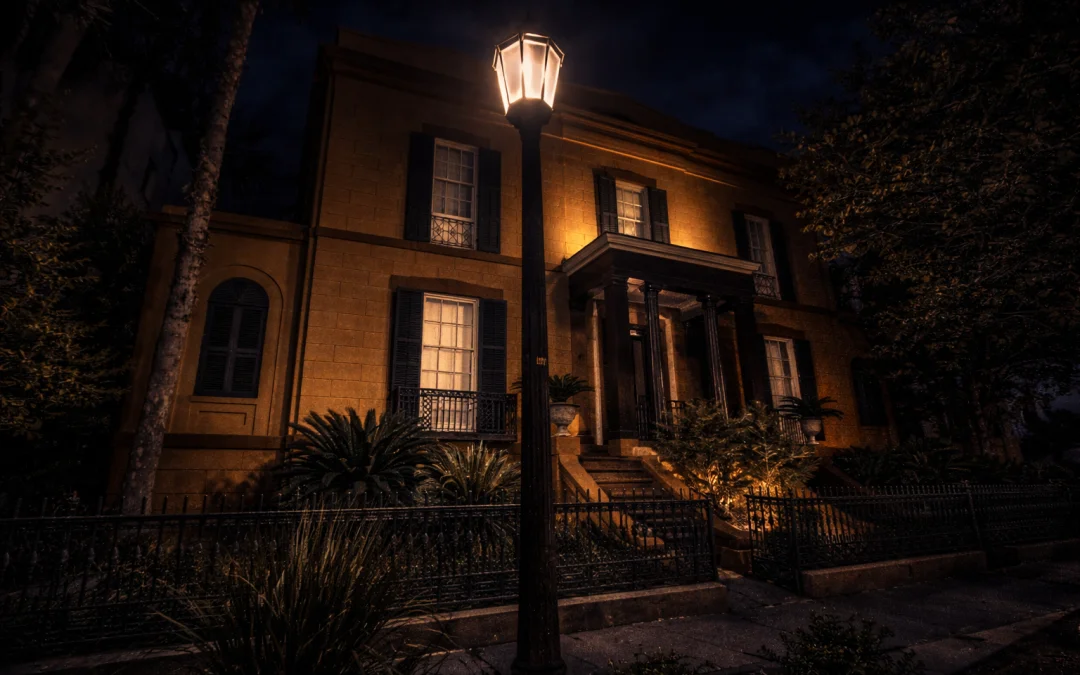
Standing over Madison Square in the heart of Savannah is a mansion that has become a byword for the haunted South: the Sorrel-Weed House. As the sun sinks behind the Spanish moss, its stately columns cast long shadows — and the weight of its history, and its legends, seems to press in from every side.
A Foundation Built on History and Heartbreak
Constructed between 1835 and 1840 for Francis Sorrel, a wealthy shipping merchant, the Sorrel-Weed House is one of Georgia’s finest examples of Greek Revival architecture. Sorrel himself had a dramatic backstory: born in the French colony of Saint-Domingue (Haiti), he was, as a child, reportedly saved from the violence of the Haitian Revolution by an enslaved servant before his family fled to America — where he grew wealthy in the Savannah shipping trade and became, in turn, a slaveholder himself.
The house takes its double name from its two families. In 1859, Francis Sorrel sold the mansion to Henry D. Weed, whose family held it until 1914 — hence “Sorrel-Weed.” The home also had a notable Civil War connection: it was the boyhood home of G. Moxley Sorrel, Francis’s son, who rose from Savannah bank clerk to one of the youngest brigadier generals in the Confederate Army, serving as a celebrated staff officer under General James Longstreet. And Francis Sorrel counted General Robert E. Lee, a close family friend, among his guests — Lee is said to have visited the house on several occasions.
Architectural Elegance and Ethereal Presence

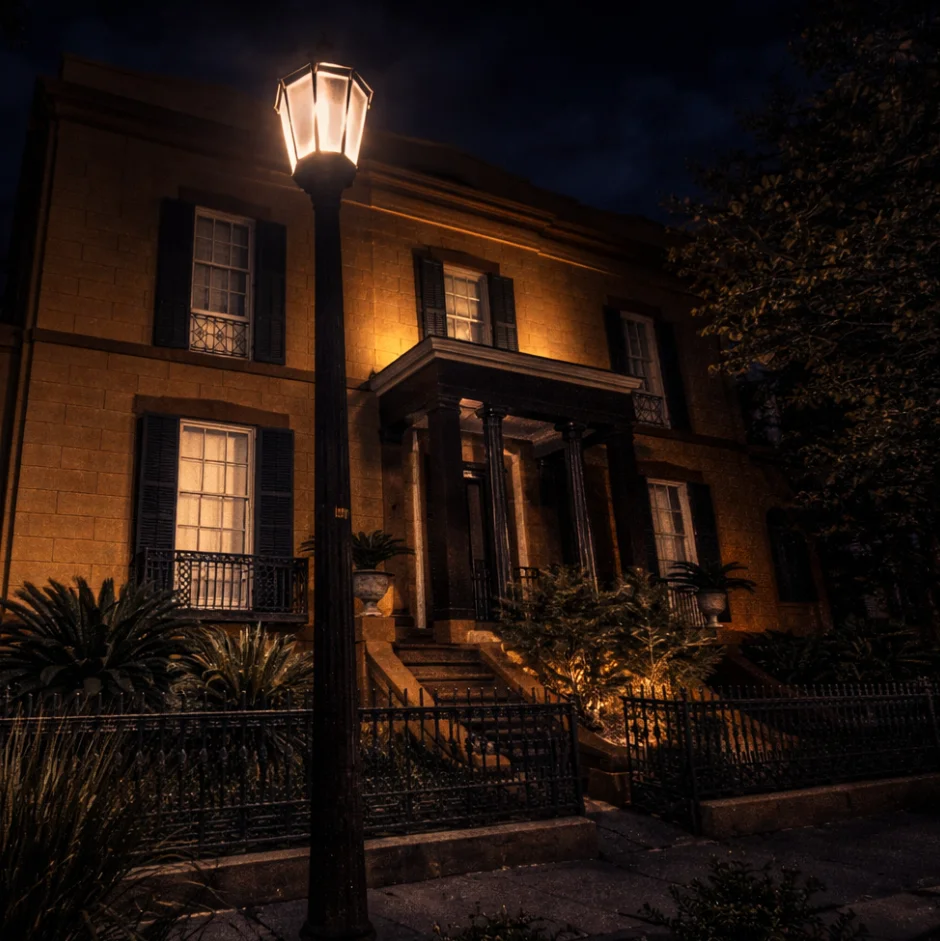
The mansion was designed by the noted Irish-born architect Charles B. Cluskey — the same architect behind Savannah’s mysterious Cluskey Vaults down on the bluff. His work here blends Greek Revival grandeur with a symmetrical Regency layout, expansive rooms, sprawling gardens, and detailed ironwork. When the mid-20th-century preservation movement took hold, the Historic Savannah Foundation chose the Sorrel-Weed House as its very first public exhibit, and it became one of the first two homes in Georgia to be designated a state landmark.
Yet it isn’t only the physical beauty that captivates visitors. The house has become a nexus of reported paranormal activity, with countless guests and investigators describing unexplained phenomena — ghostly footsteps echoing through empty halls, doors that move on their own, and sudden, inexplicable chills in the air.
Matilda and Molly: Fact and Legend
No story is more tied to the Sorrel-Weed House than the tragic tale of Matilda Sorrel and an enslaved woman named Molly. It’s worth separating what history documents from what legend has embellished — because the truth is haunting enough on its own.
What is documented: Francis Sorrel’s wife, Matilda, died by suicide in 1859. A letter written by a family friend, Charles C. Jones, records that she fell to her death from an upper-story window “in a fit of lunacy” — and, notably, that it happened not in the grand mansion itself but at the family’s home next door at 12 West Harris Street, where they had moved after selling the house to the Weeds. Matilda’s death was a real and profound tragedy.
What is legend: the popular ghost-tour version holds that Matilda leapt to her death after discovering that Francis was having an affair with a young enslaved woman named Molly, and that Molly, consumed by grief and fear, was soon found dead in the carriage house. It’s a dramatic tale — but historians have found no records tying an enslaved woman named Molly to the household in that way, and the specific affair-and-suicide story is generally regarded as fictional. (Slave manifests do record enslaved women named Molly owned by Francis Sorrel, so a Molly certainly existed among the people he enslaved — but not the story the legend tells.)
The legend may be fiction — but the horrors it points to were terribly real.
It’s important to hold both truths at once. The dramatic Molly narrative isn’t supported by the record — and yet, as one history of American slavery notes, it reflects the very real horrors of abuse that enslaved women endured throughout this era. In that sense, the legend endures not because it happened exactly as told, but because it gives voice to a suffering that was all too common, and too rarely written down.
Echoes of the Past: The Ghostly Inhabitants

Whatever the truth behind the legends, the Sorrel-Weed House has earned a formidable reputation for the paranormal — it’s one of the most investigated haunted houses in America, having appeared on numerous ghost-hunting television programs. Two figures dominate the reports: a sorrowful woman, often identified with Matilda, seen on the balconies and in the upper rooms, and a shadowy female figure said to linger in the carriage house, tied to the Molly legend.
Guests and investigators describe cold spots, disembodied footsteps, and the unshakable sense of being watched. Paranormal teams have come away with EVP recordings that seem to capture mysterious voices, and night-vision cameras that catch fleeting movement in empty rooms. Whether these are echoes of real tragedy, the weight of the house’s difficult history, or something the mind conjures in such an atmospheric place, few visitors leave the Sorrel-Weed House unmoved.
Beyond the Veil: The Lasting Legacy
The Sorrel-Weed House stands at the intersection of history, architecture, and the paranormal. Its walls tell the story of a bygone era — of antebellum wealth built on slavery, of a family divided by war, and of a genuine tragedy that folklore has since wrapped in legend. It endures as a reminder that the most compelling ghost stories are usually rooted in real human loss.
On our walk through haunted Savannah, we pause before this grand house on Madison Square to tell its story — carefully separating the documented history from the legend, and honoring the real people, free and enslaved, whose lives and deaths gave rise to it. Listen closely at dusk, and it’s not hard to believe that some of them are listening back.
Hear the Sorrel-Weed House Story After Dark
The Sorrel-Weed House is a highlight of our walk through haunted Savannah — where we tell you the true history behind one of the city’s most famous legends.
Book a Savannah Ghost Tour
Chris Allen is the founder of Destination Ghost Tours, a historian and storyteller with a lifelong fascination for the darker corners of history. He spends his time uncovering the true stories behind haunted legends, guiding guests through historic cities, and chasing down details that refuse to stay buried. When he is not working, he can usually be found with his partner Arissa, their dog Bear, and their two cats, Trouble and Covu, photographing old places, digging through archives, or disappearing into historical rabbit holes. He believes the best history is honest, atmospheric, and just unsettling enough to linger.
Trackbacks/Pingbacks