The Haunted History of Colonial Park Cemetery: Savannah Ghost Tours Reveal Yellow Fever Secrets
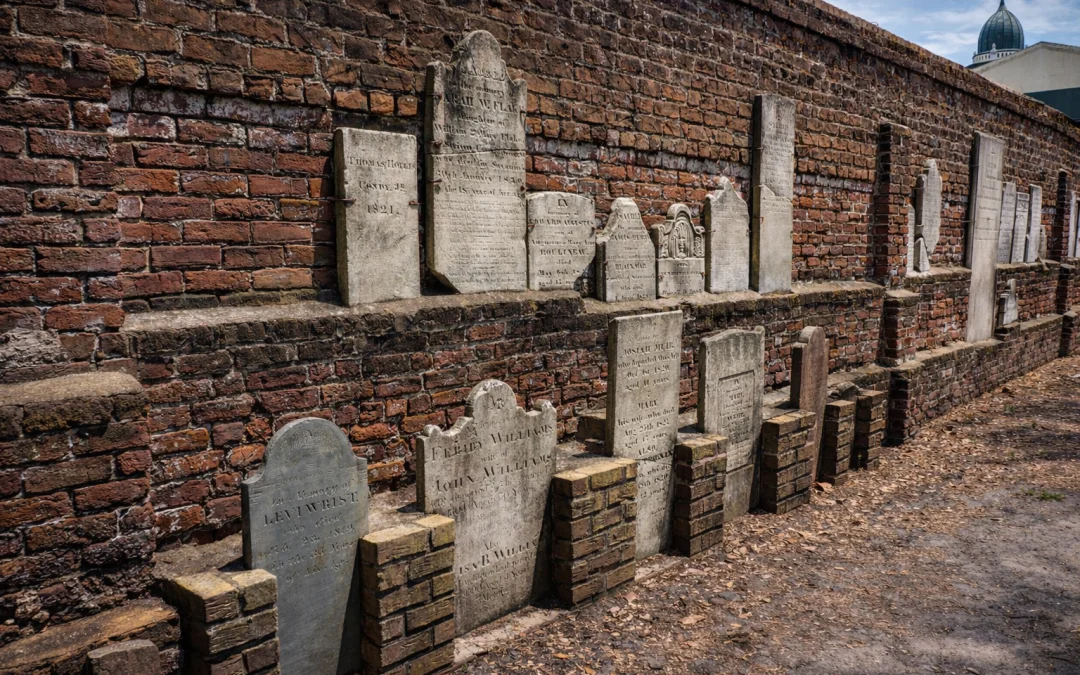
Moonlight filters through Spanish moss, casting shifting shadows across weathered headstones that lean at impossible angles. The air hangs heavy with the scent of magnolia and something deeper—the weight of centuries. Colonial Park Cemetery stretches before you like an open book of Savannah’s darkest chapters, its six acres holding more than 10,000 souls, many claimed by the yellow fever epidemics that swept through Georgia’s oldest city like wildfire through dry timber. When experienced guides lead
Savannah Ghost Tours through these hallowed grounds, they’re not just sharing ghost stories—they’re unveiling the raw, unvarnished truth of how a city learned to live with death as a constant companion.
The cemetery’s wrought-iron gates have witnessed more sorrow than perhaps any other location in the Historic District. Here, beneath your feet, lie victims of yellow fever, Revolutionary War soldiers, and ordinary citizens whose lives were cut short by the harsh realities of colonial life. Their headstones tell stories of entire families wiped out in weeks, of children who never saw their fifth birthday, of a community that refused to surrender despite facing what seemed like biblical plagues.
But Colonial Park Cemetery holds secrets darker than disease and death. Grave robbing. Body snatching. Medical students desperate for cadavers. The violations that occurred here in the 19th century would horrify modern sensibilities, yet they shaped the very foundations of American medical education. Understanding this history—all of it, without sanitization or sensationalism—transforms a simple walk among headstones into something profound: a meditation on resilience, remembrance, and the thin veil between past and present.
From Sacred Ground to Public Cemetery: Colonial Park’s Origins
The land that became Colonial Park Cemetery began its service to Savannah’s dead in 1750, when the growing city needed space beyond the small burial ground at Christ Church. General James Oglethorpe’s original plan for Savannah hadn’t anticipated how quickly the population would grow—or how frequently residents would die. The six-acre plot on the southeastern edge of the colonial city seemed spacious then. Within decades, it would prove woefully inadequate.
Originally known simply as the South Broad Street Cemetery, the burial ground served all of Savannah’s residents regardless of social status, though wealth certainly influenced where and how elaborately one was interred. The cemetery’s earliest graves reflect the diverse population that called colonial Savannah home: English settlers, Scottish Highlanders, German Salzburgers, and Sephardic Jews who had fled persecution in Europe. Side by side, their headstones create a stone tapestry of immigration, hope, and ultimately, shared mortality.
The Revolutionary War Years
When the Revolutionary War reached Savannah, Colonial Park Cemetery took on new significance. The British occupied the city from December 1778 to July 1782, and during this period, the cemetery became a silent witness to the brutalities of war. American patriots and British loyalists found themselves buried in the same soil, their political differences rendered meaningless by death.
The Siege of Savannah in October 1779 brought particular tragedy. Count Casimir Pulaski, the Polish nobleman who had become a hero of the American cause, died from wounds received during the failed assault on British positions. Though his exact burial location remains disputed, Colonial Park Cemetery was certainly filled with casualties from that bloody autumn day when over 800 Allied soldiers fell in a disastrous charge against British fortifications.
Yellow Fever: The Invisible Enemy
If war brought death to Colonial Park Cemetery in dramatic bursts, yellow fever brought it in relentless waves that tested Savannah’s very survival. The disease, transmitted by Aedes aegypti mosquitoes, found ideal conditions in Savannah’s humid climate and standing water. What residents couldn’t understand was why some summers brought only scattered cases while others unleashed full-scale epidemics that emptied entire neighborhoods.
The yellow fever epidemic of 1820 marked a turning point in both the cemetery’s history and Savannah’s relationship with death. Over 700 people died in a city of roughly 7,500 residents—nearly one in ten. The cemetery’s orderly rows of graves gave way to mass burial trenches as overwhelmed gravediggers struggled to keep pace with the relentless toll. Families who had carefully planned their eternal resting places found their loved ones buried wherever space could be found.
The 1876 Epidemic: A City Under Siege
No epidemic tested Savannah more severely than the yellow fever outbreak of 1876. The disease arrived in late summer aboard ships from Cuba, where yellow fever was endemic. Within weeks, it had spread throughout the city’s densely packed neighborhoods. Colonial Park Cemetery, though officially closed to new burials since 1853, became a focal point for the city’s grief as families visited the graves of previous yellow fever victims while burying new ones in Laurel Grove Cemetery.
The 1876 epidemic killed over 1,000 people in Savannah alone. Entire families vanished from city directories. Businesses shuttered permanently. The psychological toll proved almost as devastating as the physical deaths. Survivors developed an acute awareness of mortality that permeated Savannah culture, contributing to the elaborate mourning rituals and death customs that persist in modified forms today.
During these epidemic years, people reported strange phenomena around Colonial Park Cemetery. Lights moving between the headstones when no one was present. Voices calling out in the pre-dawn hours. Whether these accounts reflected genuine paranormal activity or the psychological stress of a community under siege remains open to interpretation. What’s undeniable is that yellow fever left Savannah forever changed—and Colonial Park Cemetery became a repository not just for bodies, but for the collective trauma of a city that had stared into the abyss.
The Dark Business of Body Snatching
Colonial Park Cemetery’s troubles didn’t end with yellow fever. By the early 1800s, the cemetery faced a different kind of violation: grave robbing. The Medical College of Georgia, founded in Augusta in 1828, created demand for human cadavers that legal sources couldn’t meet. Medical students and unscrupulous entrepreneurs turned to “resurrection men”—professional grave robbers who exhumed fresh corpses for anatomical study.
Savannah’s cemeteries, including Colonial Park, became prime targets. The resurrection men developed sophisticated techniques, working by moonlight with minimal tools to avoid detection. They would dig down to the head of a coffin, break open the top, and remove the body using ropes and pulleys. Personal belongings were typically left behind—the goal was cadavers, not treasure.
The Button Gwinnett Incident
Perhaps the most famous case of grave robbing at Colonial Park Cemetery involved Button Gwinnett, one of Georgia’s three signers of the Declaration of Independence. Gwinnett had been buried in the cemetery after dying from wounds received in a duel with Lachlan McIntosh in 1777. In the 1840s, his grave was found disturbed, the coffin broken open and the remains missing.
The discovery created a scandal that reached national newspapers. Had resurrection men stolen the body of a Founding Father? The mystery was never solved, though rumors persisted that Gwinnett’s remains had ended up in a medical school somewhere in the South. The incident highlighted how even the most prominent citizens weren’t safe from post-mortem violations.
Community Response and Protection
Savannah’s residents didn’t accept grave robbing passively. Wealthy families began investing in elaborate security measures: heavy stone slabs, iron cages around graves, and private watchmen. Some families moved their loved ones to private vaults or had them buried in unmarked graves to avoid attention. The poor, who couldn’t afford such protections, remained vulnerable to resurrection men.
The body snatching era left Colonial Park Cemetery scarred both literally and figuratively. Many graves show signs of having been disturbed and hastily refilled. Headstones were moved, sometimes multiple times, as families attempted to conceal the exact locations of their loved ones’ remains. This chaotic rearrangement contributes to the cemetery’s current maze-like appearance, where headstones often mark empty graves while unmarked plots hold multiple bodies.
Paranormal Encounters in the Haunted Squares of Savannah
Colonial Park Cemetery’s traumatic history has made it a focal point for those interested in Savannah’s paranormal reputation. The combination of mass yellow fever burials, grave robbing violations, and over two centuries of accumulated grief has created what many consider one of the most spiritually active locations among the haunted squares Savannah is famous for. Visitors and paranormal researchers have documented a wide range of unusual phenomena, though interpreting these experiences requires careful consideration of both historical context and individual psychology.
The most commonly reported experiences involve sudden temperature drops in specific areas of the cemetery, particularly near the sections where yellow fever victims were buried in mass graves. Multiple witnesses have described feeling observed while walking among the headstones, especially during the early morning hours when mist rises from the ground. Some visitors report hearing voices speaking in what sounds like colonial-era speech patterns, though no sources are visible.
The Children’s Section
Perhaps the most emotionally charged area of Colonial Park Cemetery is the section containing numerous children’s graves. Yellow fever was particularly deadly to young people, and entire families of children were sometimes buried within days of each other. The small headstones, many featuring lambs or clasped hands, create a poignant reminder of how precarious childhood was in colonial and antebellum Savannah.
Visitors to this section frequently report hearing what sounds like children playing—laughter, running footsteps, voices calling out games. These experiences typically occur during daylight hours rather than at night, contrary to typical ghost story expectations. Whether these represent actual paranormal phenomena or the psychological impact of confronting such concentrated child mortality remains a matter of individual interpretation.
Archaeological Discoveries and Modern Understanding
Recent archaeological work at Colonial Park Cemetery has revealed new insights into both its history and its paranormal reputation. Ground-penetrating radar studies have confirmed what historians long suspected: the cemetery contains far more bodies than marked graves would suggest. The mass burial trenches from yellow fever epidemics contain multiple layers of remains, with some estimates suggesting over 10,000 people are buried in the six-acre space.
These discoveries help explain why Colonial Park Cemetery feels so charged with history. The density of human remains, combined with the traumatic circumstances of many deaths, has created what archaeologists term a “palimpsest of memory”—layers of history that bleed through into contemporary experience. Understanding the literal underground reality of the cemetery provides context for why so many visitors report intense emotional responses to the space.
Preservation Challenges
Colonial Park Cemetery faces ongoing preservation challenges that connect directly to its paranormal reputation. Many headstones have been moved multiple times over the centuries, creating confusion about who is actually buried where. Some graves were relocated when streets were widened or buildings constructed. Others were disturbed by grave robbers and never properly restored.
This physical displacement of graves and markers contributes to what paranormal researchers describe as “spiritual unrest.” The disconnect between markers and actual burial locations may explain why some visitors report feeling that the cemetery’s energy is somehow “unsettled” or “confused.” Whether interpreted in paranormal terms or psychological ones, the cemetery’s complex layering of death, displacement, and remembrance creates a unique atmosphere that distinguishes it from more orderly burial grounds.
Colonial Park Cemetery and Savannah’s Ghost Tour Tradition
Colonial Park Cemetery’s role in Savannah Ghost Tours extends beyond simple scare tactics to encompass serious historical education about the city’s development, public health challenges, and social evolution. Experienced guides use the cemetery’s documented history to illuminate broader themes about how communities cope with mass death, social inequality, and collective trauma. The yellow fever epidemics, grave robbing incidents, and preservation challenges provide concrete examples of how the past continues to influence the present.
When visitors walk through Colonial Park Cemetery on a professionally guided tour, they’re experiencing what historians call “dark heritage”—tourism that acknowledges difficult aspects of the past without exploiting them for mere entertainment. The cemetery’s Spanish moss-draped atmosphere and weathered headstones certainly contribute to its ghostly reputation, but the real power of the location lies in its ability to make abstract historical concepts tangible and personal.
Educational Value of Paranormal Tourism
The intersection of paranormal interest and historical education at Colonial Park Cemetery creates unique opportunities for learning. Visitors who might never pick up a book about 19th-century public health find themselves deeply engaged with yellow fever epidemics when the information is presented in the atmospheric context of a nighttime cemetery tour. The emotional connection fostered by the setting makes historical facts more memorable and meaningful.
This educational value extends beyond simple fact retention to include empathy development and historical thinking skills. Standing among graves of yellow fever victims while learning about the social conditions that enabled epidemic disease helps visitors understand how public health, urban planning, and social justice interconnect across time. The paranormal framework provides an entry point for serious historical reflection.
The Living History of Colonial Park Cemetery
Colonial Park Cemetery closed to new burials in 1853, but its history didn’t end there. The space has continued evolving as subsequent generations have used it to understand their relationship to Savannah’s past. During the Civil War, Union soldiers camped in the cemetery and used headstones for gaming tables and makeshift stoves, leaving scorch marks still visible today. These violations added another layer of trauma to an already troubled space.
The cemetery’s transformation into a public park in the early 20th century reflected changing attitudes toward death and public space. What had once been strictly a place of mourning became a location for quiet reflection, historical education, and eventually, paranormal tourism. This evolution demonstrates how communities repurpose spaces of collective memory to meet contemporary needs while honoring past experiences.
Contemporary Preservation Efforts
Modern preservation efforts at Colonial Park Cemetery focus on stabilizing headstones, documenting grave locations, and maintaining the site’s historical integrity. These practical concerns intersect with paranormal tourism in interesting ways. Proper historical documentation helps separate verified facts from folklore, while preservation work often uncovers new information that adds depth to existing ghost stories.
The ongoing archaeological and historical research at Colonial Park Cemetery ensures that Savannah Ghost Tours can continue offering accurate, respectful presentations of the site’s complex history. As new discoveries emerge—additional mass grave sites, previously unknown victims, evidence of grave robbing techniques—they’re incorporated into tour narratives in ways that enhance rather than sensationalize the historical record.
Why Colonial Park Cemetery Remains Savannah’s Most Haunted Ground
Colonial Park Cemetery’s reputation as one of the most spiritually active locations on Savannah Ghost Tours stems from the convergence of multiple historical traumas within a single, relatively small space. Yellow fever epidemics, grave robbing, wartime violations, and centuries of accumulated grief have created what paranormal researchers describe as a “perfect storm” of conditions associated with supernatural activity. Whether one interprets reported phenomena as genuine ghost encounters or psychological responses to historical knowledge, the cemetery’s power to move and unsettle visitors remains undeniable.
The cemetery’s physical layout contributes to its haunted atmosphere. Headstones lean at dramatic angles, creating shadows that shift and dance with the slightest breeze. Spanish moss drapes from ancient oak trees like tattered curtains, filtering moonlight into ethereal patterns. The scent of magnolia mingles with the earthier aromas of old graves and decomposing leaves. These sensory elements combine with historical knowledge to create an experience that engages both rational analysis and emotional response.
But perhaps most importantly, Colonial Park Cemetery serves as a tangible connection to Savannah’s most vulnerable moments. The yellow fever victims buried in unmarked mass graves represent the city’s struggle against forces beyond human control. The violated graves speak to the ongoing exploitation of the powerless by the powerful. The weathered headstones marking children’s graves remind us that progress isn’t inevitable and that past sorrows deserve remembrance rather than forgetting.
Walking through Colonial Park Cemetery on a properly researched and respectfully conducted ghost tour transforms visitors from passive consumers of spooky entertainment into active participants in historical memory. The experience works precisely because it doesn’t rely on fabricated scares or manufactured mysteries. The documented history provides more than enough material for reflection on mortality, community resilience, and the ways that past traumas continue influencing present experiences.
When you stand among these weathered headstones beneath Savannah’s Spanish moss, you’re not just visiting a tourist attraction—you’re witnessing the physical evidence of how a community learned to survive repeated encounters with mass death. The yellow fever epidemics that filled these graves tested Savannah’s resolve in ways modern residents can barely imagine. The grave robbing violations that followed represent a different kind of trauma, one that challenged assumptions about dignity, respect, and the sanctity of death itself.
These aren’t abstract historical concepts when experienced in the atmospheric setting of Colonial Park Cemetery during a professionally guided tour. They become personal, immediate, and emotionally resonant. Whether you interpret your experience in paranormal terms or purely historical ones, the cemetery offers something increasingly rare in our modern world: a genuine encounter with the weight of the past and its continuing influence on the present.
Destination Ghost offers both Spirits & Scoundrels Ghost Tours and Haunted Hops Pub Tours that include Colonial Park Cemetery as a central stop, providing visitors with thoroughly researched historical context alongside the atmospheric experience that makes Savannah’s haunted reputation so compelling. These aren’t sensationalized scare experiences but rather thoughtful explorations of how historical trauma, collective memory, and individual psychology intersect in spaces where the past feels particularly present.
Learn more about our historically grounded approach to Savannah’s paranormal heritage, or
book your tour today to experience Colonial Park Cemetery’s haunted history with guides who understand that the most powerful ghost stories are often the truest ones.