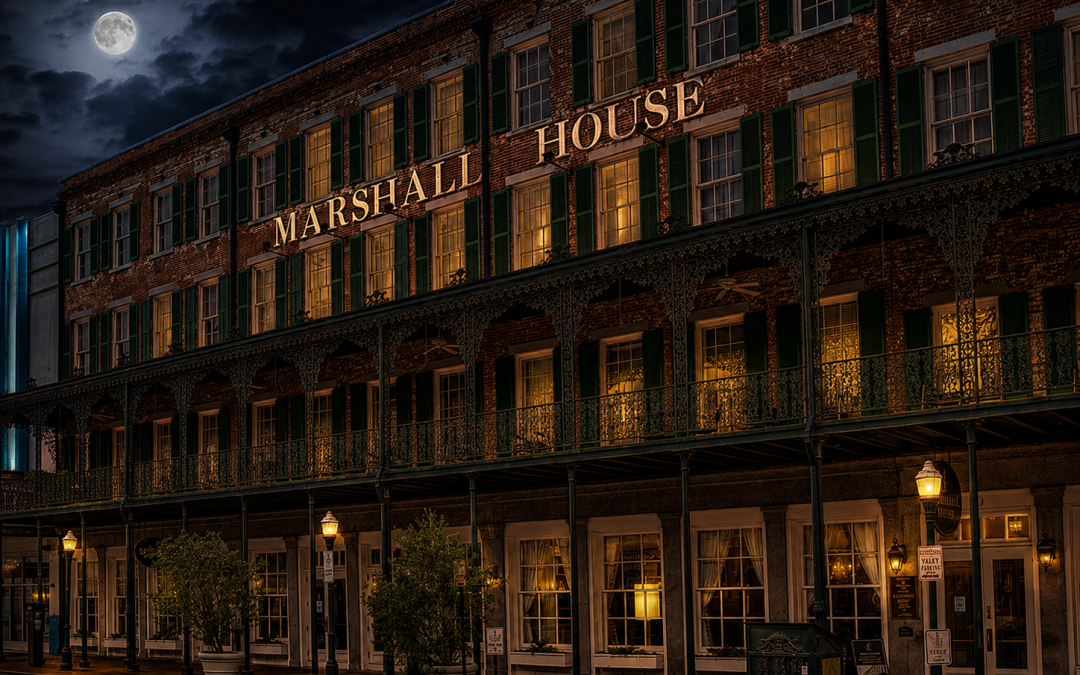
Known for its Southern charm, cobblestone streets, and balmy moonlit nights, Savannah is an ancient city by American standards — and, many would argue, one of the most haunted.
Founded in 1733 by General James Edward Oglethorpe, Savannah has seen more than its share of fire, fever, war, and tragedy. Given that turbulent history, it’s little wonder the city is chock-full of spooky graveyards, haunted squares, and repurposed old buildings whose walls surely have stories to tell. Visitors come from all over the world for the ghosts, and there’s a Savannah ghost tour for every kind of seeker. Here are some of the city’s most haunted places.
The Marshall House
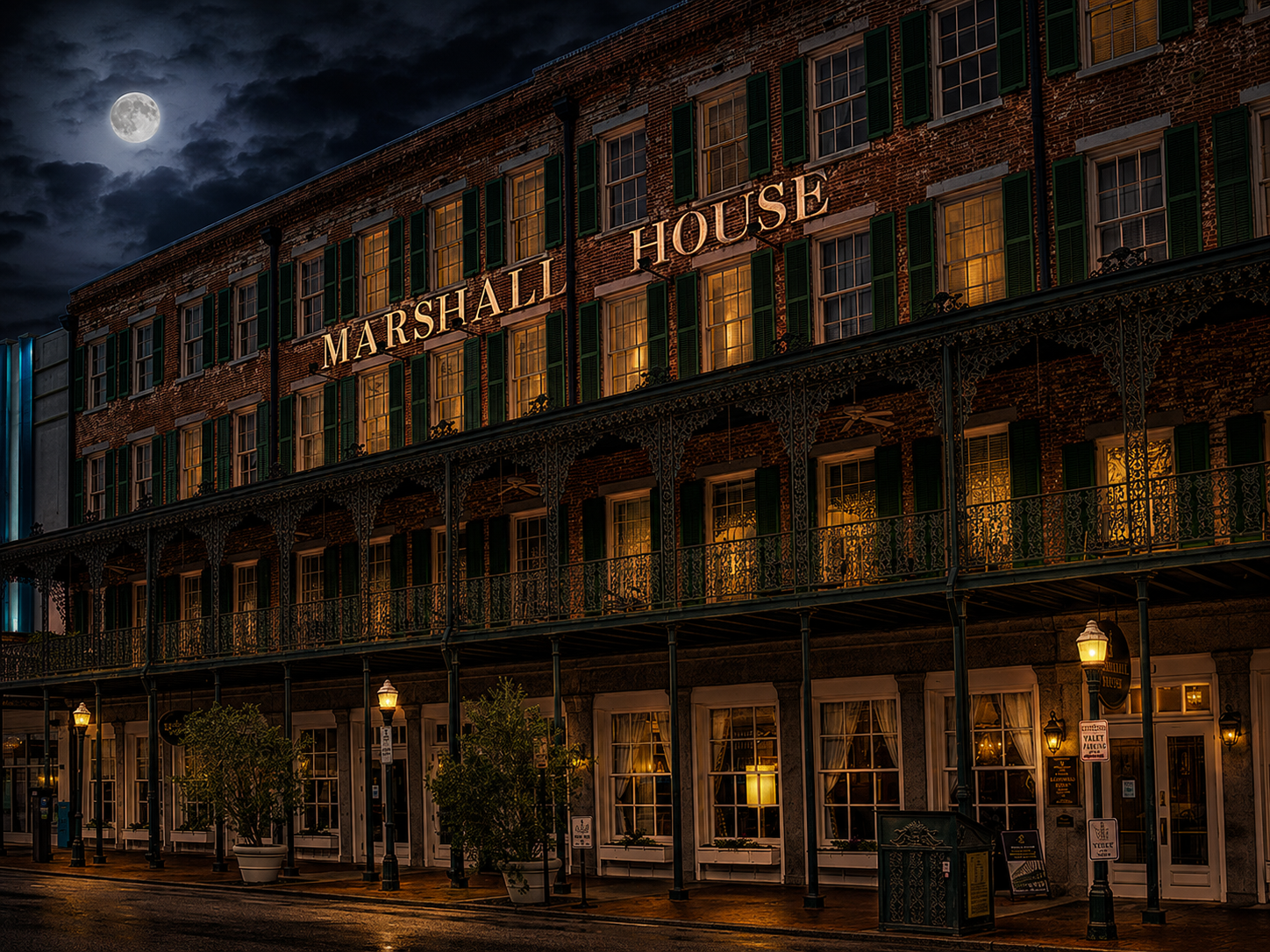
Built in 1851, the Marshall House is one of Savannah’s oldest hotels. Between hosting countless travelers, it served as a hospital during Savannah’s mid-century yellow fever epidemics and again for Union soldiers during the Civil War. That grim history left a literal mark: during renovations in the 1990s, workers famously discovered human bones beneath the floorboards — believed to be amputated limbs from the building’s days as a wartime surgical hospital.
With that much death and suffering under one roof, modern reports of strange odors, moaning, and the giggling of unseen children start to make a certain sense. The most unsettling spot is said to be the night manager’s office, where guests and staff alike have reported creepy sounds, phantom footsteps, and persistent, muffled groaning. Some tie the activity to the 1885 shooting of night clerk W. H. Dawson, killed by a drunken ruffian — and wonder whether his restless spirit still lingers.
Bonaventure Cemetery
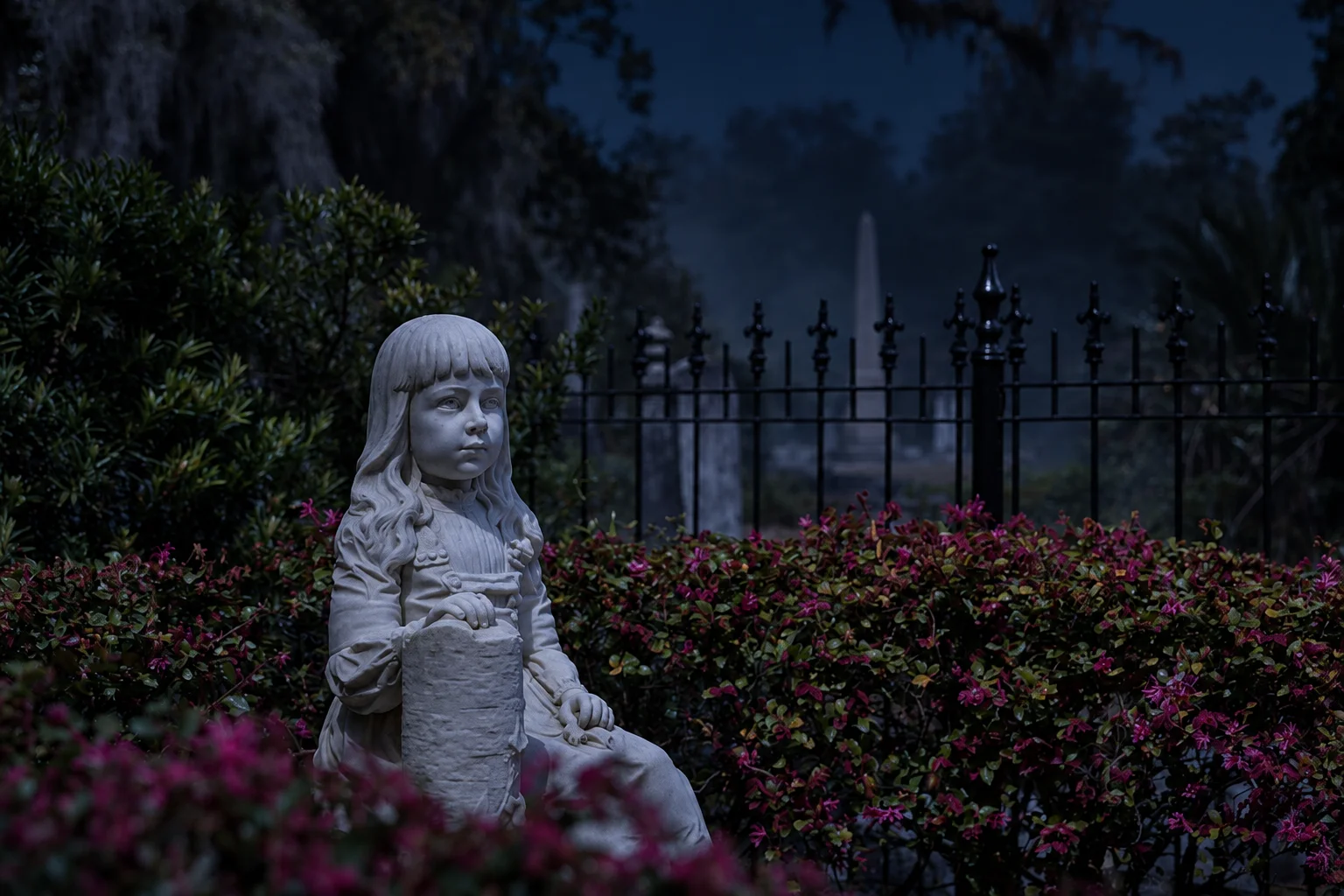
Picture, if you dare, row after row of age-worn tombstones shaded by live oaks heavy with Spanish moss. Set on the grounds of a former plantation along the Wilmington River — a private cemetery since 1846 and a public one since 1907 — Bonaventure is everything you could want in a classically spooky graveyard.
Among all its haunting statues, the bravest souls seek out the grave of Little Gracie Watson, the beloved six-year-old whose parents nearly went mad with grief when pneumonia took her in 1889. Her father commissioned a lifelike statue of the girl that still watches over her grave. Some claim to glimpse her tiny ghost near the site; others swear the statue itself weeps tears of blood. There are cemetery-focused tours dedicated to Savannah’s burial grounds, including Bonaventure, Laurel Grove South, and the downtown Colonial Park Cemetery.
Wright Square

Part of Savannah’s charm is its grid of squares, originally laid out by Oglethorpe as parade grounds for drilling his militia and later evolving into the leafy public spaces the city is famous for. But some squares served far grimmer purposes. Wright Square is among the most infamous, for it was once the site of the city’s gallows.
Keep an eye out for the sorrowful spirit of Alice Riley, the first woman hanged in Georgia. In 1735, Alice and her common-law husband killed their cruel employer and were sentenced to death. Because Alice was pregnant, she received a brief stay — just long enough to deliver her child, who was then taken from her before she went to the gallows. For nearly three centuries, visitors have reported the figure of a distraught young woman drifting through Wright Square, searching for her lost infant. Other squares said to be haunted include Reynolds, Madison, Lafayette, and Calhoun.
Moon River Brewery (The Former City Hotel)

On the corner of West Bay and Whitaker Streets sits a popular microbrewery housed in what was once Savannah’s first hotel. The City Hotel opened in 1821, hosting countless guests — among them the naturalist John James Audubon — and witnessing its share of violence, including a fatal 1832 shooting in its barroom. Some of those guests, it seems, never checked out.
Employees of the brewery report visits from Toby, a spirit with a habit of getting physical with people he doesn’t like. Beyond Toby’s shoves, staff have heard footsteps and watched beer bottles move on their own. The unrenovated upper floors have the darkest reputation: those who venture up have reported being grabbed or slapped by an unseen force, and some have glimpsed a spirit they’ve nicknamed Mrs. Johnson, thought to be a hotel cook from more than 150 years ago. Today, Moon River Brewery is considered one of the spookiest spots in the city.
Factor’s Walk
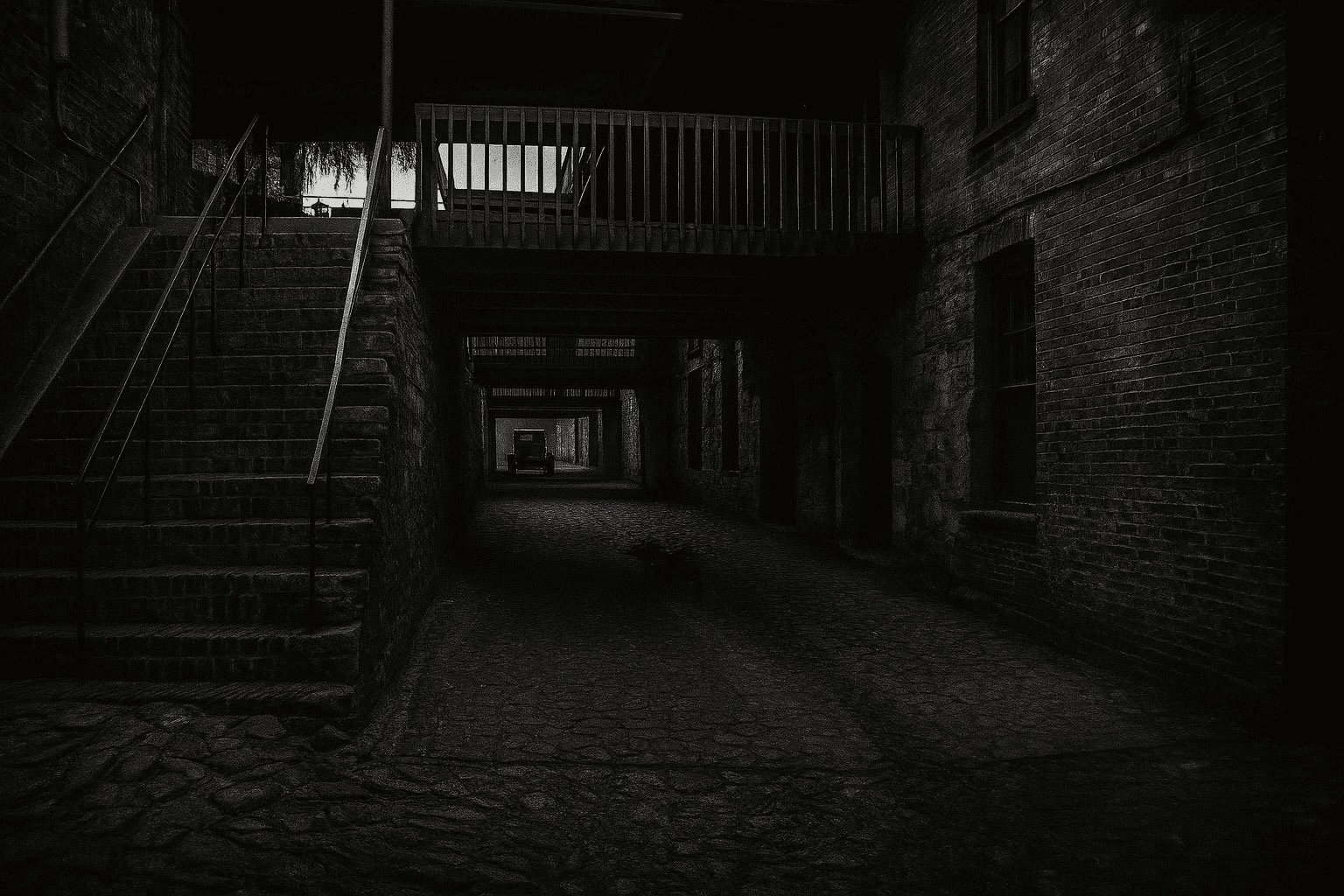
Once the busy hub of Savannah’s cotton trade, Factor’s Walk — the network of iron bridges and old warehouses between Bay Street and River Street — is now home to restaurants, antique stores, and art shops. Its name comes from the cotton “factors,” the brokers who set prices and ran the trade that made antebellum Savannah rich. And that wealth was inseparable from slavery: the waterfront below was a place of profound human suffering, where enslaved people were bought, sold, and worked in brutal conditions.
A popular legend, told with great confidence on many tours, holds that the warehouses and a network of tunnels beneath them were used to hold enslaved people in chains before sale. The documented history is more complicated. The international slave trade was outlawed in 1808, most of these structures postdate that, and a city-sponsored archaeological study of the vaults built into the bluff found no evidence they were ever used to confine people. What is beyond dispute is the depth of suffering the waterfront witnessed. Whether the distant moans and shadowy figures of women and children that visitors report are echoes of that history — or simply the weight of it — Factor’s Walk is a stop on nearly every Savannah ghost tour.
River Street
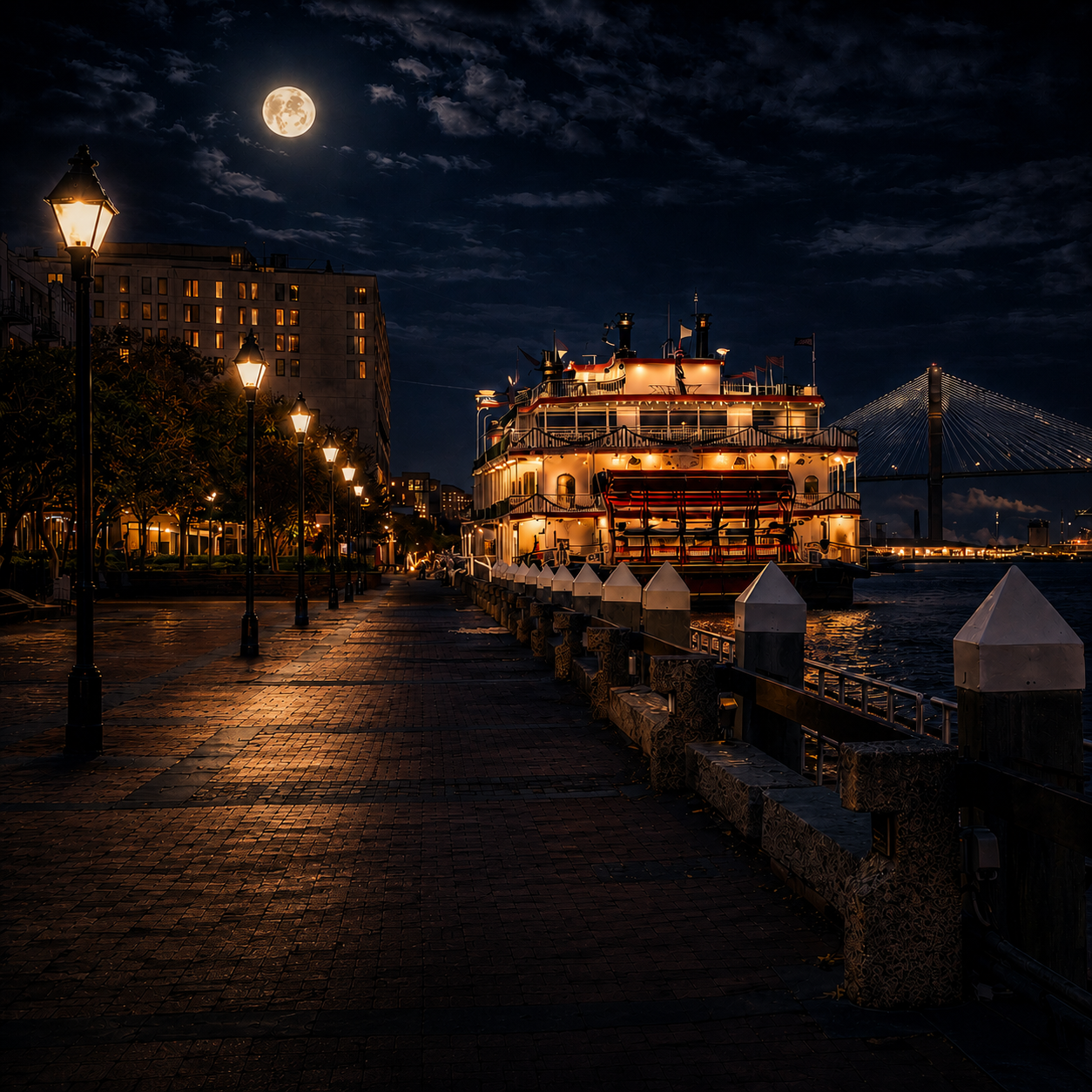
River Street runs along the Savannah River, and its history is as old as the city itself. Nearly everything that came into or left Savannah passed through here — including, tragically, enslaved men, women, and children, who arrived at this waterfront to be sold into a system built on their suffering. The human toll of those years is almost unimaginable by today’s standards, and it is a real and sobering part of the city’s past.
Given that history, it’s no surprise the area has become a center for reported supernatural experiences. Visitors describe rattling chains, moaning, and desperate cries echoing from the old passageways, along with a heavy feeling of darkness and foreboding; some even claim to have seen shadowy figures among the cobblestones. As with the tunnels of Factor’s Walk, the more dramatic claims blur history and legend — but the atmosphere here is undeniable, and River Street remains a favorite of haunted Savannah tours.
Hampton-Lillibridge House
The Hampton-Lillibridge House is often called one of Savannah’s most haunted private residences — which surprises visitors, because the modest, New England-style home looks so ordinary. Then you hear its stories. Built in 1796, it began as a private home before becoming a boarding house, where one troubled guest, a sailor, is said to have taken his own life in an upstairs room.
In 1963 the house was purchased by antiques dealer Jim Williams — later the notorious subject of Midnight in the Garden of Good and Evil — who moved the entire structure across the city. During the relocation, a workman was killed, and rumors of a curse began to swirl. Workers preparing the foundation reportedly uncovered an old brick crypt, which they hurriedly resealed and never discussed again. Williams himself claimed to hear voices and footsteps and to feel unseen presences, and passersby reported a mysterious bow-tied man watching from the window. The disturbances grew so severe that the home underwent a formal exorcism in December 1963. Whether it worked is, to this day, a matter of debate.
See Haunted Savannah for Yourself
From graveyards to old hotels to the shadows of the waterfront, the best way to feel Savannah’s haunted history is to walk it after dark. Join Destination Ghost Tours.
Book a Savannah Ghost Tour
Chris Allen is the founder of Destination Ghost Tours, a historian and storyteller with a lifelong fascination for the darker corners of history. He spends his time uncovering the true stories behind haunted legends, guiding guests through historic cities, and chasing down details that refuse to stay buried. When he is not working, he can usually be found with his partner Arissa, their dog Bear, and their two cats, Trouble and Covu, photographing old places, digging through archives, or disappearing into historical rabbit holes. He believes the best history is honest, atmospheric, and just unsettling enough to linger.