
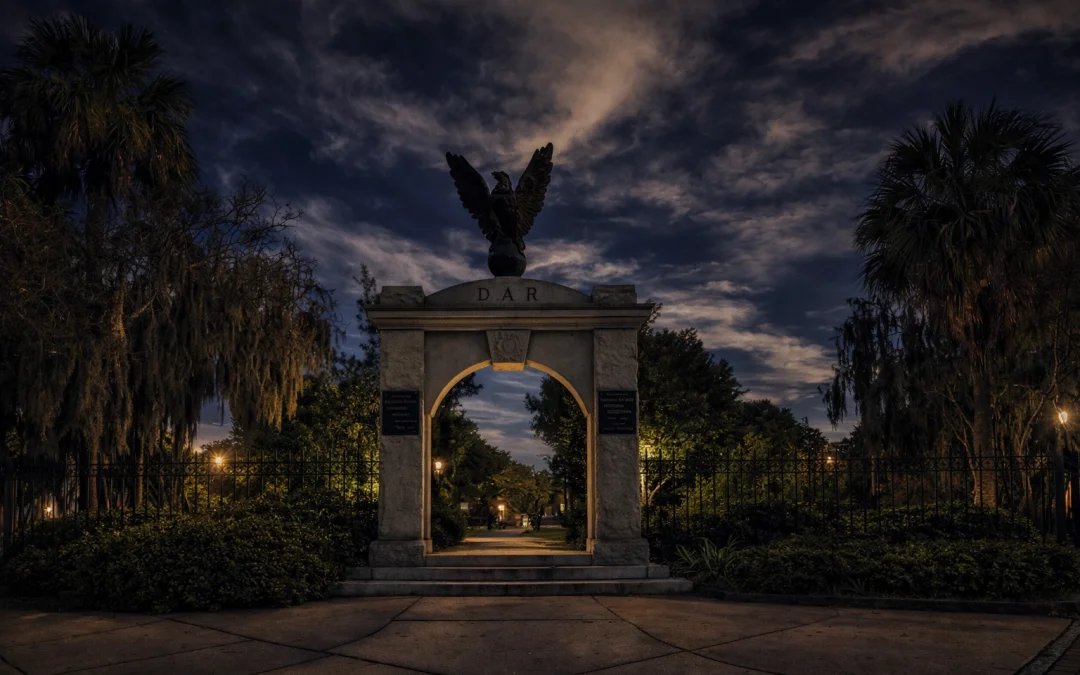
The Top Five Most Haunted Locations in Savannah
In 2002, Savannah was named “America’s Most Haunted City,” and even the most stubborn skeptic feels something shift after dark on these cobblestone lanes.
The title was awarded at a 2002 conference organized in Savannah by the American Institute of Parapsychology, a paranormal research group led by psychologist Andrew Nichols. Nichols himself admitted the designation was more honorary than strictly scientific, but he also argued Savannah earned it honestly. The city’s squares, homes, and burial grounds remain unusually intact and unusually old, and much of the historic district sits atop ground that once held graves. Savannah is sometimes described as a city built upon its own dead, and that reputation is not entirely metaphor.
Whether or not you believe in ghosts, the feeling is hard to shake: the sense of being watched, the cold that settles into brick after sunset, the footstep that echoes a beat behind your own. If you want to understand how Savannah earned its haunted name, you can read the real story behind the “Most Haunted City” title. But if you simply want to know where the stories live, start here. These are the five most haunted locations in the Hostess City of the South, counting down to the most notorious of them all.
5 The Pirates’ House
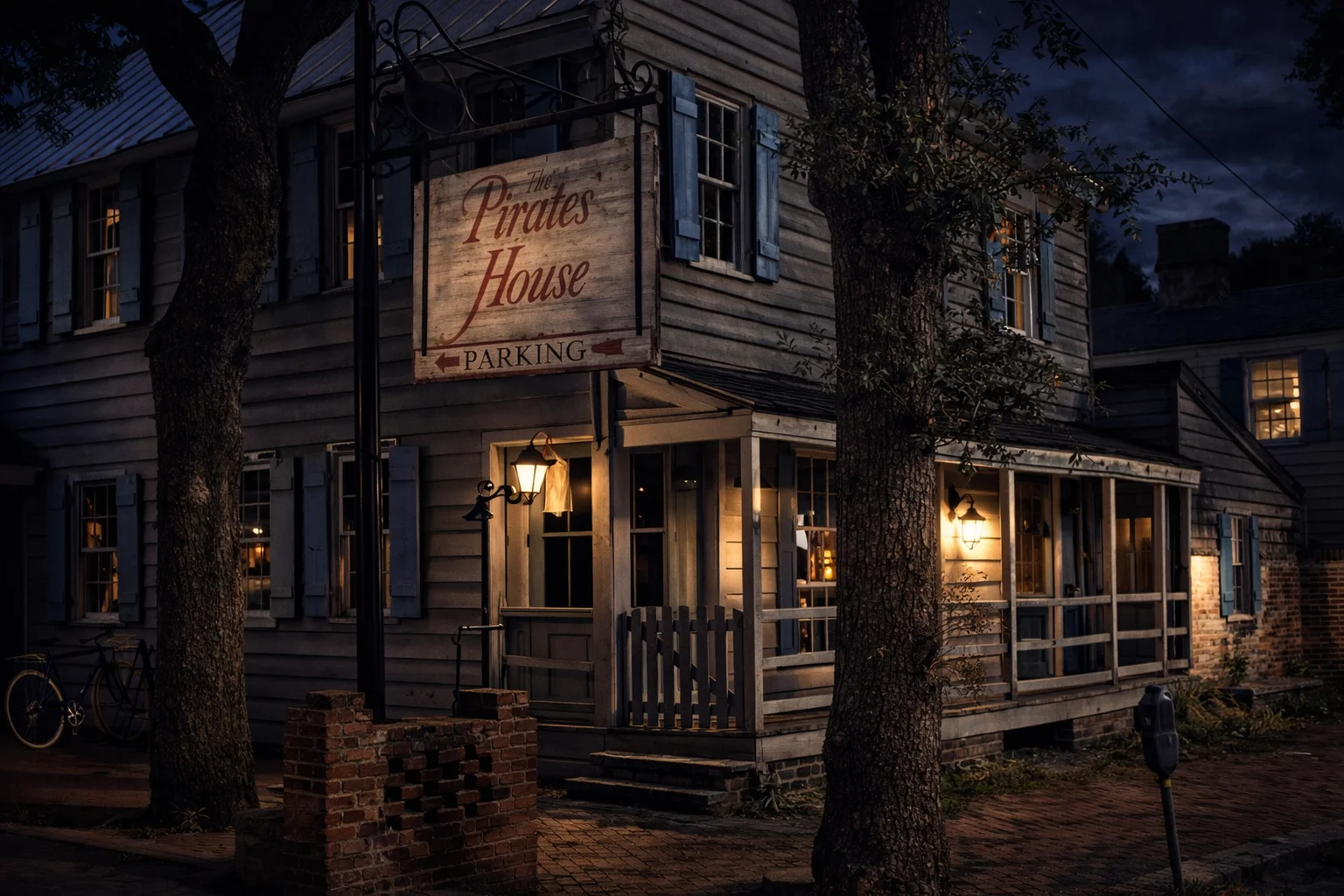
The oldest bones of The Pirates’ House reach back further than almost anything else in Savannah. In 1734, one year after James Oglethorpe founded the colony, a modest structure now called the Herb House was raised to shelter the gardener who tended the Trustees’ Garden, the first public agricultural experiment station in colonial America, modeled on the Chelsea Physic Garden in London. When the garden was abandoned around 1753, the site near the river was too valuable to waste. Savannah had become a thriving seaport, and the building was converted into an inn and tavern for the sailors coming off the ships.
It did not stay respectable for long. The tavern drew the roughest trade the docks could offer, and its reputation for danger became part of its identity. Today the restaurant, established in 1953 by Herb Traub and Jim Casey after the building was rescued from demolition, sprawls across fifteen dining rooms filled with maps, flags, and seafaring relics. It is widely considered the oldest surviving bar in Georgia.
The stories that took root
The most enduring legend ties the house to literature. Robert Louis Stevenson published Treasure Island in 1883, and tradition holds that the fearsome Captain Flint drew his last, rum-soaked breath in an upstairs room of this very inn. Whether Stevenson ever set foot in Savannah is debated, but the association has stuck for well over a century, and guests still report a sailor’s apparition drifting through the rooms.
Then there are the tunnels. Passages beneath the building are said to have connected the cellar toward the river, and the popular tale claims unlucky young men were drugged, dragged below, and pressed, or “shanghaied,” into service aboard outbound ships. Historians treat the shanghai-tunnel story with caution, since hard evidence is thin, but the legend persists, and visitors still describe faint sea shanties and the muffled cries of men who never chose a life at sea. For the full account, read our deep dive into the haunting history of The Pirates’ House.
4 Moon River Brewing Company

The imposing building on West Bay Street, its green letters spelling out Moon River Brewing Company, began life in 1821 as the City Hotel, built by Charleston native Eleazer Early. It was the first hotel in Savannah, and in its early years it also housed the city’s first United States post office and a branch of the Bank of the United States. Its bar became a gathering place for Savannah’s elite, and its guest register carried remarkable names, including the naturalist John James Audubon, who lodged here for roughly six months, the Marquis de Lafayette, and General Winfield Scott.
But refinement and violence shared the same rooms. On August 10, 1832, a long and bitter feud between local physician Philip Minis and James Jones Stark, a Georgia legislator, ended when Minis shot Stark dead inside the hotel. Minis was tried and acquitted. Stark is now the most famous of Moon River’s reputed spirits, said to shove guests on the staircase and prowl the main floor.
The City Hotel closed in 1864, around the time Union forces occupied Savannah. The building later served as a warehouse, lost its roof to Hurricane David in 1979, and sat largely empty until it reopened as a brewery in the 1990s. The current name nods to “Moon River,” the song co-written by Savannah’s own Johnny Mercer.
Reported encounters
The upper floors carry the heaviest reputation. During Savannah’s repeated yellow fever epidemics, the hotel served as a makeshift hospital, and many who died there were children. Visitors and staff have long reported childlike laughter and footsteps, cold spots, a “Lady in White,” and objects that slide or fly from shelves. The building’s notoriety has made it a favorite of paranormal television, which only deepened the legend.
3 Colonial Park Cemetery
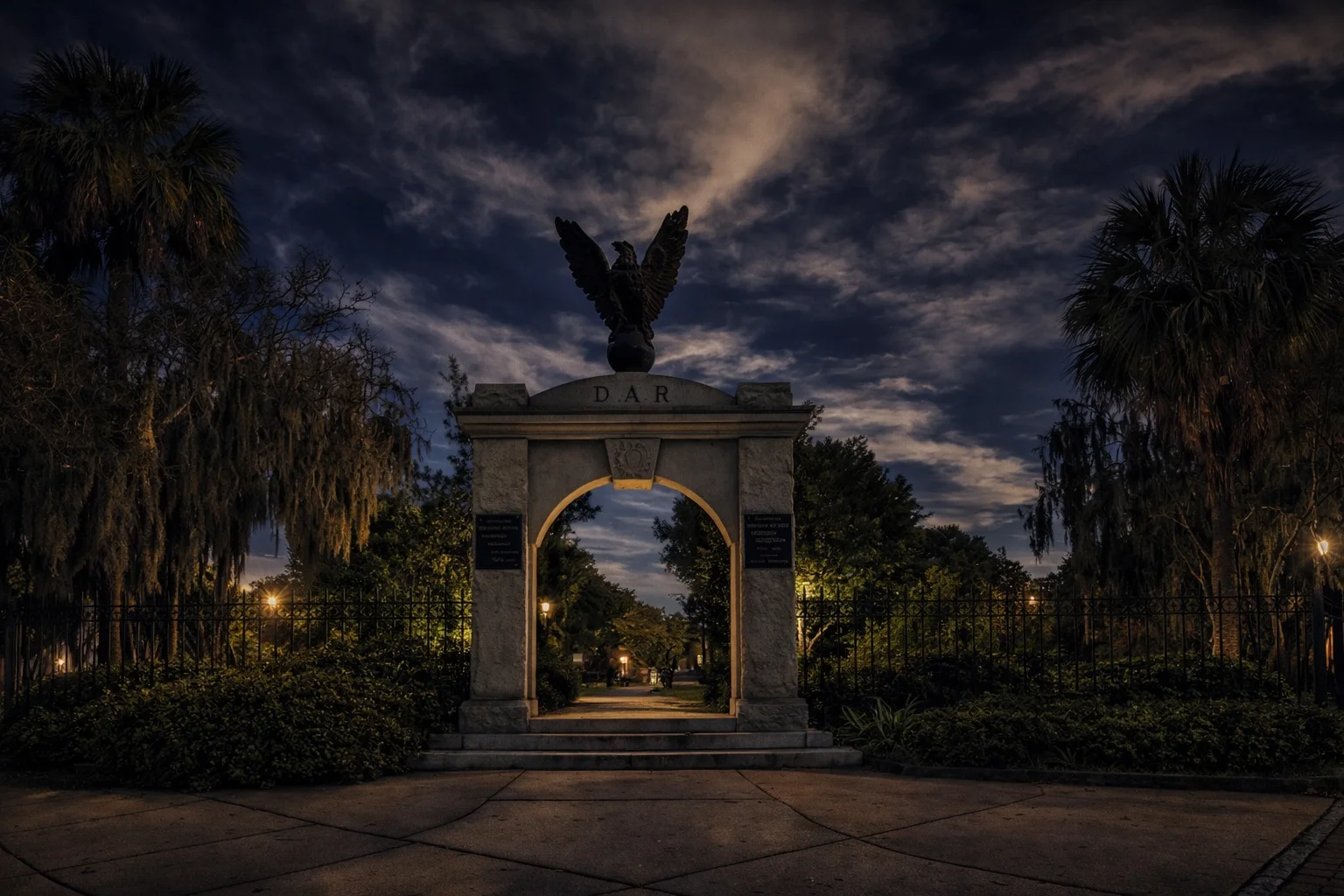
Founded in 1750, Colonial Park Cemetery is the oldest surviving cemetery in Savannah, a shaded six acres in the heart of the historic district. It began as the burial ground for Christ Church Parish and opened to Savannahians of every denomination in 1789. By the time it stopped accepting new burials in 1853, an estimated nine to ten thousand people had been laid to rest here, and yet only a fraction of the original markers survive today.
Because the cemetery closed eight years before the Civil War, a common assumption is wrong: no Confederate or Union soldiers were ever buried here. What the ground does hold is a remarkable cross-section of early Georgia. Among the interred is Button Gwinnett, a signer of the Declaration of Independence, who died in 1777 from wounds suffered in a duel with fellow Revolutionary Lachlan McIntosh. The cemetery long doubled as the city’s dueling ground, and a marker known as the Duelist’s Grave remembers young James Wilde, killed in an affair of honor. A mass grave holds roughly 700 victims of the catastrophic yellow fever epidemic of 1820.
The altered stones
The cemetery’s eeriest legend dates to December 1864, when Union troops occupied Savannah and camped among the graves. According to local tradition, bored soldiers defaced markers, toppled stones, and even chiseled false dates into the marble, which is why a handful of headstones seem to record people who lived for centuries or became parents as small children. Historians note that vandals of every era share the blame, so the story is best treated as tradition rather than settled fact. Today many of the broken and altered markers are cemented to the cemetery’s wall, unable to be matched to the graves they once named. Visitors describe the paths as strangely timeless, and report the shapes of children among the stones and a tall, dark shadow that keeps its distance.
2 The Sorrel-Weed House
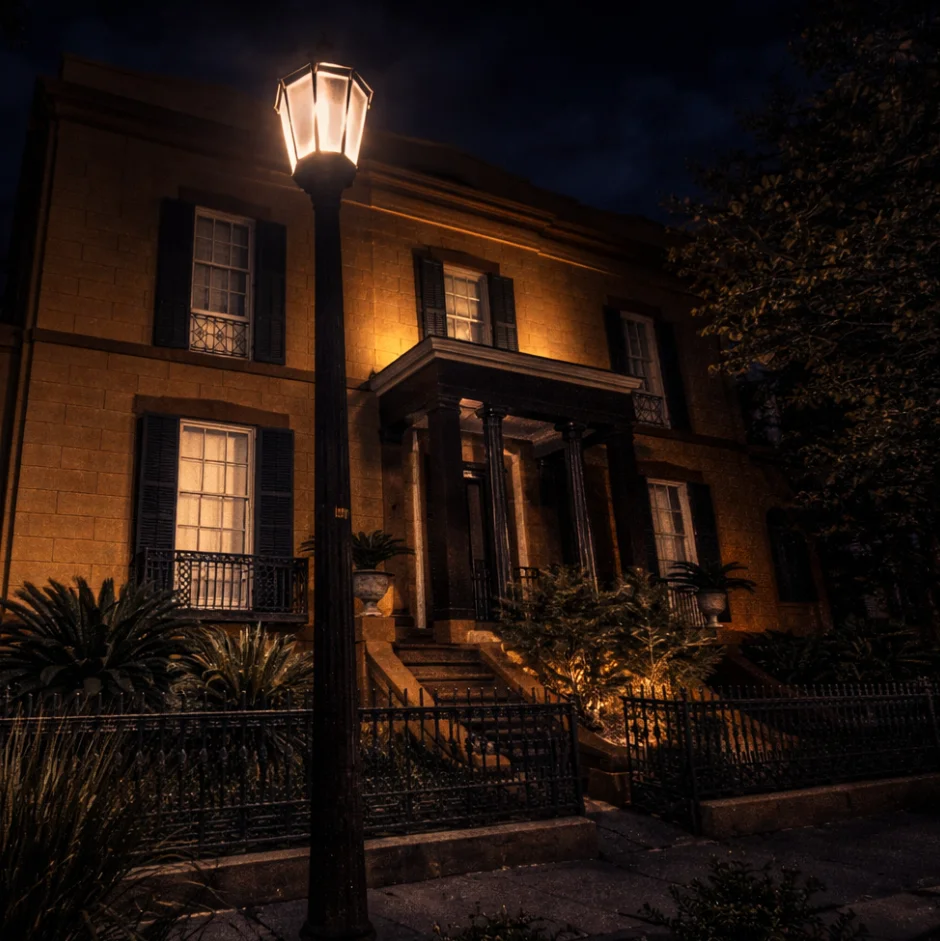
Commissioned around 1840 by the cotton merchant Francis Sorrel, the Sorrel-Weed House rises over Madison Square in confident Greek Revival symmetry. It was among the earliest and grandest homes on the square, and its beauty is inseparable from the wealth, and the enslaved labor, that built it. That double inheritance is part of why the house feels the way it does after dark.
Popular retellings often present a single dramatic tale as fact: that Matilda Sorrel discovered her husband’s affair with an enslaved woman named Molly, threw herself from a balcony, and that Molly was later found hanged in the carriage house. The truth is more careful, and more honest. Matilda Sorrel’s death by suicide in 1859 is documented, though no surviving record explains its cause. Records confirm that an enslaved woman named Molly lived in the household, but there is no historical evidence of an affair, and nothing verifies how or where Molly’s life ended. The two stories became entwined over generations into one complete-feeling legend, but responsible history lets the gaps remain.
Documented: Matilda Sorrel died by suicide in 1859. Unverified folklore: the affair, and Molly’s death by hanging. The confirmed tragedy is powerful enough without embellishment.
Reported encounters
Even measured carefully, the house has an unusual reputation. Visitors report strange noises in the small hours, sudden cold spots, objects that move on their own, and small handprints that seem to appear on the walls of the basement level. The carriage house and service areas are often named as the most unsettling spots, perhaps because they represent lives the historical record barely acknowledged. Whether that unease is a haunting or a reckoning with the past may depend on the visitor.
1 The Hampton-Lillibridge House
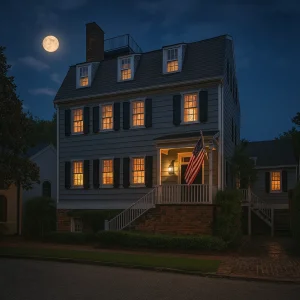
Savannah’s most notorious haunted house was not always where it now stands. Built beginning in 1796 by Hampton Lillibridge, a transplant from Rhode Island, the gambrel-roofed home reflected New England tastes that looked distinctly out of place in the Georgia lowcountry. It originally sat on East Bryan Street. After Lillibridge’s death, his widow sold the property, and it eventually became a boarding house, a chapter that included at least one reported tragedy: a sailor said to have taken his own life in an upstairs room. For years afterward, the house sat empty.
In 1963, the antiques dealer and preservationist Jim Williams, later made famous as the central figure of John Berendt’s Midnight in the Garden of Good and Evil, purchased the house along with an adjoining structure and undertook to move both to 507 East St. Julian Street, near Washington Square. The second house collapsed in the attempt, and a laborer was killed when part of the structure gave way. Larger death tolls are often repeated in the retellings, but the documented accounts center on that one fatal collapse.
A house that would not settle
The trouble, by every account, only intensified once restoration began. Workers reported tools that vanished and reappeared, disembodied footsteps and voices, and a persistent sense of being watched. One of Williams’s friends was reportedly found on an upper floor, face down and paralyzed with fear. Neighbors described a woman’s scream, a figure in a black suit at the window of the empty house, and lights that threw dancing shadows across the upstairs glass. During the work, laborers are said to have uncovered an empty brick crypt beneath the site and simply sealed it back up, something Williams later suspected had disturbed whatever lingered there.
On December 7, 1963, Reverend Albert Rhett Stewart, a bishop of the Episcopal Diocese of Georgia, performed a formal exorcism and blessing of the house. By most accounts the calm lasted less than a week before the disturbances returned.
The exorcism is a matter of record; its success is not. Investigators, psychics, and paranormal researchers have visited ever since, and the property, still a private residence, is frequently called one of the most psychically active houses in America. It is the number one haunted location in Savannah for a simple reason: no ritual, sale, or renovation has ever quieted it for long.
See Haunted Savannah for Yourself
From Madison Square to the old City Hotel, the best way to feel Savannah’s haunted history is to walk it after dark. Join Destination Ghost Tours and hear the stories where they happened.
Book a Savannah Ghost Tour
Chris Allen is the founder of Destination Ghost Tours, a historian and storyteller with a lifelong fascination for the darker corners of history. He spends his time uncovering the true stories behind haunted legends, guiding guests through historic cities, and chasing down details that refuse to stay buried. When he is not working, he can usually be found with his partner Arissa, their dog Bear, and their two cats, Trouble and Covu, photographing old places, digging through archives, or disappearing into historical rabbit holes. He believes the best history is honest, atmospheric, and just unsettling enough to linger.