
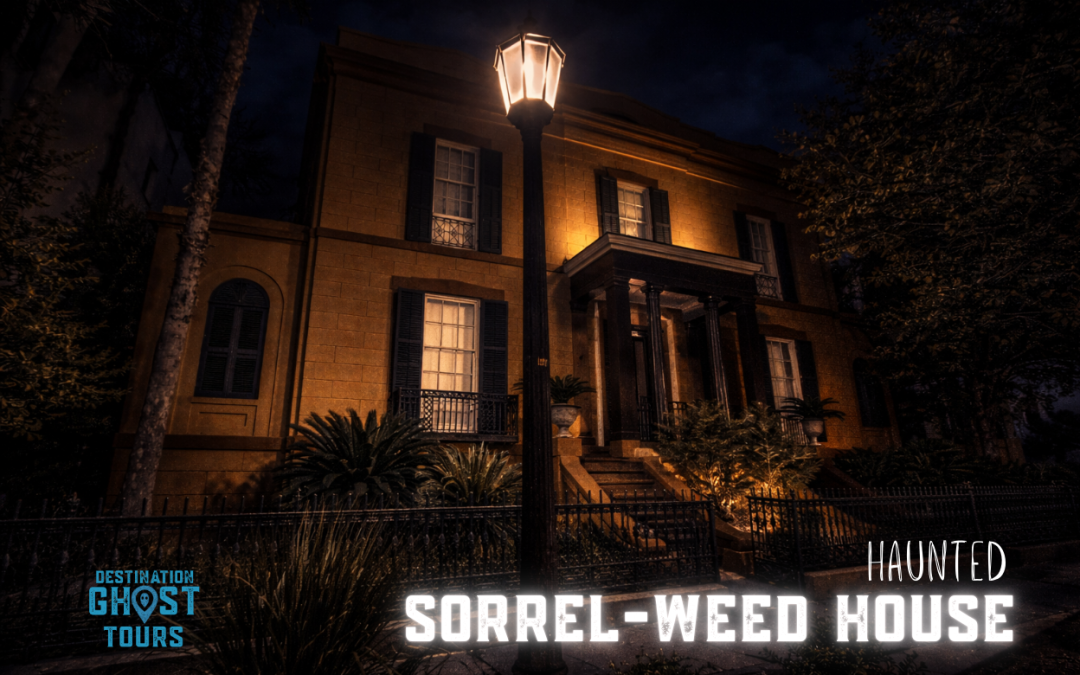
By the time dusk settles over Madison Square, Savannah begins to exhale.
The heat that clung to brick and iron all afternoon softens. Spanish moss shifts in the slow coastal breeze. Streetlamps hum to life one by one, casting a pale glow that gathers in pools across the square’s walkways. In that filtered light, the Sorrel-Weed House stands with quiet authority, its façade composed and symmetrical, its windows reflecting a city that has learned how to keep its secrets.
It does not announce itself loudly. It does not need to.
The house rises above the sidewalk with a confidence born in the 1840s, when Savannah’s wealth was measured in cotton bales and maritime contracts. The brick feels cool under the hand after sunset. Iron railings hold the memory of countless palms. Even before a guide shares a single story, visitors sense that this structure has watched generations pass through Madison Square.
Those who arrive seeking Haunted Savannah experiences often feel that awareness almost immediately. There is a stillness inside older buildings that can feel heavier than silence. Footsteps echo differently. Doors close with a deeper note. The air seems thicker, not in a theatrical way, but in the way history can settle into plaster and wood.
The Sorrel-Weed House has become one of the most talked-about locations in Savannah Ghost Tours, not because of spectacle, but because of continuity. Its beauty draws visitors in. Its past holds them there.
Before considering the ghosts, it is worth understanding the ground beneath them.
Built on Prosperity, Framed by Power
Savannah did not grow by accident. The city’s famous grid of squares, including Madison Square, reflects a deliberate plan that shaped both civic life and private ambition. The squares created breathing room, visibility, and order. They also framed the homes of merchants and families who benefited from Savannah’s position as a major port.
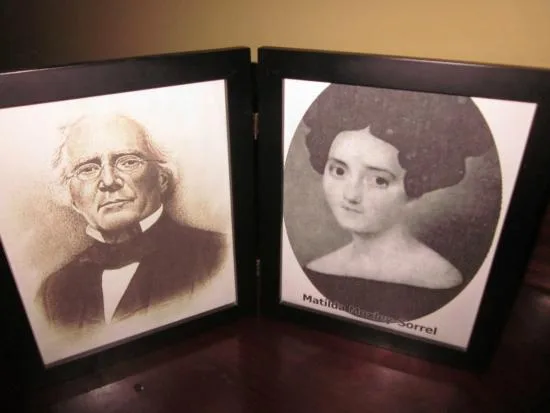
The Sorrel-Weed House emerged from this world of calculated elegance. Construction is generally dated to the late 1830s or around 1840, commissioned by Francis Sorrel, a merchant whose success reflected Savannah’s booming cotton economy. The house’s design is commonly associated with the Greek Revival style, a language of symmetry and classical restraint that conveyed stability and refinement.
It was meant to impress.
But the prosperity that funded such homes was inseparable from the institution of slavery. Savannah was not simply a picturesque Southern city. It was an active participant in a system that relied on enslaved labor both in rural plantations and within urban households. Enslaved individuals worked in kitchens, stables, carriage houses, and domestic quarters across the Savannah historic district.
The Sorrel-Weed House was no exception to that broader context.
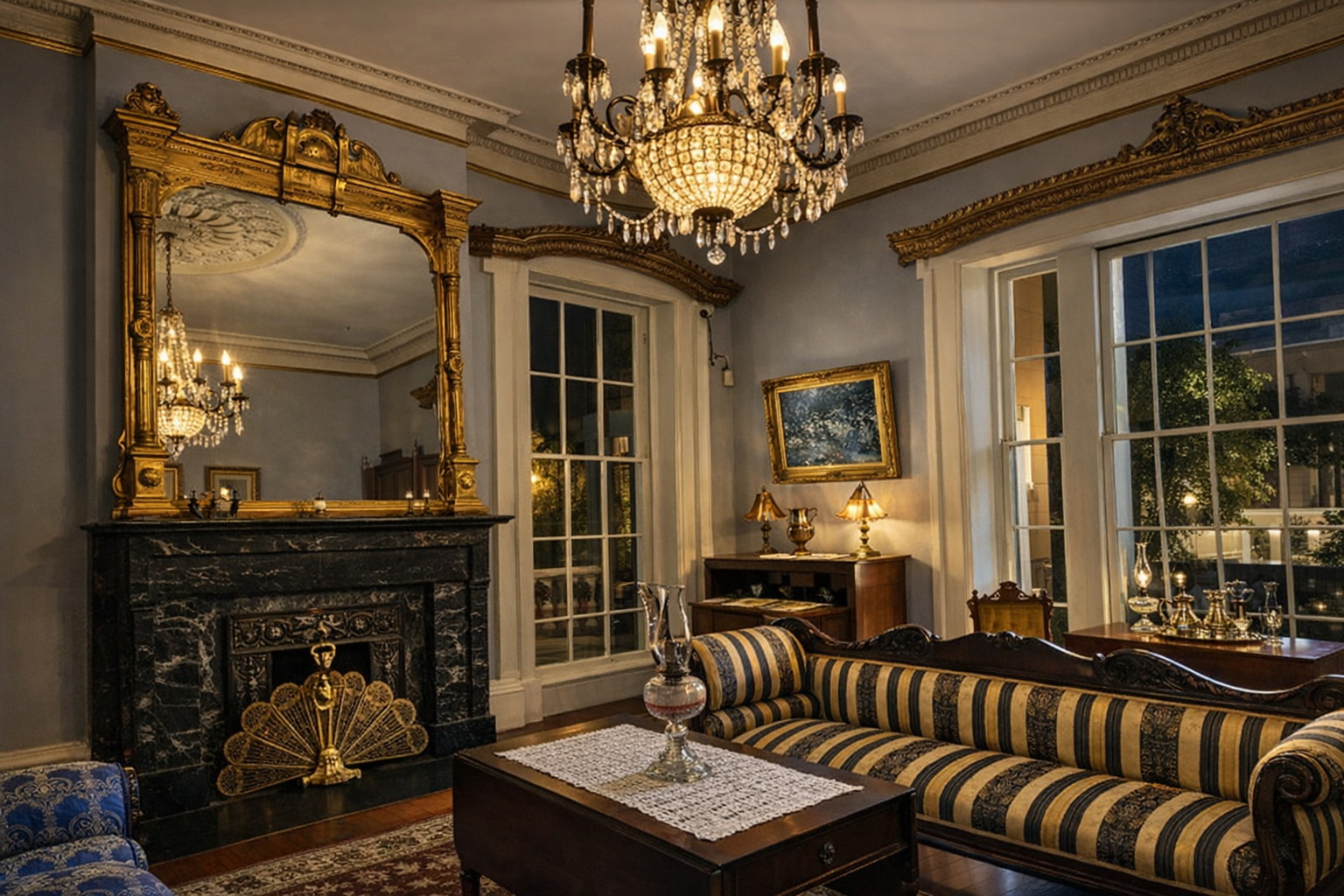
To stand in its rooms today is to occupy a space that once reflected wealth and hierarchy in equal measure. Formal parlors faced the square, projecting status outward. Service areas functioned behind the scenes, often unseen by the social world the house was designed to impress. The architecture itself tells that story, even if no one says it aloud.
Savannah’s story did not pause with the Civil War. The conflict reshaped property, power, and identity across the South. The house later became associated with the Weed family, which is why the hyphenated name endures today. Ownership changed. Generations shifted. The building adapted, as historic homes often do, to new economic realities.
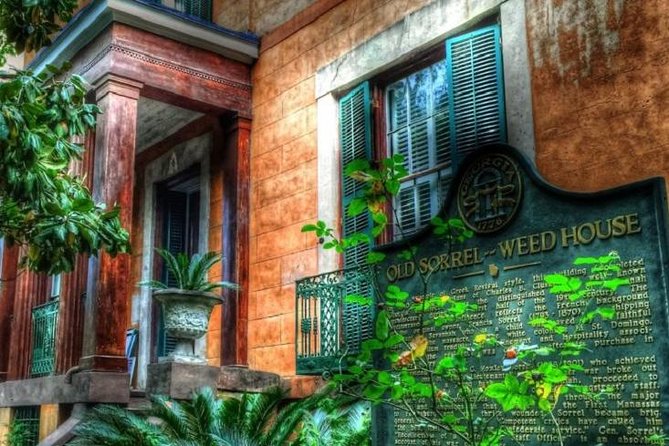
Like many properties in the Savannah historic district, the house experienced periods of decline before preservation efforts revived interest in its architectural and cultural significance. By the twentieth century, a broader appreciation for Savannah’s historic fabric helped protect structures that might otherwise have vanished beneath modernization.
Preservation, however, is selective memory. It safeguards beauty. It can also soften discomfort.
The Sorrel-Weed House remains striking because it carries both.
Rooms That Remember
Visitors often remark on the physical sensation of moving through the house. The staircase curves with measured grace. Floorboards respond with subtle creaks that seem amplified after dark. Air shifts unexpectedly in corridors where ventilation is minimal.
Old buildings breathe in peculiar ways.
In daylight, architectural detail dominates the experience. The geometry of windows, the thickness of brick, the height of ceilings, all suggest permanence. At night, those same features feel less like statements and more like witnesses. The shadows cast by banisters stretch longer. Light pools unevenly across polished wood.
It is not difficult to understand why the house became associated with Haunted Savannah Tours. The structure itself provides atmosphere without embellishment.
But atmosphere alone does not create legend.
The Stories That Took Root
Reported Encounters, Measured Carefully
Beyond folklore, there are the experiences reported by visitors and staff.
Accounts frequently include sudden cold spots in enclosed rooms, unexplained footsteps, the sensation of being observed, and peripheral glimpses of movement. Some describe impressions of children. Others mention figures in period clothing, particularly on staircases or in upper rooms.
These experiences are subjective.
Old houses produce complex acoustics. Temperature changes can occur in layered brick structures. Light behaves unpredictably in low illumination. Expectation shapes perception, especially during Ghost Tours in Savannah where participants are primed to notice unusual details.
Yet dismissing every report outright would ignore something equally important: the sincerity of those who felt them.
The carriage house or outbuilding is often cited as an area of heightened unease. Service spaces in historic homes tend to carry emotional weight in public imagination, perhaps because they represent lives that were constrained and largely undocumented. When visitors describe a shift in atmosphere there, they are responding not only to architecture but to narrative context.
Reputation amplifies this effect.
The Sorrel-Weed House’s prominence in Savannah Ghost Tours has created a feedback loop. Stories attract visitors. Visitors arrive with expectations. Heightened awareness can transform ordinary stimuli into meaningful experiences. Fame, in this way, becomes part of the haunting.
This does not confirm the supernatural. It does confirm the power of place.
Why This House Endures in Haunted Savannah
Savannah is uniquely suited to ghost stories because its past remains physically intact. The city’s planning preserved scale and continuity. The squares anchor memory in geography. Walking through the Savannah historic district often feels like stepping through layered time rather than across it.
The Sorrel-Weed House embodies that layering.
Its façade reflects antebellum ambition. Its interior reflects domestic life shaped by inequality. Its legends reflect modern attempts to grapple with uncomfortable truths through narrative.
When people seek Haunted Savannah experiences, they are often looking for more than a scare. They want contact with authenticity. They want to feel that what they are seeing is real, not fabricated for effect.
The house offers that.
Even if no visitor ever experiences a cold spot or unexplained sound, the knowledge of what occurred within similar walls across the city can linger. The unease may stem less from a ghostly presence and more from the realization that beauty and suffering coexisted here.
In Savannah, that tension is part of the atmosphere.
Beauty, Memory, and the Quiet Weight of History
Standing on Madison Square after dark, it is possible to feel two emotions at once.
Admiration comes first. The proportions are elegant. The lamplight is gentle. The square feels curated, almost serene.
Then reflection follows.
The prosperity that built such homes depended on systems that denied freedom to others. That fact does not vanish because the façade photographs well. It lives alongside it.
Perhaps that is why the Sorrel-Weed House continues to anchor Haunted Savannah Tours. The ghost stories, whether literal or symbolic, function as reminders that the past is not a decorative backdrop. It is active in the present, shaping how spaces feel and how stories are told.
Savannah Ghost Tours succeed when they treat that complexity with respect. They do not need theatrics. The city provides enough weight on its own.
Visiting Sorrel-Weed House Today
For travelers planning what to do in Savannah, the Sorrel-Weed House remains a central stop within the Savannah historic district. It appeals to architectural enthusiasts, history lovers, and those drawn to Haunted Savannah alike.
A visit during daylight highlights craftsmanship and urban design. Evening visits shift focus toward atmosphere and storytelling. Both experiences can be meaningful when approached thoughtfully.
Those interested in guided experiences often incorporate the house into broader Ghost Tours in Savannah. For visitors seeking context grounded in documented history and careful treatment of folklore, Destination Ghost Tours offers an approach that prioritizes credibility and respect.
Practical considerations matter. Savannah’s climate can be humid well into the evening, and tours often involve extended walking. Comfortable footwear and awareness of accessibility policies enhance the experience. Photography rules and interior access can vary, so checking current guidelines before visiting is wise.
Madison Square itself is worth lingering in. The geometry of the square, the filtered lamplight through live oaks, and the quiet rhythm of the surrounding streets make it one of the city’s most atmospheric settings.
The Sorrel-Weed House stands there not as a stage prop, but as a preserved landmark. It invites curiosity rather than demands belief.
Visitors may leave without witnessing anything unexplained. They may also leave with a lingering awareness that history is not inert. In Savannah, the line between past and present feels unusually thin.
Whether one interprets that feeling as haunting or as memory depends on perspective.
Either way, the house endures, steady against the night, a focal point in the continuing story of Haunted Savannah Tours and one of the most discussed addresses in Savannah Ghost Tours.
It remains, above all, a place where history and atmosphere meet.
Ready to take a Savannah Ghost Tour?
Are you ready to take a Savannah Ghost Tour and see the Haunted Sorrel Weed House yourself? Book a tour with Destination Ghost Tours tonight. See below for our tour options.
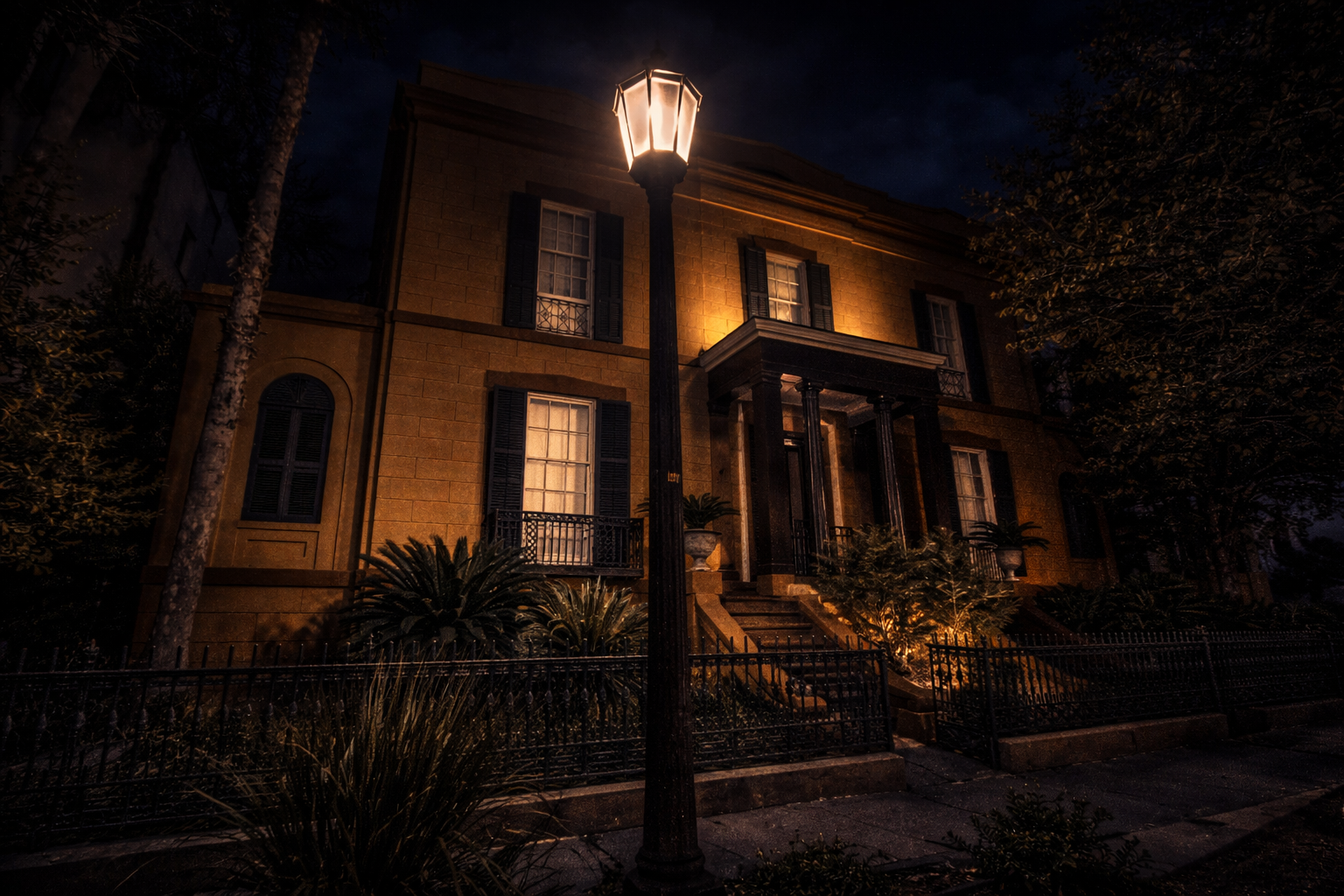
The Original Haunted Savannah Tour
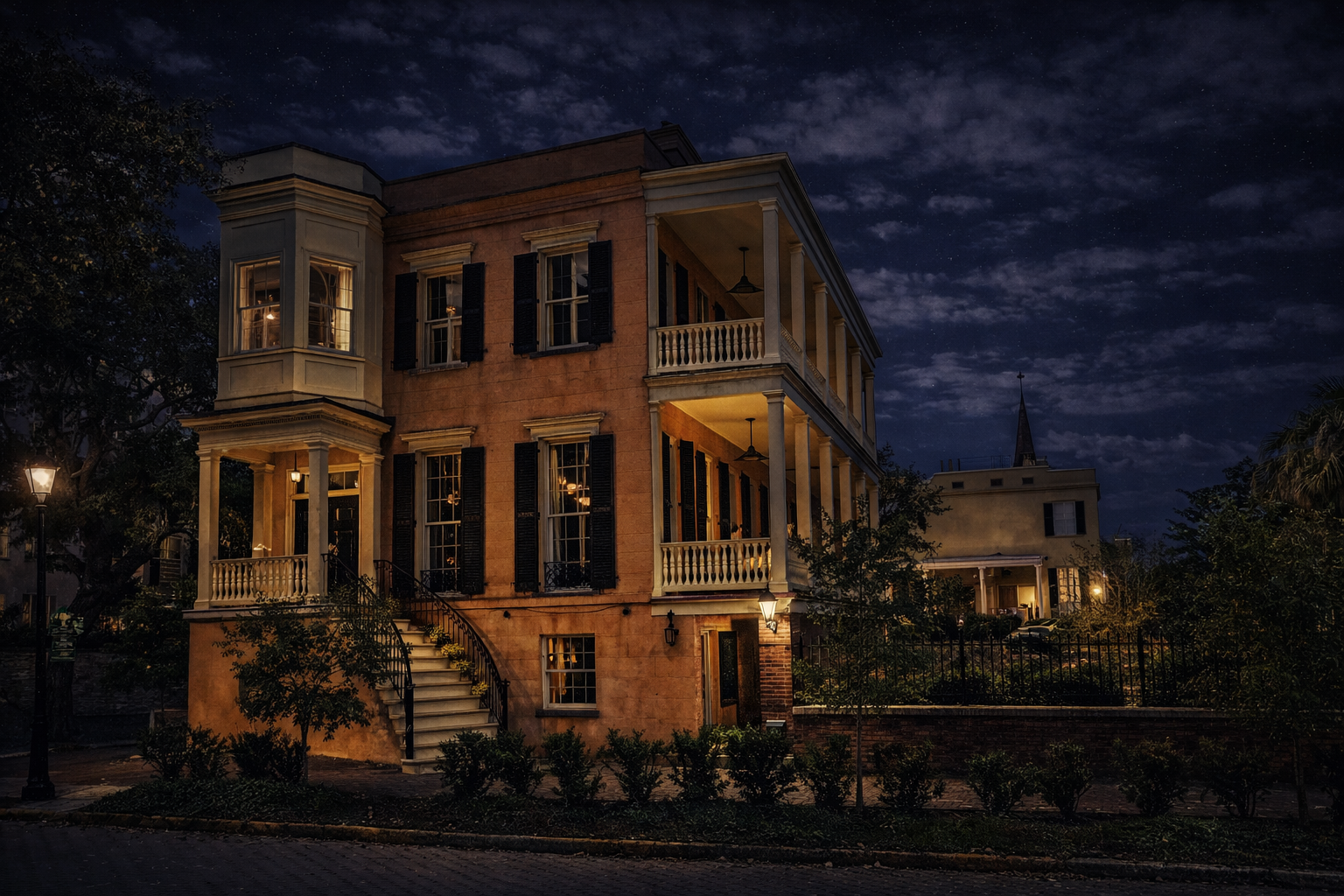
Spirits and Scoundrels Ghost Tour
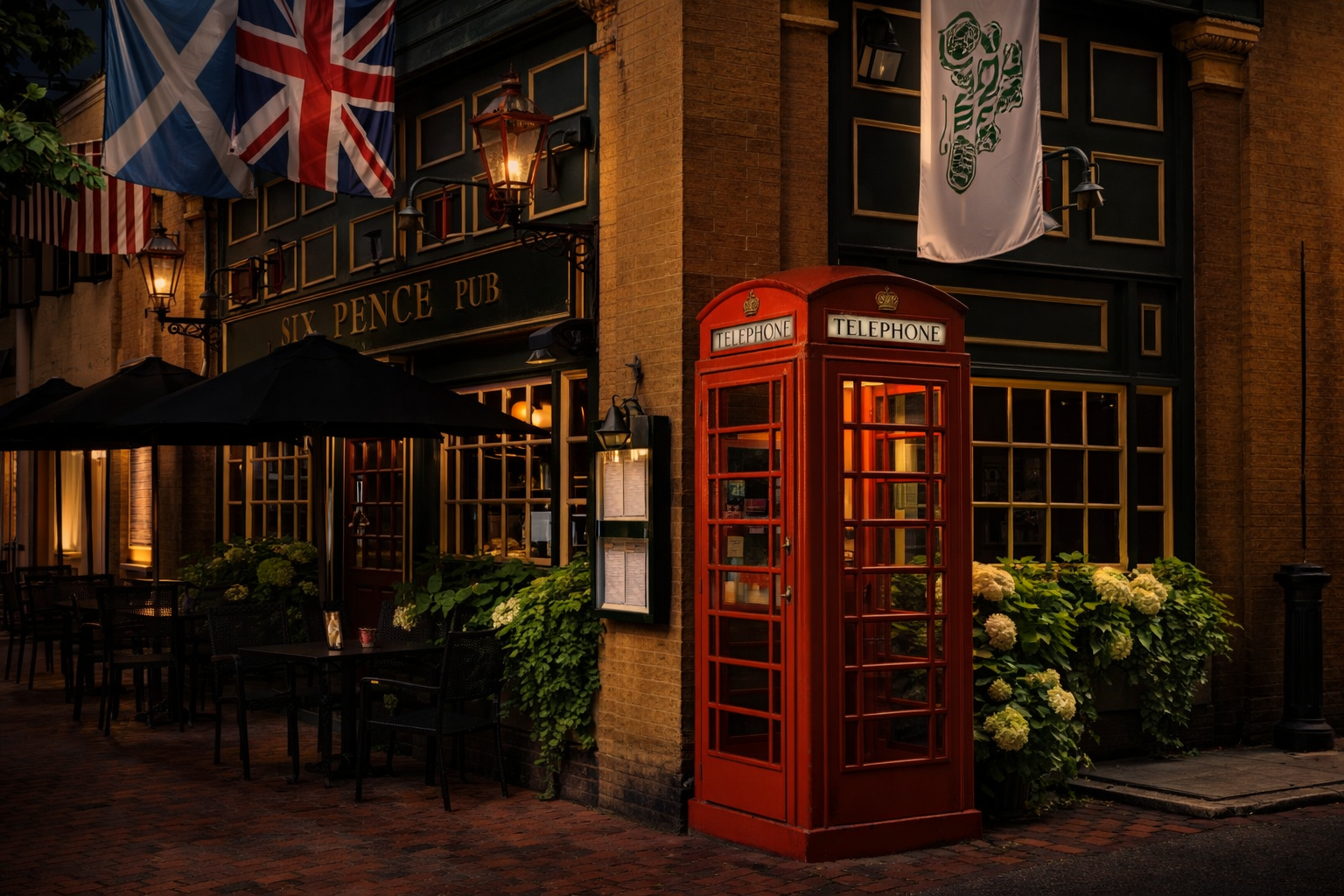
Haunted Hops Savannah Pub Tour

Chris Allen is the founder of Destination Ghost Tours, a historian and storyteller with a lifelong fascination for the darker corners of history. He spends his time uncovering the true stories behind haunted legends, guiding guests through historic cities, and chasing down details that refuse to stay buried. When he is not working, he can usually be found with his partner Arissa, their dog Bear, and their two cats, Trouble and Covu, photographing old places, digging through archives, or disappearing into historical rabbit holes. He believes the best history is honest, atmospheric, and just unsettling enough to linger.